Tag Archives: HBCUs

Good News/Bad News: Percentage Of HBCU Graduates With Debt Drops But Debt Loads Increase

Debt is the slavery of the free. – Publilius Syrus

hbcugradsdebt

A follow up to our internal study two years ago on HBCU student loan debt shows a “good news, bad news” situation for those graduating from HBCUs hallowed grounds. Slightly less are graduating with debt than two years ago, but those who are graduating with debt can expect those debt loads to be heavier. A troubling sign as wages stubbornly refuse to rise despite an arguably healthier overall economy in terms of employment. I say arguably because African America still remains the only group in this country experiencing double digit unemployment and largely dependent on employment from non-HBCU owned businesses. Add to the fact African American households earn 35 percent less than the national average and 50 percent less than Asian American households who have the highest household income in the nation; there will be a good deal of continued penny-pinching ahead for HBCU graduates. Although, one has to wonder at this point if we are not squeezing blood from a turnip as the old saying goes.

HBCUs served 99 percent of the African American population obtaining higher education prior to desegregation while today that number has dwindled to the neighborhood of 10 percent. This steady but precipitous decline over the past 60 years has had long-term impacts on HBCU endowments not least among them the probability of producing high quality donors and large alumni populations. The latter being integral since only an average 13 percent of America’s alumni donate. Wealth or lack thereof is also playing a role for African American families and the rising HBCU student loan debt. African American families have recovered mildly since the recession, but the median wealth gap between European/Asian and African American families is well over 20:1 as of 2012. Institutional wealth is also part of the spider web of student loan debt. The institutional wealth gap as a result of desegregation is even scarier with the top 50 endowments (all PWI/HWCUs) having a combined $330 billion versus 100 plus HBCUs with approximately $2-3 billion. All of these factors contribute to an ongoing burden by families, HBCUs, and HBCU support organizations to try and reduce student loan debt for HBCU graduates.

The results were paired against America’s 50 largest universities by endowment which surprisingly varied by geography, public and private status, and school size eerily similar to that of HBCUs. The Project on Student Debt reports in 2013 that 69 percent of all college graduates have student loan debt and the average debt of that graduate is $28 400. Both numbers are up from two years ago, when the figures were 66 percent and $26 600, respectively. The latter puts average debt rising almost 7 percent in the past two years.

The number in parentheses shows the comparative results from the universities of the 50 largest endowments:

Median debt of HBCU Graduate – $30 344 ($22 020)

Proportion of HBCU Graduates with debt – 88% (45%)

Nonfederal debt, % of total debt of graduates – 6% (23%)

Pell Grant Recipients – 69% (17%)

The statistics show that HBCU students are still 28 percent more likely to graduate with debt than the national average, a figure that was at 35 percent two years ago. A sign that the nation is catching up to the HBCU indebted way of life. HBCU graduates are 96 percent more likely to graduate with debt than someone from a school with a top 50 endowment, which is higher than the 93 percent two years ago. Unfortunately, there is no way to break out the African American student loan debt data of those attending those HWCUs which would help control for family resources playing an integral part in the difference. Given top 50 endowments ability to provide more low-income based aid; it is a safe assumption that the student loan debt is potentially lower for African Americans at HWCUs both in terms of percentage of those graduating with debt and debt loads. Over the past two years, median debt for HBCU graduates has risen 5.4 percent in comparison to top 50 endowment schools of only 1.4 percent. Both groups though are below the aforementioned national average over the same time period.

The most telling sign of just how vital endowments impact student loan debt appears in the median cost of attendance for HBCUs versus top 50 endowment institutions. Top 50 endowment institutions cost almost three times as much or 177 percent more than HBCUs in terms of median total cost of attendance. Despite this HBCU graduates are still twice as likely to finish with debt and with more of it is a disturbing reality of just how big the institutional wealth gap is. HBCU graduates are finishing with almost 38 percent more student loan debt burdens than their top 50 endowment institution counterparts. A problem that will have very long term systemic wealth building implications if not attacked ferociously. Currently, the median net worth or wealth for African Americans is the lowest among all groups in this country at $11 000. In comparison, Asian and European American median net worth is $91 440 and $134 008, respectively.

As I said two years ago, we could spend years playing the blame game of why this situation is as it is. Unfortunately, African America does not have that kind of time. Two years later, it seems even harder to believe that the HBCU community has any more grapple or workable solution on this problem than before. There seems to be a foregone conclusion that student loan debt is just a part of life and as is the case with most things in this nation when America catches a cold, then African America catches pneumonia. The question becomes just how much debt and how fast it accumulates will ultimately determine the sustainability factor for how long-term benefits will be reaped by graduates, their families and communities. Unfortunately, HBCUs are caught between a rock and hard place in needing to desperately raise tuition to generate more revenue because of weak endowments, but doing so increases an already over-sized burden on their graduates long-term and making it even less likely they will become the donors that the institutions desperately need. It has become a vicious cycle and with so much of African America and America invested in the demise of HBCUs that it seems only a miracle will keep us from perishing.
2015 HBCU-Based Credit Unions: Alabama A&M’s Councill Credit Union Leads A Weak Pack

Opportunity has power over all things. – Sophocles

CFCU

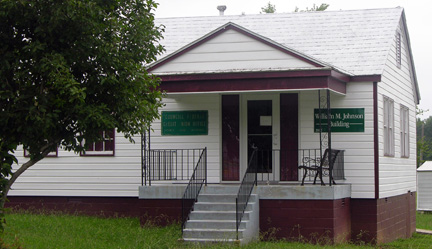
(Pictured Above: Councill Federal Credit Union at Alabama A&M University)

The release of the second annual HBCU Money African American Credit Union Directory allowed us to uncover two more HBCU-based credit unions. A total of eleven HBCU-based credit unions that control a combined $87 million in assets and have 17 099 in members. For comparison, Navy Federal Credit Union, America’s largest credit union has $63.7 billion in assets and 5.3 million members. Three years ago, I wrote on what forming a national HBCU credit union would look like and why it should be a reality. As it turns out, much of the infrastructure for this reality is already in place. Now the question is, what is holding us back?

  1. Southern Teachers & Parents (LA) – $28 million ($29 million)
  2. Florida A&M University (FL) – $19.6 million ($20.6 million)
  3. Howard University Employees (DC) – $11.3 million ($11.4 million)
  4. Virginia State University (VA) – $9.6 million ($10.6 million)
  5. Prairie View (TX) – $4.8 million ($5 million)
  6. Savastate Teachers (GA) – $3.6 million ($3.6 million)
  7. Councill (AL) – $3.4 million ($3.1 million)
  8. Xavier University (LA) – $2.4 million (N/A)
  9. Arkansas A&M College (AR) – $2.3 million (N/A)
  10. Tennessee State University (TN) – $1.4 million ($1.4 million)
  11. Shaw University (NC) – $0.5 million ($0.5 million)

If the eleven merged it would the eleventh largest credit union by assets and by members, and would be only the second African American financial institution with a national footprint. The other being OneUnited Bank, which covers Massachusetts, Florida, and California.The lack of products at HBCU-based credit unions continues to be a chief complaint of why so little deposits seem to remain in them. Everything from better web-presence, mobile banking, investment products, and small business loans could be rolled out in scale if the eleven merged.

Instead, six of the nine HBCU-based credit unions we reported from last year saw their assets drop. Median and average assets fell 1.7 percent and 1.4 percent, respectively among last year’s group of nine. In terms of membership, membership also declined in six of the nine HBCU-based credit unions as well. Membership overall fared into the red with median and average membership down 2.3 percent and 6.3 percent, respectively. Two trends you want to desperately avoid if you are any institution. The best performer was Councill Credit Union at Alabama A&M University who saw an increase of 8.5 percent in assets, this despite the second worse drop among the group in membership decline with a 17 percent drop. Tennessee State University’s Credit Union had the largest increase in membership with a 6.3 percent increase from 2014. However, it only resulted a 1.7 percent increase in assets. One of only three HBCU-based credit unions to see an increase of any sort in assets from the previous year so I guess the cup is half full if you want to see it as such.

Unfortunately, there also seems to be no urgency by these credit unions to do the things necessary to increase their membership and assets. Students entering into HBCUs today may be more financially illiterate than a generation ago, but they have more complex financial needs thanks in large part to student loans playing such a large role into today’s higher education finance. Not to mention the reduced role that social security will play in their long-term retirement planning. An issue that should be prompting more HBCU-based credit unions to find ways to help students reduce student loan debt and start retirement planning while in college. A hard task to give this group given the limited financial products and services they offer leave HBCU-based credit unions minute opportunity to serve the needs of students, faculty, campus organizations, or even the HBCUs themselves. These limited products and services are largely an issue of lacking scale. Instead of a credit union with at least $87 million in assets, the median is $3.6 million amongst eleven with declining assets and membership. Instead of students, faculty, and institutions who travel more today than ever to conferences, tournaments, etc. being able to access their money at one of the eleven branches or through mobile app banking along the way, they are limited to just one insular branch with technology that at best reminds you of AOL dial-up. Holding onto students is even more difficult with most returning to their hometowns or nearest major city upon graduation and only returning to the campus at most once a year for homecoming. Incentive to keep banking beyond graduation? None.

Lauryn Hill has a wonderful song called the Ex-Factor that I think often describes African America institutional strategic behavior and with HBCU-based credit unions it seems no different. “It could all be so simple, but you’d rather make it hard. Loving you is like a battle and we both end up with scars.” I still believe with the right vision, an HBCU credit union could rival the Navy Federal Credit Union and give African America a place of financial safety instead of the scars we constantly end up with from predatory financial services that come into communities because we are left with such meager choices from our own financial institutions. It really all could be so simple, but more than likely we will continue to make it hard.

Last Chance: How The President Can Finally Redress HBCUs & Fund Free Community Colleges

“Wise men ne’er sit and wail their loss, but cheerily seek how to redress their harms.” – William Shakespeare

I know everyone loves math problems, so here is one for you. What is 39.1 percent of zero? I suspect even those who find math an arduous task know the answer is zero to this problem. It appears everyone except the president and congress that is. Although the president does not seem to know how to do simple math problems, it does not seem to prevent him and his administration from wanting to add new bills to taxpayers with grand ideas of free community college. The Hill recently reported that the cost of “free” community colleges could cost the American taxpayer an estimated $60 billion over the next decade. Meanwhile, the administration continues to ignore the idea of restitution for HBCUs who have been historically underfunded by both state and federal governments since their inception. As you recall, the administration gave 100 plus HBCUs only $850 million over a decade. Quite the gap, given both serve virtually the same communities and students.  Former HBCU Digest editor Autumn Arnett in an interview pointed out that, “HBCUs were truly in a better position under President George W. Bush than they have been under President Obama.” The president and his administration’s policies toward HBCUs have potentially cost the institutions multiple billions when you factor in the Parent PLUS loan debacle that sent many students home and the longer term implications of students who would have graduated and become alumni donors. So how can we pay for this grand plan of “free” community college, right the wrongs of HBCU funding, and get the support of the American taxpayer? Tap into a $2.1 trillion piggy bank that American corporations are keeping abroad and refusing to bring home because of the world’s highest corporate tax rate of 39.1 percent (below).

corporate-tax-rate-600

The idea of giving corporations a tax holiday has been floating around the past few years as the cash hoard they have abroad continues to amass. Unfortunately, due to the drubbing that happen to the federal government in 2004 giving a tax holiday to corporations there is little motivation to do so again. According to a report from the Democratic staff of the Senate Permanent Subcommittee on Investigations; the tax holiday cost the U.S. treasury $3.3 billion in tax revenues, saw the companies that received tax holidays cut 20 000 jobs, and decrease their research spending. This despite the Wall Street Journal reporting, “When Congress passed the repatriation tax holiday in 2004, the legislation specified that the funds should be earmarked for activities like hiring workers or conducting research and prohibited using the money for executive compensation or buying back stock.” So why on earth would I suggest we do it, again? I love my kids, but I do not know anyone who is a parent who would give their child a bag of candy, tell the child they can have one piece, and then leave the room and not expect to come back to an empty bag.

MK-CB497B_FORCA_G_20130310184804

Why did the federal government not A) enforce penalties for non-compliance B) have the companies put the funds into organizations that conduct job training and/or independent research facilities? Again, why leave it up to the corporation to do the right thing here. The temptation for the companies to not comply seems asininely discernible. After all their fiduciary responsibility is first and foremost to the shareholders of the company. This time around however, President Obama and congress could offer the corporations a tax holiday at 10 percent (a subtle penalty for the previous 2004 digression) that would generate $210 billion. Corporations would have to put $210 billion or ten percent of the amount they choose to bring back during the holiday period into the newly created New America Education Endowment, where it would then be disbursed to the institutions themselves within 90 days of receipt. $100 billion could be set aside for the community college program because let us face it, if the government says $60 billion is the cost, it is safe to assume it is more. Now, depending on what number you feel HBCUs deserve would be up for debate, but if it is less than $31.5 billion (representative of Africa America’s population percentage), then HBCU advocates should be up in arms. The remaining $80 billion would go to vocational training programs, improving K-12 schools, and student loan relief. The latter is becoming an ever increasing danger for the 40 and under population in America. America as a whole now carries over $1 trillion in student loan debt, which while making the country very educated is also making it so indebted that it will never be able to reap the benefits of that education. However, I would not be in favor of including debt relief from for-profit colleges, but that is my own personal bias against them. It should be noted that in order for the holiday to take effect, the administration must set a minimum amount that must be repatriated for it to take effect. Otherwise, corporations may not bring enough back to fund the new endowment program. Again, have the government set the terms in this case not instead of allowing for malleable terms as before.

I am sure there could and will be some argument by a great many groups in the country and their interest for the usage of some of the funding, but the point of the matter here is there is money available to achieve the president’s ambition to cement his legacy and a great many other things. In this case, President Obama actually would get support from a Republican led congress and senate and probably opposition from his own party. Although, support could get complicated if the president decides to exclude those receiving free community college (see class warfare argument) who have whatever the administration deems as upper class income, which may boost support from his party, but in a Republican controlled house and senate may not be worth the fight.  It could also considerably spur both parties to create some corporate tax reform. However, given how long the country has been waiting on any sort of tax reform just getting the holiday passed seems to have more fortuitous odds than any rational governing. An instance where both parties can show effort toward a more moderate governance would do well for both parties approval ratings in the eyes of the public, which is near all-time lows.

Ultimately, we need a more educated country, which includes a long overdue redress historically for HBCUs and although “free” community colleges are still questionable versus a major K-12 investment, taxpayers can not feel they are on the hook for another pie in the sky ideal. Nor can corporations simply be left to Do The Right Thing. An opportunity to try a new model where tax funds go directly into the public institutions and programs that need it as opposed to being subject to governmental red tape and bureaucracy is also at stake. After all, even shareholders are going to soon be clamoring for these mountains of cash to be returned to them in the form of dividends and they will be met with the same math that the U.S. Treasury was a decade ago. Any percentage of 100 percent of zero is still zero – and that is a losing proposition for all stakeholders involved.

HBCU Money’s 12 Month HBCU Alumni Giving Challenge

Endowment_Plant

To give away money is an easy matter, and in any man’s power. But to decide to whom to give it, and how large and when, and for what purpose and how, is neither in every man’s power-nor an easy matter. Hence it is that such excellence is rare, praiseworthy and noble. – Aristotle

The HBCU Money™ 12 Month Challenge is an effort to help HBCUs and HBCU support organization increase their charitable donations. We are offering this challenge sheet to HBCU alumni, alumni associations, and friends of HBCUs. You can challenge yourself, a fellow alum, or anyone who is interested in giving to the HBCU Diaspora. Share your progress on social media to inspire others. Keep a hard copy on your refrigerator. Whatever it takes to keep ourselves accountable to empowering our institutions for tomorrow.

HBCU or HBCU Organization:

Your Name:

Your Challenger:

Giving Purpose:

  • Month 1 – $1

  • Month 2 – $2

  • Month 3 – $4

  • Month 4 – $8

  • Month 5 – $16

  • Month 6 – $32

  • Month 7 – $64

  • Month 8 – $128

  • Month 9 – $256

  • Month 10 – $512

  • Month 11 – $1024

  • Month 12 – $2048

The Term HBCU Must Transcend More Than Colleges For African America

By William A. Foster, IV

I know no national boundary where the Negro is concerned. The whole world is my province until Africa is free. – Marcus Garvey

Village West Revitalization

I know no national boundary where the Negro is concerned. The whole world is my province until Africa is free.
Read more at http://www.brainyquote.com/quotes/quotes/m/marcusgarv390470.html#oSLCrTYbwfLYxdm7.99
I know no national boundary where the Negro is concerned. The whole world is my province until Africa is free.
Read more at http://www.brainyquote.com/quotes/quotes/m/marcusgarv390470.html#oSLCrTYbwfLYxdm7.99
I know no national boundary where the Negro is concerned. The whole world is my province until Africa is free.
Read more at http://www.brainyquote.com/quotes/quotes/m/marcusgarv390470.html#oSLCrTYbwfLYxdm7.99
I know no national boundary where the Negro is concerned. The whole world is my province until Africa is free.
Read more at http://www.brainyquote.com/quotes/quotes/m/marcusgarv390470.html#oSLCrTYbwfLYxdm7.99

Let me say this first – African America must define itself. Again, African American must define itself. It must not be defined by the federal government or those in ivory towers in lands far away. No, African America must define itself. That includes all institutions that have been created to serving our interest.

What is an HBCU? We know the acronym stands for Historically Black Colleges & Universities. We know that it was the federal government that defined an HBCU as an institution whose primary mission was to educate African Americans and established prior to 1964. This inflexible definition based on a founding year sounds a lot like what those in geostrategy would call containment. George F. Keenan, a career Foreign Service Officer, created the policy, strategy, and term of containment to deal with the Soviet Union after World War II. The strategy has been used in many different facets from the very macro level of countries to organizations on micro levels. It has been used by McDonald’s against Burger King and Wendy’s by a strategy of buying and controlling prime property locations when possible. By limiting what an HBCU can be, there seems to be a policy to contain African American institutional power. Unfortunately, HBCUs themselves are contributing to this containment themselves.

Chicago State, Charles Drew University, Martin College, Roxbury Community College, Medgar Ever College all serve predominantly African American populations, but are not considered HBCUs by the federal government and do not receive federal funding – more importantly there does not seem to be effort by traditional HBCUs themselves to include these institutions into the fabric. These schools are located in Illinois, California, Indiana, Massachusetts, and New York, respectively. All strategic geographic areas for African America. Instead, we allow for schools like Bluefield State College, West Virginia State University, and at least six other colleges who have federal HBCU designations, but have predominantly European American populations to receive federal funding under the guise of being HBCUs. They are historic certainly, but have long since not been under the control of African America. Even if we can not change the statute of the funding – debatable since that is what amendments are for – we can do a better job of expanding our geographic reach of what an HBCU is nationally by including the aforementioned schools rather than holding onto institutions we have long since lost control of.

Can HBCUs be more than colleges and universities though? I believe it can, if you believe that an HBCUs purpose in spirit is to serve the institutional development of African America. It can and should include predominantly African American cities and towns, neighborhoods, secondary schools, banks and credit unions, businesses (the reason for the creation of HBCU Chamber of Commerce), colleges and universities outside of the United States serving African Diaspora populations, and other institutions whose purpose are deemed to create an ecosystem of African America’s ability to circulate its social, economic, and political assets. By allowing the term HBCU to transcend colleges and universities it allows a flag of unity and interlocking to be established.

HBCUs are facing threats on a number of fronts. Some of these threats are internal like endowments, alumni giving, and some external like state and federal policies and outside influence looking to dilute and contain HBCUs as institutions of African American institutional power. The way to combat this is to expand not retrench. An HBCU manifest destiny I dare call it. The old saying a chain is only as strong as its weakest link, but what if the chain is not even interlocking? Outside of some loose conference interlocking, there seems to be very little interlocking of African American institutions with each other and HBCUs are no different. We could can help this by expanding the definition of HBCU and defining it ourselves. A definition based on inclusion of other institutions who are working towards the same goals and missions as HBCUs.