

Tag Archives: entrepreneur

The HBCUpreneur Corner™ – North Carolina A&T’s La’Tisha Price & EducateDancer

educatedancerCLEARBACK copy2

Name: La’Tisha Price

Alma Mater: North Carolina A&T State University

Business Name & Description: EducateDancer Studio, Dance studio and apparel for ages 2-Adult

What year did you found your company? My company was founded June 20, 2014.

What has been the most exciting and/or fearful moment during your HBCUpreneur career? The most exciting moment of my HBCUpreneur career has been the opening of my studio. It has been 3 months and God has blessed this studio with amazing things! The most fearful moment would have to again be the opening of my studio. It takes a lot to make sure you stay relevant and constantly growing your clientele as well as challenging your students so that they continue to grow.

What made you want to start your own company? I have always wanted a dance studio. Dance is is something that I love whether I am the performer or behind the scenes. I also love education and the growth and development of people. These two things combined make me the happiest woman on Earth. I believe in having multiple sources of income as well as working for myself. I always knew I would go into business for myself, I just wasn’t sure what it would be.

Who was the most influential person/people for you during your time in college? The most influential people for me throughout college has to be my 3 mentors, Dr. Kenneth Ruff, Ms. Tiffany Brown, and Ms. Akua Matherson. My mother put me in the best hands possible and these three people truly molded me into a wonderful performer and woman. I struggled with balancing school and dance, I struggled with social ridicule from others, and these three kept me focused. They pushed me to my full potential and I am forever grateful for them.

image1

How do you handle complex problems?  I am faced with complex problems all that time. I first take a second to breathe and think things through. I always keep a positive mindset because negative thinking will limit you. I like to include the thoughts and perspectives of my closest friends so that I can have something to compare my thoughts to and then I make my decision. Honestly, “you’ve got to do what you’ve got to do” as they say! As long as the ending result is ethical and moral, I make sure I solve the problem so I can move on to the next.

What is something you wish you had known prior to starting your company? I wish I would have known more of the legal information. I think that is the hardest part to figure out because it’s a lot of phone calls, paperwork, trademarking, it can get hectic. Starting out most business owners don’t have the money for lawyers, accountants, etc. I don’t want to take out any loans because I am still paying student loans. So I had to figure out a lot of information on my own and some stuff I learned late, but better now than never.

How do you see Misty Copeland’s presence on the ballet landscape impacting your business? and African American participation both as participants and viewers in ballet overall? I think every black dancer has an admiration for Misty Copeland. It’s the same with education, our hair, our actresses, our culture! Whenever we see an African American woman accomplishing a major goal we automatically idolize them. Its beautiful! Ballet is French and a lot of African American woman don’t receive the acknowledgement that they should for excelling in the field. I work really hard to make sure that my young dancers are not simply “whipping and hitting the quan”. It’s okay because I appreciate our culture of fun dances, but to be a well-rounded dancer they need training, ballet training!! We have a lot of black dance studio’s that train African American ballet dancers, for example; Debbie Allen has a dance studio that is packed with African American (young) ballet students. It’s a beautiful thing to witness and I am so happy to be a part of the contribution with my own studio.

Being both an instructor and CEO/President of the company has to come with some challenges. What has been your biggest help in managing both roles? The biggest challenge is having time for me. Outside of being the CEO and an instructor, I also have a full-time job as an EC Assistant and Job Coach at a high school. I am also engaged to be married. I have a lot of things going on and sometimes it is overwhelming for me to juggle all of these different things. However, I enjoy being a woman that wears many hats.

What do you believe are some of the biggest headwinds facing the ballet industry as a whole in the coming decade? I’m not sure what some of the biggest issues are facing ballet, I am more invested in HBCU Dance.

Where do you see your company in ten years?  In 10 years, I would like to see about 4-5 EducateDancer Studios around North Carolina with a structured curriculum! I would like to provide dance scholarships and send more dancers and students to HBCU’s.

What do you believe HBCUs can do to spur more innovation and entrepreneurship while their students are in school either as undergraduate or graduate students? It would be great to bring more entrepreneurs to HBCUs to speak, hold conferences, workshops, etc. I have nothing against corporate America and working a 9-5; However, I feel as if that is the ONLY thing you do, you are limiting yourself. Someone is in charge of your paycheck, someone is in control of your promotion. We have so many discrimination issues towards women and race, I don’t even feel comfortable working for someone and honestly believing that I would grow within that company. We should push for more entrepreneurs, even if you do work a 9-5. Have something to call your own.

How do you deal with rejection? I handle rejection very well. I’m a dancer and I am used to criticism and rejection because that happens in this business. I also have a close enough connection with God to know that he will give me what I need and he won’t let me walk into something that is not for me.

When you have down time how do you like to spend it? When I have down time I love to spend it with my fiancé! He is honestly the best person I have ever met in my life! We have so much fun together and I am so in love that I just can’t think of anyone else that I would want to be around. We both love to have fun, so it’s a guaranteed fun time when I’m with him.

What was your most memorable HBCU memory? My most memorable HBCU memory was dancing with Golden Delight throughout my entire college career.

In leaving is there any advice you have for budding HBCUpreneurs?The best advice that I can give is “Don’t Quit!” I often have to tell myself the same thing. When I had the opening of my studio I asked all my friends that attended to write a special note to me and to put it inside of this little box. Whenever I get sad, or feel like I cant make it anymore I read one of their notes about “how proud they are” or “how this is so amazing for so many little girls” and I keep going. So if anything, DO NOT QUIT!
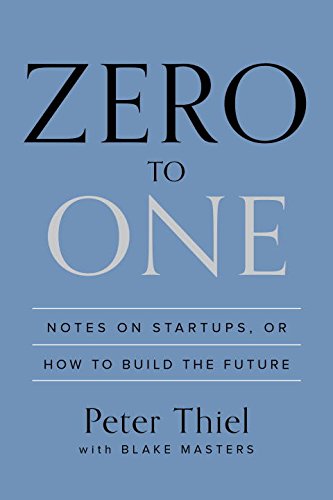

HBCU Money™ Business Book Feature – Zero to One: Notes on Startups, or How to Build the Future

5200c8f1e9_41RhIujiGpL

If you want to build a better future, you must believe in secrets.

The great secret of our time is that there are still uncharted frontiers to explore and new inventions to create. In Zero to One, legendary entrepreneur and investor Peter Thiel shows how we can find singular ways to create those new things.

Thiel begins with the contrarian premise that we live in an age of technological stagnation, even if we’re too distracted by shiny mobile devices to notice. Information technology has improved rapidly, but there is no reason why progress should be limited to computers or Silicon Valley. Progress can be achieved in any industry or area of business. It comes from the most important skill that every leader must master: learning to think for yourself.

Doing what someone else already knows how to do takes the world from 1 to n, adding more of something familiar. But when you do something new, you go from 0 to 1. The next Bill Gates will not build an operating system. The next Larry Page or Sergey Brin won’t make a search engine. Tomorrow’s champions will not win by competing ruthlessly in today’s marketplace. They will escape competition altogether, because their businesses will be unique.

Zero to One presents at once an optimistic view of the future of progress in America and a new way of thinking about innovation: it starts by learning to ask the questions that lead you to find value in unexpected places.

HBCU Money™ B-School: Entrepreneurs

Individuals who are willing to take risks in order to develop new products and start new business. They recognize opportunities, enjoy working for themselves and accept challenges.

Source: St. Louis Fed Glossary

The HBCUpreneur Corner – Tennessee State University’s Trina Morris & Style Root

download

Name: Trina Morris

Alma Mater: Tennessee State University

Business Name & Description: Style Root Inc., a public relations and personal development consulting firm

What year did you found your company? Started as a freelancer (sole proprietor) in 2002 and officially launched as an incorporated business in 2005.

What was the most exciting and/or fearful moment during your HBCUpreneur career?

Exciting- Every time I saw one of my clients in the press (print, online or TV), I was over the moon! Every time I proved that my petite PR powerhouse could contend with the PR giants (via international clients, corporate sponsorships, national campaigns, etc.), I was beyond delighted. When I would see the images from events that I produced, I was truly proud. Doing PR is an art as much as a strategy for me, so my events were like live exhibitions ; )

Fearful- In 2009-10, when the recession hit hard. Across several industries, PR was “the last hired and the first fired.” Also when ‘Web 2.0’ launched with social media and the abyss of the blogosphere. Whether other PR pros will admit it or not, that immediately pulled the rug from under all of us. We had to learn Web 2.0, get on the other side of (this new way) and figure out how to make it ‘billable’- in spite of it being something the client could do for free/on their own. As a very small firm, I was stressed OUT. This was also amidst a print publishing collapse. Thus, my media services and contacts were in jeopardy and I was slowly melting.

What made you want to start your own company? Networking and exploring NYC provided me with loads of connections. These industry and creative professionals (rising and seasoned) wanted to build their brands in some way, but were too close (to them) to have an objective view and fresh positioning approach. Its like they were Style Root clients-in-waiting, so I knew starting my own firm was inevitable and fast-approaching ; )

Who was the most influential person/people for you during your time in college? My sophomore Resident Assistant (RA). Her style and charm were matchless, and I knew I could learn soo much from her. Our relationship evolved upon me joining her/our sorority, and I will forever refer to her as my ‘special’ sister.

TSU’s PR Director at the time. Once I realized that Public Relations was ‘the name of this mystery career’ I duly researched, I asked to volunteer in her on-campus office. She solidified my interest in PR, and was the catalyst for my decision to pursue my Masters degree (in PR).

Trina HBCUMoney Shot

My English Professor (from hell) whose academic approach challenged me in a way I’d never been before. She made me analyze and express myself from a deeply authentic place, and defend myself in a way that has served me tremendously- as a female, black woman, intellectual and communications professional. In the end, I waved my white flag (in surrender) and she applauded my growth and talent. Turns out, she was God-sent ; )

How do you handle complex problems? To quote Nina Simone “Oh I’m just a soul whose intentions are good, Lord please don’t let me be misunderstood.”

Prayer, Yoga, Meditation, Tears, Counsel from my closest confidants, Inspirational Reading, Long Showers, Laughter, Wine- lol

What is something you wish you had known prior to starting your company? ‘Exit’ or let me say, ‘Growth’ Strategies- ones that are not purely professional, but also personal. When you are young and inspired, you dare think that you’d ever tire of the work you’re doing, or that things will change (for the bad or good). I wish someone had told me that it was not just okay to rebrand myself/business, but its necessary for long-term success. Internal and external influences must be factored in on a regular basis. OMG, I was sooo emotional about the whole process. Part of me felt like I was betraying myself/business/clients/industry, or claiming defeat. But thank God, today… I know better ; )

What do you believe HBCUs can do to spur more innovation and entrepreneurship while their students are in school either as undergraduate or graduate students? If I answer that, I will expose Style Root’s new product details prematurely. I’ll just say stay tuned for YouArePR, launching this Fall. Also this summer, I am hosting workshops (locally) which examine how to be #wholeselfemployed. My hope is to bring these unique solutions to HBCUs directly.

How do you deal with rejection? (Refer to my answer to the Question How do you handle complex problems?)And actually… I’ve gotten much better. As I’ve mentioned, the recession, Web 2.0 and my subsequent lifestyle changes were like my training grounds. I just recently re-tweeted PR veteran @TerrieWilliams who said, “Sometimes the bad things that happen in our lives put us directly on the path to the best things that will ever happen to us.” Its true. So to answer your question, I think rejection is simply the divine means to reception ; )

When you have down time how do you like to spend it? I have the biggest ‘auntie crush’ on my 1-yr old niece, so whenever I can hop on a plane (to the Midwest) to love her up… I do. As an entrepreneur, college professor and yoga instructor, I have a strict schedule and mainly live from a “To Do List”. Thus, I enjoy breaking up the monotony via travel- domestic or international. With others or solo. I’m definitely a beach bum, but when I can’t get there, I simply follow the sun and go on ‘staycation’ (a rooftop, park, backyard, spa, or hey… my stoop!). I also enjoy cooking. Researching and trying new recipes is my nerdland (s/o to @MHarrisPerry), and pop culture (media, fashion, music and art) will forever be a major source of inspiration.

What was your most memorable HBCU memory? Its soooo hard to just give one memory when you are a TSU alum!! All of our Greek Weeks were INSANELY entertaining (Skeeee weeeee!! to my Alpha Psi Sorors of Alpha Kappa Alpha Sorority Inc!!) and Homecoming was just BANANAS!! I was also on the Student Union Board of Governors (SUBG), which coordinated nearly all of the student activities throughout the year. So I could pick ANY of those events between 1996-2000… honestly, the prequel to my PR career ; )

In leaving is there any advice you have for budding HBCUpreneurs? Take personal development as seriously as professional development. Accept that you aren’t just good at one thing (and honor them as ‘transitional skills/talents’). Know your core values and deal-breakers. Volunteer. Slow down. Evolve. Do yoga ; )

The HBCUpreneur Corner – Morgan State’s Jarrett Carter, Sr. & Carter Media Enterprises

carterlogo

Name: Jarrett Carter Sr.

Alma Mater: Morgan State University, Class of 2003

Business Name & Description: Carter Media Enterprises, a new media development and consulting company with focus on coverage of African-American news and lifestyle.

What year did you found your company? 2008

What was the most exciting and/or fearful moment during your HBCUpreneur career? One of the most exciting highlights of my career thus far was the chance to give the keynote address to Hampton University’s Greer-Dawson-Wilson Student Leadership program. To take a stage at one of the nation’s most prestigious HBCUs headed by perhaps the greatest black college president in history, and to speak to students who will soon become esteemed leaders in a wide range of fields is something I will never forget. And I will be forever grateful to Hampton University for such a honor.

jcarter

What made you want to start your own company? Understanding that media was changing in a way that would give more black people a chance to have media leverage and credibility, I thought that I would bring a unique perspective to some underrepresented elements of our culture, and so I started a series of blogs focusing on HBCU news and issues, black images in mass media, and hip-hop culture from an artistic perspective. (StereotypeSquad.com and RapReservoir.com, respectively.)

Who was the most influential person/people for you during your time in college? Morgan gave me so many great role models. Among my professors was Frank Dexter Brown, the creator of YSB Magazine, Dr. Ruthe Sheffey, one of the world’s leading experts on William Shakespeare and Zora Neale Hurston, Dr. Michael Bayton, a brilliant scholar and professor of American literature, and Dr. Burney Hollis, my Dean Emeritus of the MSU College of Liberal Arts who to this day remains a source of humor, insight and inspiration as a Morgan Man. All of these people taught me, but also inspired me to think as a creator and observer, and not just as a student.

How do you handle complex problems? I talk to my wife constantly. She really is my best friend, my harshest critic, and the love of my life. Between her perspective and mine, we are frequently able to hash out solutions for difficult problems. I’m also blessed to have great mentors and friends, whom I can depend on to talk critical issues in my life, or even to have discourse on cultural problems and issues. Many times, the discourse is a good way to exercise the brain in such a way that complex personal problems often reveal simple answers.

What is something you wish you had known prior to starting your company? I wish I had established a larger network of media industry contacts and officials at schools. Hampton President William Harvey once told me that the key to running a college is to run it as a business with educational objectives. I set out to tell stories and to improve perceptions about HBCUs, but if I could do it over again, I would have managed my company to operate as a media brand with outreach objectives from Day One.

What do you believe HBCUs and colleges of the African Diaspora can do to spur more innovation and entrepreneurship with their students and the local community? – I think that if colleges and universities mandated for the major courses to examine ownership and business building, our students would have a different outlook on what it means to be a professional, a community member and philanthropist. They would approach work from what they could own one day, and not what company is most prestigious to work for. In turn, I think our alumni and supporters would buy into this concept enough to support by giving money and expertise.

How do you deal with rejection? When I first got started, not well. I would buy into the stereotype that black people were hesitant to support their own. But three years in, I understand that when you don’t have a lot of resources, and you are a great idea with low-level executions, our people are much more likely to invest in a personality and vision than they are an actual product. Paul Quinn President Michael Sorrell once told me that there’s no such thing as ‘no,’ only ‘not yet.’ I have found this to be true at a professional and personal level, if you invest a lot of time analyzing your vision and personality, and working to make those things come to the front of every approach you make in business or in life.

When you have down time how do you like to spend it? I’m a very simple guy, so I love being with my wife and two sons. Watching sports, playing video games, and reading are the ways I get away to think about new ideas, or to just take my mind off of overwhelming topics, requests or development strategies. I’ve learned that you have to incorporate time off to let your mind, body and spirit recover from fully investing in your calling. If you don’t, you can’t appreciate the work that you’re called to do, or the fact that you are called to do it.

What was your most memorable HBCU memory? Strangely enough, graduating from a PWI with my master’s in communication management. The five years it took me to finish that degree – a year and a half to do course requirements and three years to assemble a non-racist, supportive thesis committee, were the toughest times I ever encountered. Finishing the program made me realize several things – one, how much tougher it must have been for our forbearers to seek and endure integration in the throes of civil rights. Two, how spoiled I was by the HBCU experience of having faculty push and support you beyond the classroom. Three, how much harder I need to work for HBCUs to get fair representation in the media, so that they won’t have to endure potential scenarios of isolation, racism or discrimination at a PWI as they work towards college degrees.

In leaving is there any advice you have for budding HBCUpreneurs? – College is a professional development and networking haven. You are there to learn about an industry, and to find your place within it. If you aren’t a business major, take some business courses for electives, and learn all that you can through volunteering and internship about how to do a job and manage a product. Before you leave, make sure that you have incorporated an LLC, and even if you don’t know what product or service you can offer, create a business idea that can evolve into a business plan. In a down economoy, it is the person with the most creativity, the most innovation, and the one who finds a need to fill that will become wealthy, and will be able to give back to our people to build more entrepreneurship in our communities.