
“The only way you survive is you continuously transform into something else. It’s this idea of continuous transformation that makes you an innovation company.” – Ginni Rometty
By William A. Foster, IV
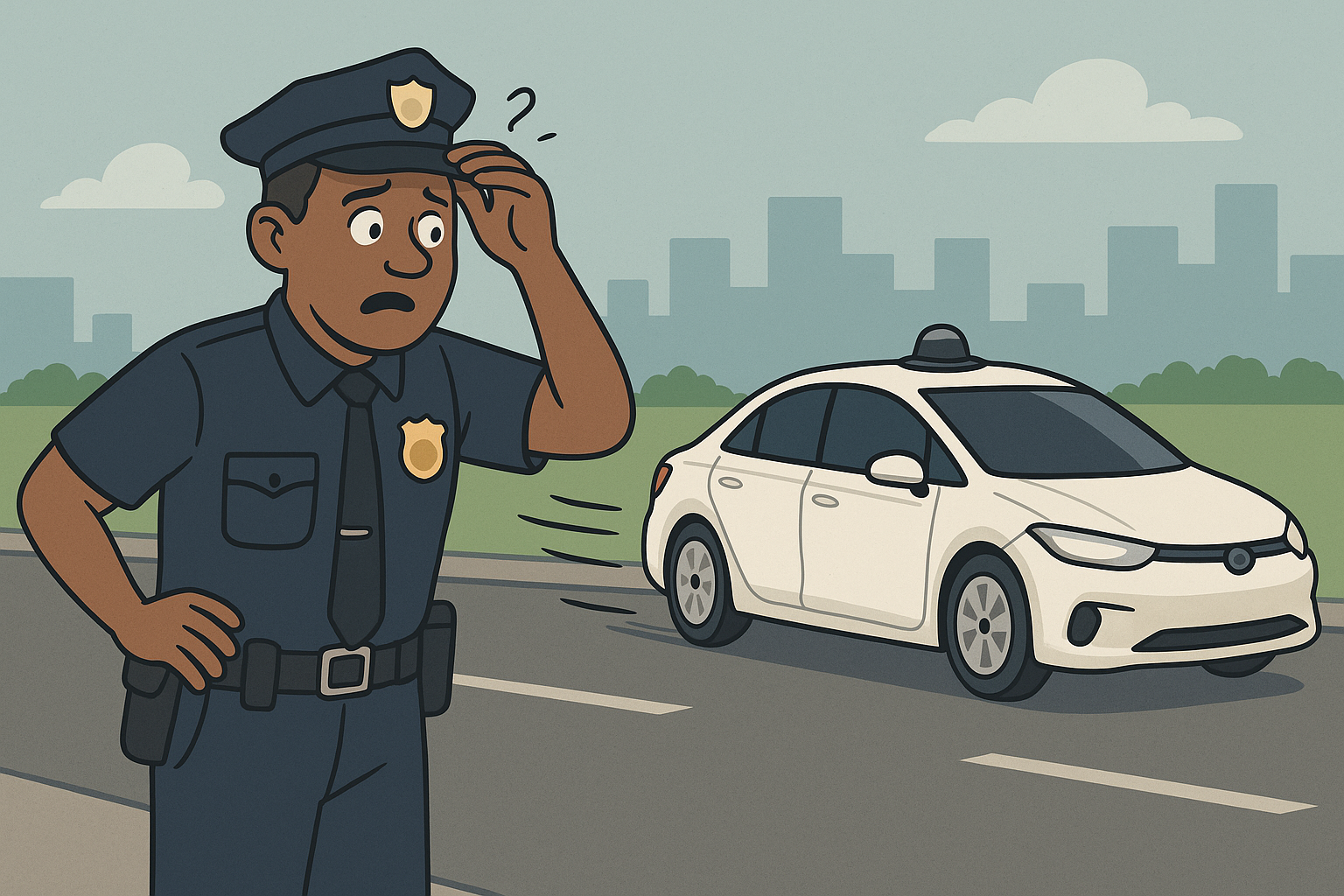
Anyone who knows me intimately knows I have been pulled over a lot in my lifetime. In my first month after transferring into Virginia State University, I was pulled over five times by the local police. I have probably paid enough in fines and court costs to fund a full-ride scholarship at many HBCUs.
Instead, I—like many African Americans (disproportionately speaking) and Americans in general—was paying into what amounts to a shadow tax system. This system is fueled not by income or property, but by police-issued traffic tickets. It’s a pay-as-you-go model for civic participation, enforced with red-and-blue lights. And while traffic violations serve a nominal safety purpose, they also feed the operational budgets of thousands of city governments and police departments across the United States.
This framework—an unspoken pact between public safety enforcement and municipal finance—is now facing an existential threat. The advent of autonomous vehicles, or AVs, promises to upend not just transportation norms, but the budgetary bedrock of American cities. And yet, amid the techno-optimism of AVs, one question remains startlingly unexamined: if machines no longer speed, run red lights, or roll through stop signs, who—or what—will fund the municipal revenue streams that traffic enforcement has long propped up?
The Traffic Ticket Economy
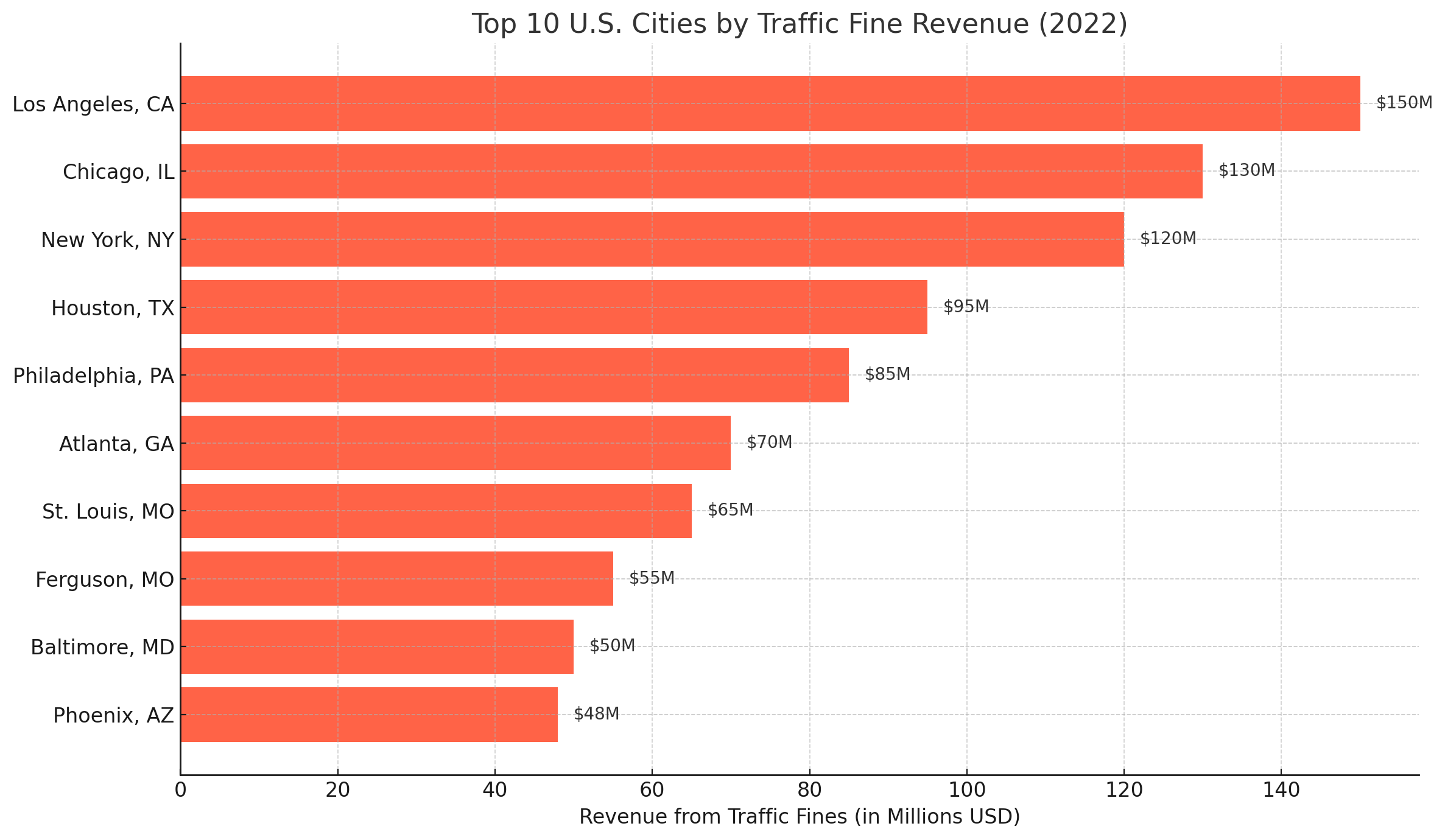
To understand the fiscal cliff approaching, it’s necessary to acknowledge just how embedded traffic tickets are in city and police budgets. A 2019 report by Governing Magazine found that nearly 600 jurisdictions across the United States relied on fines and fees for at least 10% of their general fund revenues. In 80 of those towns, fines and fees made up more than 50% of revenue. These places, like Calverton Park, Missouri, and Henderson, Louisiana, have built entire municipal ecosystems around traffic enforcement.
For many cities, especially those with shrinking tax bases or limited industry, traffic fines are a predictable stream of cash. The relationship between enforcement and revenue becomes so intertwined that police departments may face pressure explicit or implied to issue a certain number of citations. While quotas are technically illegal in many states, anecdotal and whistleblower reports have revealed otherwise.
For marginalized communities, the burden is not merely financial but psychological and systemic. A 2015 Department of Justice investigation into Ferguson, Missouri, revealed how ticketing became a weaponized form of racial control, with Black residents disproportionately stopped, cited, and incarcerated for minor traffic infractions. Thus, traffic enforcement has become more than a tool for safety it’s become a fiscal engine, a behavioral control mechanism, and a lightning rod for racial and economic justice debates.
Enter the Driverless Car
Autonomous vehicles promise to revolutionize mobility. Tech firms like Waymo, Tesla, Cruise, and Apple are jockeying to commercialize a future where cars operate without human drivers. Proponents point to fewer accidents, faster commutes, and more accessible transportation options for people with disabilities or the elderly. But AVs also promise near-perfect compliance with traffic laws. They don’t speed. They don’t drive drunk. They don’t fail to signal or get distracted by cell phones. That’s great for public safety and a death knell for traffic citation revenue.
A 2018 analysis by the Eno Center for Transportation found that AVs could eventually eliminate up to 90% of traffic-related tickets. Another study by the University of Texas estimated that driverless vehicles could reduce annual ticketing revenue by $4 billion nationally. These projections don’t even include the indirect financial losses from towing, impound fees, court costs, and driver education programs—services that exist largely to correct human error.
The Quiet Fiscal Crisis Ahead
For cities, this shift is not theoretical it’s fiscal. In a 2020 audit of San Francisco’s finances, officials warned that AV adoption could cut traffic fine revenues by 50% by 2040. In Los Angeles, ticketing generates over $150 million annually. If AVs wipe out even half of that, the city will need to either cut services or find new revenue sources. The pressure is particularly acute for small towns and municipalities that have used traffic enforcement as an economic development tool, often targeting out-of-town drivers on underposted speed traps. The loss of such income may mean layoffs for police departments, library closures, deferred maintenance, or higher property taxes. The irony is striking: a technology designed to increase safety could force cities into fiscal austerity or into finding new ways to extract revenue from increasingly law-abiding machine operators.
Policing Without Pullovers
There’s another dimension to consider: the very nature of policing may change. Much of modern American policing revolves around vehicle stops, which serve not just to enforce traffic laws, but to search for drugs, guns, warrants, and more. According to the Stanford Open Policing Project, police make over 50,000 traffic stops per day in the U.S. AVs could eliminate this cornerstone of law enforcement’s engagement with the public.
In some quarters, this is welcome news. Advocates for criminal justice reform argue that fewer stops could mean fewer racially charged confrontations, fewer unnecessary arrests, and fewer deaths. But for departments whose mission and staffing are oriented around vehicle enforcement, this creates an identity crisis.
Moreover, will police departments respond to the fiscal void by doubling down on other kinds of fines and citations—jaywalking, bicycle violations, loitering—or increasing their reliance on civil asset forfeiture, a deeply controversial practice?
The Race and Class Implications
It is critical to understand that traffic enforcement in America does not occur in a vacuum—it is deeply racialized and class-based. Poorer residents and communities of color are more likely to be pulled over, more likely to be unable to pay, and more likely to face compounded legal trouble from unpaid fines.
With AVs, which will initially be expensive and likely concentrated in wealthier areas, there’s a real risk of a dual system emerging. Rich neighborhoods may become AV utopias with safe, citation-free transport, while poorer areas continue to face heavy-handed traffic enforcement until legacy vehicles are phased out. The timeline for AV adoption may therefore exacerbate existing inequalities rather than resolve them.
Moreover, if cities try to recoup lost revenue through flat fees or usage taxes, they must be mindful of regressivity. A flat AV tax would hit lower-income users harder, even as they adopt older or shared AV technology.
The Urban Planning Ripple Effects
The decline of ticketing is only one part of the municipal financial picture AVs threaten to redraw. Consider the broader impact on urban planning and budgets: fewer accidents mean less need for emergency services, fewer parking tickets reduce municipal court dockets, fewer DUIs lessen jail populations.
This could be a moment for reallocation, not just resignation. Cities might seize the transition to AVs as an opportunity to rethink public space, reinvest savings from emergency responses into social programs, or pivot their budgetary dependencies away from punitive revenue altogether.
But it requires planning. Today, very few city budget blueprints forecast for an AV future. The conversation is dominated by curb space management, rideshare integration, and data privacy—but not budget reform. That’s a mistake.
Solutions & Proactive Policy
So, what can cities do to prepare?
- Revenue Diversification
Cities must transition away from fine-heavy fiscal models. This may mean more progressive taxation, congestion pricing, or taxing the AV platforms themselves. For instance, Chicago already taxes ride-hailing services and allocates a portion toward public transit. - Equity in AV Deployment
Cities must ensure that AV benefits don’t accrue only to the wealthy. Requiring AV companies to operate in low-income neighborhoods, share data with city planners, and contribute to mobility justice funds could ensure more inclusive outcomes. - Policing Reform
As traffic stops decline, cities can reassign officers to community service roles, behavioral crisis teams, or investigative units. AVs could accelerate the conversation on demilitarizing the police and moving toward public safety models that are less reliant on confrontation. - Participatory Budgeting
Cities should engage residents directly in conversations about how budgets are shaped, especially when long-standing revenue streams (like traffic fines) begin to disappear. Participatory budgeting can align spending with community values rather than institutional inertia. - AV Fee Structures
Some cities may introduce per-mile AV taxes or vehicle occupancy incentives. If structured well, these can offset lost ticket revenue while promoting sustainable transport behavior. - State-Level Oversight
In many states, traffic fine revenue is capped or partially redirected. Legislatures could intervene to mandate revenue neutrality, preventing cities from replacing one predatory revenue model with another.
The Way Forward
As with many shifts in technology, the arrival of AVs has triggered excitement about safety, efficiency, and innovation. But few are sounding the alarm about what is lost—especially for cities and police departments whose fiscal models were quietly built on human error and punishment.
That’s not to say traffic enforcement should be mourned. For many, it has been more punitive than protective, a reminder of how racial and economic disparities are built into the bones of urban governance. AVs could offer a reprieve.
But only if cities prepare. Only if we confront the uncomfortable reality that public budgets were sustained by bad behavior—and begin the work of replacing that scaffolding with something more just, more sustainable, and more transparent.
The driverless car is coming. Whether cities crash into that future or coast into it smoothly depends on what they do now—not when the last human foot presses a gas pedal, but long before.
Disclaimer: This article was assisted by ChatGPT

