
Tag Archives: African American

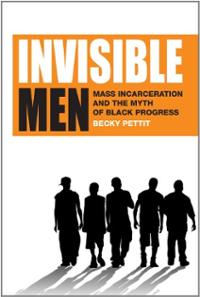
HBCU Money™ Business Book Feature – Invisible Men: Mass Incarceration and the Myth of Black Progress

invisible-men-mass-incarceration-myth-black-progress-becky-pettit-hardcover-cover-art

For African American men without a high school diploma, being in prison or jail is more common than being employed–a sobering reality that calls into question post–Civil Rights era social gains. Nearly 70 percent of young black men will be imprisoned at some point in their lives, and poor black men with low levels of education make up a disproportionate share of incarcerated Americans. In Invisible Men, sociologist Becky Pettit demonstrates another vexing fact of mass incarceration: most national surveys do not account for prison inmates, a fact that results in a misrepresentation of U.S. political, economic, and social conditions in general and black progress in particular. Invisible Men provides an eye-opening examination of how mass incarceration has concealed decades of racial inequality.

Pettit marshals a wealth of evidence correlating the explosion in prison growth with the disappearance of millions of black men into the American penal system. She shows that, because prison inmates are not included in most survey data, statistics that seemed to indicate a narrowing black-white racial gap–on educational attainment, work force participation, and earnings–instead fail to capture persistent racial, economic, and social disadvantage among African Americans. Federal statistical agencies, including the U.S. Census Bureau, collect surprisingly little information about the incarcerated, and inmates are not included in household samples in national surveys. As a result, these men are invisible to most mainstream social institutions, lawmakers, and nearly all social science research that isn’t directly related to crime or criminal justice. Since merely being counted poses such a challenge, inmates’ lives including their family background, the communities they come from, or what happens to them after incarceration are even more rarely examined. And since correctional budgets provide primarily for housing and monitoring inmates, with little left over for job training or rehabilitation, a large population of young men are not only invisible to society while in prison but also ill-equipped to participate upon release.

Invisible Men provides a vital reality check for social researchers, lawmakers, and anyone who cares about racial equality. The book shows that more than a half century after the first civil rights legislation, the dismal fact of mass incarceration inflicts widespread and enduring damage by undermining the fair allocation of public resources and political representation, by depriving the children of inmates of their parents’ economic and emotional participation, and, ultimately, by concealing African American disadvantage from public view.

Becky Pettit is professor of sociology at the University of Washington.

African America’s April Unemployment Report -13.2%

jobs_pic

Overall Unemployment: 7.5% (7.6%)

African America Unemployment: 13.2% (13.3%)

Latino America Unemployment: 9.0% (9.2%)

European America Unemployment: 6.7% (6.7%)

Asian America Unemployment: 5.1% (5.0%)

Analysis: The overall unemployment rate is down. African and Latino America were the only communities to see a decline in their rates. An extremely rare occurrence. European America was unchanged and Asian America saw a slight uptick. African America continues to be the only group with double digit unemployment.

African American Male Unemployment: 12.6% (12.7%)

African American Female Unemployment: 11.6% (12.2%)

African American Teenage Unemployment: 40.5% (33.8%)

African American Male Participation: 67.4% (68.1%)

African American Female Participation: 62.3% (61.3%)

African American Teenage Participation: 27.5% (27.6%)

*Previous month in parentheses.

Analysis: Men and women groups saw declines in their unemployment rates. The teenage group saw almost a 20 percent rise in their unemployment rate from last month. Participation rates saw a promising rise for women while men saw a weighty drop. The African American teenage participation rate remain fairly unchanged.

Conclusion: America overall added only 165 000 jobs in the month of April. African America netted 99 000 new jobs. African American men and teenagers loss 51 000 and 49 000 new jobs, respectively. Thankfully, African American women experienced a net of 199 000 jobs. For the third month in a row African America has seen an overall increase in employment. African American women by far the most important economic group in African America is experiencing its highest employment in the past 5 months. African American men are still above their 5 months low but starting to trend downward in their employment numbers. The participation rate for men has reached its 5 month low while the women has reached its second highest participation rate over the past 5 months. The teenage group’s employment continues to be erratic, unstable, and appears to be trending downward. The group (women) that is the most economically important is also the most economically burdened carrying much of African America’s fate on its shoulders and once again appears to be finding that weight trending upward. Overall, participation is at its second highest rate in the past 5 months. Whether that can be maintained while bringing the men and teenage groups back into the fold to spread the economic burden is yet to be seen. The sequester while taking its toll has not been as negatively impactful as originally thought given African America’s dependency on public sector employment. While things do seem to be getting better or at the very least not getting worse, in order for African America to even reach a 9.9 percent unemployment rate it would need to add 600 000 jobs.

The HBCU Money™ Weekly Market Watch

Our Money Matters /\ May 3, 2013

NAME TICKER PRICE (GAIN/LOSS %)

African American Publicly Traded Companies

Citizens Bancshares Georgia (CZBS) $5.40 (0.00% UNCH)

Radio One (ROIA) $1.50 (0.00% UNCH)

African Stock Exchanges

Bourse Regionale des Valeurs Mobilieres (BRVM)  191.66 (0.83% UP)

Botswana Stock Exchange (BSE)  N/A (N/A)

Ghana Stock Exchange (GSE)  1 799.91 (50.03% UP)*

Nairobi Stock Exchange (NSE)  120.06 (N/A)

Johannesburg Stock Exchange (JSE) 39 592.28 (1.30% UP)

International Stock Exchanges

New York Stock Exchange (NYSE) 9 357.74 (1.20% UP)

London Stock Exchange (LSE)  3 435.66 (0.96% UP)

Tokyo Stock Exchange (TOPIX)  1 153.28 (0.44% DN)

Commodities

Gold 1 464.00 (0.25% DN)

Oil 95.65 (1.77% UP)

*Ghana Stock Exchange shows current year to date movement. All others daily.

All quotes reported as of 2:00 PM Eastern Time Zone

HBCU Money™ Business Book Feature – Chicago Defender (Images of America)

9780738561240_p0_v1_s260x420

In 1905, what was to be the largest and most influential black newspaper in the country was born. The Chicago Defender began as a weekly newspaper and led an entire race to leave the oppressive South for a better life in the North. At the helm was one man with a vision and purpose and a slogan that said it all: American race prejudice must be destroyed. Robert Sengstacke Abbott began the Chicago Defender with 25¢ and a dream in his landladys kitchen. The Defender boasted a circulation of more than 230,000 nationally as the newspaper was secretly delivered by Pullman porters to cities everywhere. Almost overnight, Abbott became one of the few black millionaires of his time. By 1920, the Defender tagline was the Worlds Greatest Weekly. The story of the Defender is one of inspiration, struggles, and triumphs and of dreams coming true. It became a beacon and voice for those who for years had no voice. The Defender produced talents such as Langston Hughes, Gwendolyn Brooks, and W. E. B. DuBois. In 1940, Abbotts nephew John H. H. Sengstacke took over as publisher, and by 1956, the Defender was a daily newspaper.

2012’s Top Ten Earning African Americans

oprah_winfrey_amazon_kindle

The top ten earning African Americans earned approximately $700 million last year. It should be noted that these are pre-tax and pre-fee earnings. Because the majority of African America’s highest earners still earn their money through sports and entertainment their earnings are considered earned income by IRS definition and taxed at the highest tax rate which this year is almost 40 percent. Couple that with their agent fees (byproduct of being in the entertainment industry is a need for endless amounts of handlers) that average in the range of 10 percent, the group of ten will pay out almost 50 percent of their earnings. Chris Rock is famously quoted as saying “Shaq is rich, the white man who signs his check….is wealthy.” The income disparity between the top ten earning African Americans and European Americans is a staggering $0.07 for every $1.00 while the overall income gap between African Americans is $0.52 and $0.62 versus Asian Americans and European Americans, respectively.

1 – Oprah Winfrey

Salary: $165 million

Source: Ms. Winfrey owns Harpo, Inc. which owns 50 percent of OWN. OWN which has operated in the red since its inception is estimated to break even this fiscal year. Thankfully, Ms. Winfrey still profits greatly from syndicated shows under her company such as Dr. Phil and others.

2 – Andre Young

Salary: $110 million

Source: Better known as Dr. Dre, his place as the number two spot is due to a one-off moment where HTC paid $300 million for a majority stake in the company that operates the headphones that carry his name Beats By Dr. Dre. Mr. Young owned one-third of the company at the time of the sale.

3 – Tyler Perry

Salary: $105 million

Source: Movies

4 – LeBron James

Salary: $53 million

Source: Miami Heat and endorsements

5 – R. Rihanna Fenty

Salary: $53 million

Source: Music and endorsements

6- Kobe Bryant

Salary: $50 million

Source: Los Angeles Lakers and endorsements

7 – Sean Combs

Salary: $45 million

Source: Endorsements, Clothing, Marketing

8 – Floyd Mayweather

Salary: $40 million

Source: Boxing

9 – Beyonce Carter

Salary: $40 million

Source: Music, endorsements, clothing

10 – Shawn Carter

Salary: $38 million

Source: Music, endorsements, marketing, invest

Source: Forbes