African America’s November Jobs Report – 8.6%

jobs

Overall Unemployment: 4.6% (4.9%)

African America Unemployment: 8.1% (8.6%)

Latino America Unemployment: 5.7% (5.7%)

European America Unemployment: 4.2% (4.3%)

Asian America Unemployment: 3.0% (3.4%)

Previous month in parentheses.

Analysis: Overall unemployment dropped 30 basis points to its lowest since August 2007. All groups except Latino America saw a decline in their unemployment rate, who saw their unemployment rate go unchanged. African, Asian, and European America saw declines of 50, 40, and 10 basis points, respectively.

African American Male Unemployment: 7.7% (8.7%)

African American Female Unemployment: 7.1% (7.1%)

African American Teenage Unemployment: 26.6% (27.6%)

African American Male Participation: 67.5% (67.5%)

African American Female Participation: 62.6% (62.3%)

African American Teenage Participation: 28.0% (28.3%)

Analysis: African American men saw a 100 basis point decrease in their unemployment and no change in their participation rate. African American women saw no change in their unemployment rate and 30 basis point increase in their participation rate. African American teenagers saw a 100 basis point decrease in their unemployment rate and a 30 basis point decrease in their participation rate.

CONCLUSION: The overall economy added 178 000 jobs in November. A noticeable difference from the 161 000 in October. African America added a substantial 154 000 jobs in November. Leading to the highest African American employed numbers in the past five months. Unfortunately, despite such robust jobs growth in the month, the participation rate for African American moved only 10 basis points. The participation rate simply refusing to break from this five month bandwidth. All key variables were in the green in an unprecedented fashion, participation rate aside. The labor force increased, employed increased, and unemployed went down. December looms with a rate hike on the horizon and just how it will impact economic planning by small and big businesses alike will not be known for months. The psychological impact of the moment alone will be of significant given one has not happen in almost ten years. Also of note, for the first time since December of 2015, average hourly earnings took a dip.

African America currently needs 505 000 jobs to match America’s unemployment rate. A decrease of 218 000 jobs from October.


HBCU Money™ Business Book Feature – The Curse Of Cash

51bsc1wx1l

From the New York Times bestselling author of This Time Is Different, “a fascinating and important book” (Ben Bernanke) about phasing out most paper money to fight crime and tax evasion–and to battle financial crises by tapping the power of negative interest rates

The world is drowning in cash–and it’s making us poorer and less safe. In The Curse of Cash, Kenneth Rogoff, one of the world’s leading economists, makes a persuasive and fascinating case for an idea that until recently would have seemed outlandish: getting rid of most paper money.

Even as people in advanced economies are using less paper money, there is more cash in circulation–a record $1.4 trillion in U.S. dollars alone, or $4,200 for every American, mostly in $100 bills. And the United States is hardly exceptional. So what is all that cash being used for? The answer is simple: a large part is feeding tax evasion, corruption, terrorism, the drug trade, human trafficking, and the rest of a massive global underground economy.

As Rogoff shows, paper money can also cripple monetary policy. In the aftermath of the recent financial crisis, central banks have been unable to stimulate growth and inflation by cutting interest rates significantly below zero for fear that it would drive investors to abandon treasury bills and stockpile cash. This constraint has paralyzed monetary policy in virtually every advanced economy, and is likely to be a recurring problem in the future.

The Curse of Cash offers a plan for phasing out most paper money–while leaving small-denomination bills and coins in circulation indefinitely–and addresses the issues the transition will pose, ranging from fears about privacy and price stability to the need to provide subsidized debit cards for the poor.

While phasing out the bulk of paper money will hardly solve the world’s problems, it would be a significant step toward addressing a surprising number of very big ones. Provocative, engaging, and backed by compelling original arguments and evidence, The Curse of Cash is certain to spark widespread debate.

The Fed & Tech Week In Review – 12/3/16

zu3yfgjbqpaifw5vkjxp

Every Saturday the HBCU Money staff picks ten articles they were intrigued by and think you will enjoy for some weekend reading impacting finance and tech.

Study, work, retire. Time to scrap the old pattern of working life l @wef wef.ch/2gHgdLg

1/4 of global energy-related GHG emissions come from transport. l @WorldBankwrld.bg/zmDr3003A2O

Alexander, Who Use To Be Rich Last Sunday teaches about opportunity cost and spending l@council4econed bit.ly/270jvuK

Natural disasters hamper growth and make it harder for the poor to escape poverty. Solutions? l @WorldBankAfrica wrld.bg/kodn306sJsd

We can recycle everything we use, including cigarette butts and toothbrushes. So why don’t we? @wef wef.ch/2fMHkAt

Physics may be a small but crucial fraction of our reality l @newscientist newscienti.st/2g4nuDC

Eleven cities that are showing the way on fighting climate change l @renewablecities buff.ly/2gfWuOY

ESA approves 2020 ExoMars rover despite crash earlier this year l @newscientist newscienti.st/2gS77c1

Nikola Motor Company Unveiling — Details On “Zero Emissions” Semi Truck l @cleantechnica ow.ly/Hmqn306MkGe

Hubble uses galactic lens to study universe’s first stars l @sciencemagazine ow.ly/UCdA306Mll6

The Fed & Tech Week In Review – 11/26/16

zu3yfgjbqpaifw5vkjxp

Every Saturday the HBCU Money staff picks ten articles they were intrigued by and think you will enjoy for some weekend reading impacting finance and tech.

Why you might not be as old as you think you are wef.ch/2g2fpOl #ageing

What role do governments play in creating #jobs?  wrld.bg/rvWU306t3PG

Is there a link between rises in oil prices and rises in food prices? bit.ly/2f7UADA

How do you remove five trillion pieces of plastic waste from the Pacific Ocean? wef.ch/2f4jij8

This map shows how undersea cables move internet traffic around the world wef.ch/2gDMCCq

Buckingham Palace Might Go Solar In £369 Million Refit ow.ly/ShW1306vCB5

Africa’s tallest tree measuring 81m found on Mount Kilimanjaro bit.ly/2fW6Ar3

Deepest water found 1000km down, a third of way to Earth’s core bit.ly/2fW8APZ

U.S. sets plan to build two exascale supercomputers ow.ly/7Z8V306vDAU

How @google overtook @Apple in education  ow.ly/3EmO306vDXy


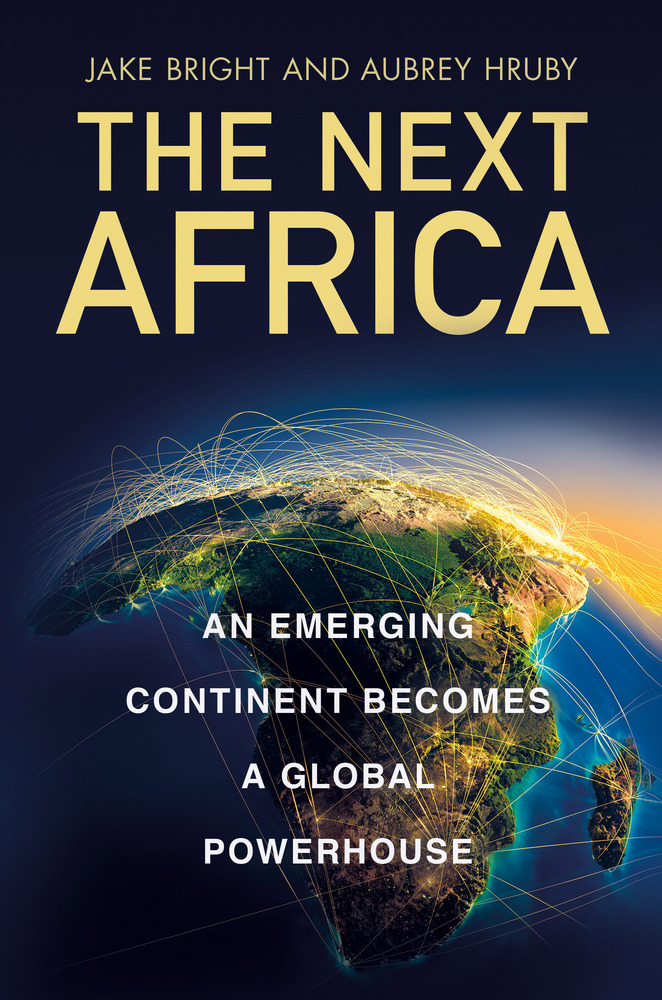
HBCU Money™ Business Book Feature – The Next Africa: An Emerging Continent Becomes a Global Powerhouse

9781250063717

The Next Africa, an Axiom Best Business Book Award winner, will change the way people think about the continent. The old narrative of an Africa disconnected from the global economy, depicted by conflict or corruption, and heavily dependent on outside donors is fading. A wave of transformation driven by business, modernization, and a new cadre of remarkably talented Africans is thrusting the continent from the world’s margins to the global mainstream.

In the coming decades the magnitude of Africa’s markets and rising influence of its people will intersect with other key trends to shape a new era, one in which Africa’s progress finally overshadows its challenges, transforming an emerging continent into a global powerhouse. The Next Africa captures this story.

Authors Jake Bright and Aubrey Hruby pair their collective decades of Africa experience with several years of direct research and interviews. Packed with profiles; personal stories, research and analysis, The Next Africa is a paradigm-shifting guide to the events, trends, and people reshaping Africa’s relationship to the world.

Bright and Hruby detail the cross-cutting trends prompting Silicon Valley venture capital funds and firms like GE, IBM, and Proctor & Gamble to make major investments in African economies, while describing how Africans are stimulating Milan runways, Hollywood studios, and London pop charts.

The Next Africa introduces readers to the continent’s burgeoning technology movement, rising entrepreneurs, groundbreaking philanthropists, and cultural innovators making an impact in music, fashion, and film. Bright and Hruby also connect Africa’s transformation to its contemporary immigrant diaspora, illustrating how this increasingly affluent group will serve as the thread that pulls the continent’s success together.

Finally, The Next Africa suggests a fresh framework for global citizens, public policy-makers, and CEOs to approach Africa. It will no longer be “The Hopeless Continent”, nor will it become an overnight utopia. Bright and Hruby offer a more nuanced, net-sum, and data-rich approach to analyzing an increasingly complex continent, reconciling its continued challenges with rapid progress.

The Next Africa describes a future of a more globally-connected Africa where its leaders and citizens wield significant economic, cultural, and political power–a future in which Americans will be more likely to own African stocks, work for companies doing business in Africa, buy African hits from iTunes, see Nigerian actors win Oscars, and learn new African names connected to tech moguls and billionaires.