
HBCU Money™ B-School: Accredited Investor

Accredited Investors Under the Securities Act of 1933, a company that offers or sells its securities must register the securities with the SEC or find an exemption from the registration requirements. The Act provides companies with a number of exemptions. For some of the exemptions, such as rules 505 and 506 of Regulation D, a company may sell its securities to what are known as “accredited investors.” The federal securities laws define the term accredited investor in Rule 501 of Regulation D as:

  1. a bank, insurance company, registered investment company, business development company, or small business investment company;
  2. an employee benefit plan, within the meaning of the Employee Retirement Income Security Act, if a bank, insurance company, or registered investment adviser makes the investment decisions, or if the plan has total assets in excess of $5 million;
  3. a charitable organization, corporation, or partnership with assets exceeding $5 million;
  4. a director, executive officer, or general partner of the company selling the securities;
  5. a business in which all the equity owners are accredited investors;
  6. a natural person who has individual net worth, or joint net worth with the person’s spouse, that exceeds $1 million at the time of the purchase, excluding the value of the primary residence of such person;
  7. a natural person with income exceeding $200,000 in each of the two most recent years or joint income with a spouse exceeding $300,000 for those years and a reasonable expectation of the same income level in the current year; or
  8. a trust with assets in excess of $5 million, not formed to acquire the securities offered, whose purchases a sophisticated person makes.
http://www.sec.gov/answers/accred.htm

HBCU Students Need Experience? Try a Start-Up or Small Business

“You can employ men and hire hands to work for you, but you will have to win their hearts to have them work with you.” — William J.H. Boetcker

One of the biggest problems that face HBCU students is getting a job after graduation. This is for a myriad of reasons. One of which is lack of experience. Many students will spend their summer taking summer classes or working part-time jobs unrelated to their field as opposed to doing internships. This is a time when they could be gaining real world work experience to put on their resume. Now in many cases students must work jobs that pay because of a host of financial issues that continuously plague African America. However, that doesn’t change the need for experience in your field and the ways one could go about obtaining it.

HBCUs aren’t typically target schools for European American owned corporations and their recruiters as a whole nor should we expect to be. Some of why that is I tackled in African-American Unemployment: An Easy Answer With Hard Means a few years ago. There are a few exceptions but exceptions (and even those have a quota) and not the rule is leaving most of our students not honing their skills during the summer (or during the semester) in an economic environment where experience is becoming even more crucial to have on one’s resume upon graduation.

To resolve this students and HBCUs can tackle this in a number of different ways. First HBCUs need to make an internship in one’s field a requirement for graduation. Then start to compile a list of start-up companies near the school and by near I mean a 45 mile radius. This would allow for a number of different things to transpire. First it would allow the school to generate new relationships with the private sectors near them which could lead to economic and political influence, future sponsorships, and future long-term employment for their students. It provides free labor for these companies who in many cases are bootstrapping but need workers. It would also generate summer revenue for HBCUs whereby students would need summer housing and transportation assuming the student did not have their own could be an additional service provided by the HBCU. For the student it provides invaluable experience and the beginning of building their network. It could lead to permanent employment immediately upon graduation assuming the company is in position to do so or it could give the student a leg up when they start applying to larger and more established firms. There is also the flexibility that start-ups have for their interns. In many instances the internships can exist remotely, during school semesters, and part-time if no more than just on the weekends. Its all still experience for the student and relationships building with a company and the network of people that the founder(s) of that company know. The beauty of start-up firms is because they have so many holes to fill the students will get experience in many different areas and a chance to contribute in a significant way to the growth of the company even as just an intern something that is not likely to happen at working at more established firms where the chance to work in the office next to the President or CEO is highly unlikely.

There are 1.9 million African American owned companies of which a staggering 1.8 million have only one employee. This is a problem but presents a great opportunity for HBCUs. A minute number of African Americans work for African American owned companies. That means the majority of our labor capital is building up the wealth of someone else’s businesses. It also means our businesses are in need of labor that can help them grow with ideas and energy. With our unemployment always twice what the national rate in good AND bad economies this is in large from our dependency in relying on other communities to supply our employment instead of providing it ourselves. There is also the issue of how long our students are going before they become employed after graduation which has long-term implications on our ability to generate accumulate capital and generate wealth.

I know my company for one is always looking for good HBCU students to serve as interns. The more interconnected a spider web is the stronger it is. We need to build a more interconnected web of African American companies and HBCUs and then reach out to our African Diaspora brethren. Let’s build a stronger web together.

Mr. Foster is the Interim Executive Director of HBCU Endowment Foundation, sits on the board of directors at the Center for HBCU Media Advocacy, & President of AK Companies, Inc. A former banker & financial analyst who earned his bachelor’s degree in Economics & Finance from Virginia State University as well his master’s degree in Community Development & Urban Planning from Prairie View A&M University. Publishing research on the agriculture economics of food waste as well as writing articles for other African American media outlets.

African American Optimum Investment Portfolio

Wealth is a great thing to have and a great thing to share. – Harold Honickman

Not sure how to invest your money in these perilous times? I’ve created a portfolio that you and your family can aspire to build over the long-term. African Americans can’t invest like our counterparts because our need to still develop wealth is high. Other groups also have the advantage of resources either multi-generational or able to receive reverse remittances from their home countries.  Therefore, we won’t be able to hold as large of cash positions as typically recommended. This presents some very tricky problems with hard assets in a lot of cases not producing a lot of cash in the short-term but having much greater long-term appreciation. “Cash is King” as my old entrepreneurship teacher use to say so don’t get over zealous when deploying your cash position into hard assets. At least 8% cash position is always needed and if you’re less risky don’t be afraid to bump it up to 15%. Especially in these uncertain times.

The breakdown of the portfolio consist of two parts. The asset class itself like cash and then the vehicle breakdown of which that asset should be deployed. Any questions feel free to put them in the comment section. Build wise. Build strong.

Cash (Checking, Money Market, & Cash Alternatives) – 8%

Checking 40% l Money Market 30% l Cash Alternatives 30%

Fixed Income (Corporate Bonds, Muni Bonds, Junk Bonds) – 10%

Corporate 55% l Muni 35% l Junk 10%

Alternative Investments (Hedge Funds, Collectibles, and Metals) – 4%

Collectibles 50% l Metals 50%

Stocks & Index Funds (Africa, BRIC, and Euro/US) – 28%

Africa 45% l BRIC 35% l Euro/US 20%

Real Estate (Rental Property & Land) – 23%

Rental Property 65% l Land 35%

Private Equity (Entrepreneurship/Franchises) – 17%

Philanthropy (Non-Profit Investing) – 10%

Childhood Education Programs 50% l African American Arts 25% l HBCUs 25%

INVESTMENT ACCOUNTS (Limits):

ROTH IRA ($5000/year)

401K ($16,500/year)

BROKERAGE ACCOUNT (Unlimited)

ROTH IRA FOR MINORS ($5000/year)

529 PLAN ($200,000)*

*Max contribution to the account over the lifetime of its existence.

Men Lie, Women Lie – Numbers Don’t: The Financial State of African America

By William A. Foster, IV

“Money, it turned out, was exactly like sex; you thought of nothing else if you didn’t have it and thought of other things if you did.” – James Baldwin

It appears that many of us simply just don’t know how BAD things are. We get blinded by a few and I do mean a few success stories and start confusing the exception to the rule as the rule. There is also the purveying confusion of many of us between wealth and income. That someone who makes millions is indeed a millionaire – even though MC Hammer & Mike Tyson remind us otherwise. So let’s take a look at some of the hard numbers when it comes to the state of African America’s financials.

  • African Americans median net worth $2,170 vs. European Americans median net worth $97,860. (Source: Economic Policy Institute)
  • Top 10 African American colleges & universities endowments have combined $1.3 billion in endowment. Top 10 European American colleges & universities endowments have combined $120 billion. (Source: NACUBO)
  • Top 10 African American colleges & universities research expenditures are a combined $349.2 million. Top 10 European American colleges & universities research expenditures are a combined $16.4 billion or 46 times greater. (Source: National Science Foundation)
  • Only 5% of African Americans work for African American owned companies. (Source: U.S. Census Bureau)
  • Only 135,525 African American owned firms out of 1,921,864 have sales of more than $100,000 annually. (Source: U.S. Census Bureau)
  • African Americans present in the Forbes 400 wealthiest Americans – 1 (Source: Forbes)
  • Only $5.6 billion of African America’s $1.1 trillion buying power sits in African American owned banks or 0.51%. (Source: Black Enterprise)
  • African American median monthly savings $189 vs. European American median monthly savings $367. (Source: Ariel Capital)
  • African Americans participating in the stock market 60% vs. European Americans participating in the stock market 79%. (Source: Ariel Capital)
  • African American land ownership in early 20th century was between 16-19 million acres. Recent African American land ownership stands at 7.7 million acres. (Source: Federation of Southern Cooperatives)

This is our reality despite what African American rappers tell us about their “ballin” in which next to none of them are “ownin”. Yes, even with Oprah our wealth as a whole is still only $0.02 for every $1.00 of European Americans. Asian Americans prior to the 2008 financial crisis were actually the wealthiest Diaspora group in America. Latino Americans have already surpassed us in wealth. Few of us even conduct ourselves as if we are in a crisis. Sadly, our business as usual will get our usual results. African America would not even qualify as a developing economy. The improvement (or worsening) of these numbers will determine the world we leave to our families, communities, and future generations. Indeed, they will either thank us or curse us.

Mr. Foster is the Interim Executive Director of HBCU Endowment Foundation, sits on the board of directors at the Center for HBCU Media Advocacy, & President of AK Companies, Inc. A former banker & financial analyst who earned his bachelor’s degree in Economics & Finance from Virginia State University as well his master’s degree in Community Development & Urban Planning from Prairie View A&M University. Publishing research on the agriculture economics of food waste as well as writing articles for other African American media outlets.

Oprah Winfrey’s New Gig: NFL Owner

By William A. Foster, IV

“If we command our wealth, we shall be rich and free; if our wealth commands us, we are poor indeed.” – Edmund Burke

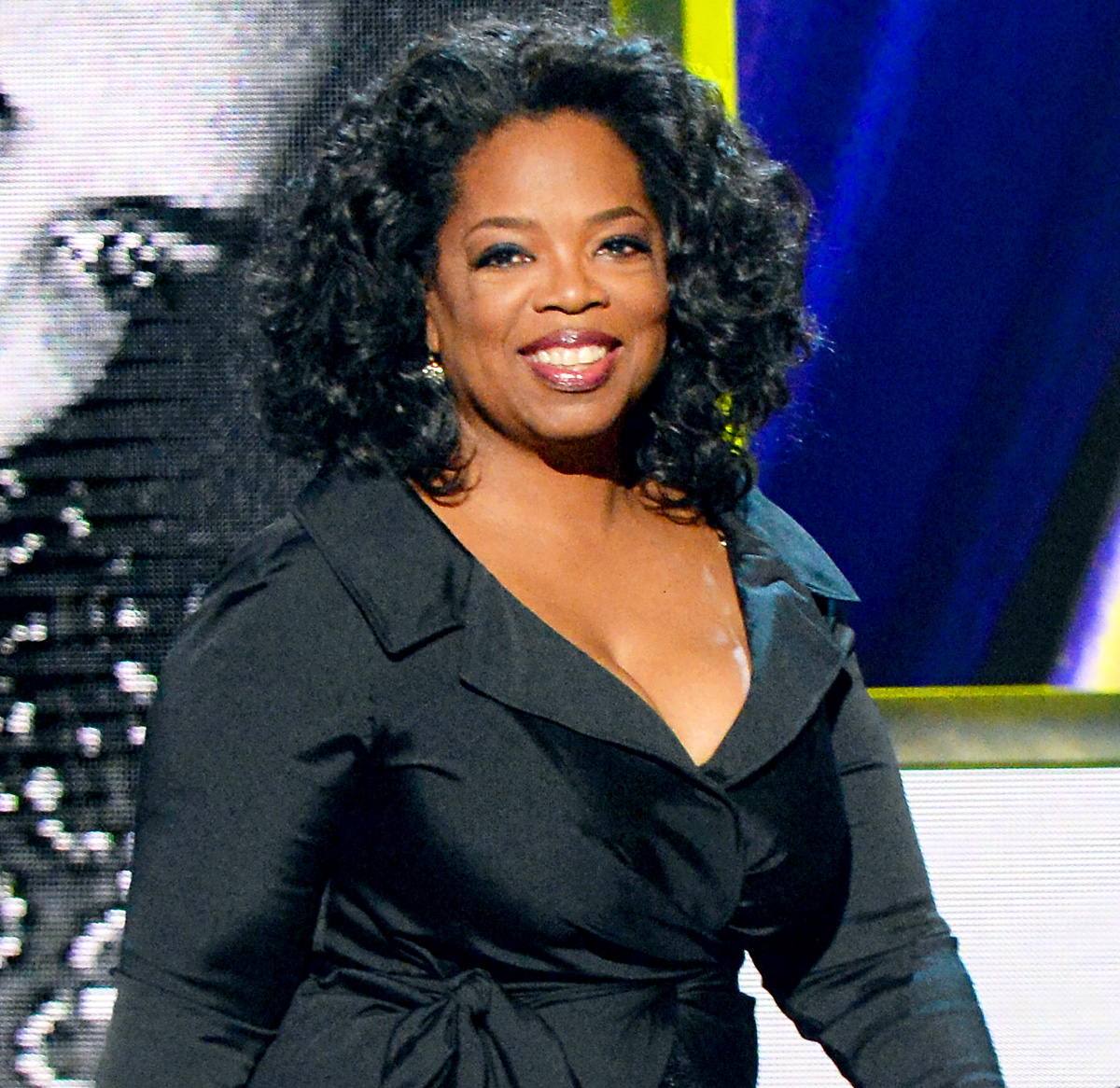
1374769076_166949325_oprah-winfrey-zoom


Roger Goodell and the NFL seem pretty intent on putting a team back in Los Angeles (if not two). Now for the life of me I have no idea why they insist on a city where they’ve failed in just my lifetime more times than I’m even going to try and remember for the sake of my sanity. Of course they’ve even tossed around the horrible idea of putting a team in London as well. All of the ideas to some degree make my head hurt. The NFL is not a global sport. It’s a U.S. one. Learning and accepting one’s limitations are a great key to long-term success in life and business. The only two global team sports with a ball in my opinion for a myriad of reasons are basketball and futbol. The latter which has yet to take hold here in the U.S. but was one of only three sports to see a rise in youth sports participation, the other two being football which is no surprise and hockey – go figure, over the past decade with youth participation being a strong trend indicator of changing attitudes and demographics. To note soccer has more youth participants than hockey and football combined, with soccer having 13.6 million versus 12 million for football and hockey. So in the long-term it appears soccer is taking hold and in the short-term football is still king as noted by the almost 20% rise in youth participation in football versus only a 5.3% in soccer. Just for good measure to check the financial health of the NFL it should also be noted that the two team expansion will net each of the current 32 owners a check of about $67 million each.

This all leads me to the point of my article. If the NFL is going to expand with two new teams it is more than time for it to have its first African American majority owner and maybe its first two. There is some large irony that 65 years after Branch Rickey killed the Negro Leagues, with our help I might add, by bringing Jackie Robinson over to the Dodgers and essentially watching European American owners drain Negro League owners, the majority of whom were African Americans, of the better talent between the two leagues and yet no ownership was extended or merger was ever suggested that we have but one majority owner between the ninety-two major sports teams in the United States. It was in 2005 the last time the NFL almost had its first African American majority owner when Arizona businessman Reggie Fowler was going to attempt to buy the Minnesota Viking from Red McCombs. The deal would fall through though because as Red McCombs himself is quoted as saying “he had plenty of net worth, but there was not enough liquidity”. This is one of the many difficulties as African Americans build their net worth we tend to acquire hard assets which over the long-term will have strong appreciation but tend to have to leverage up at the expense of our soft assets like cash and cash equivalents in the short-term. Most of us can’t even imagine having the kind of the liquid cash in our everyday bank account that the very wealthy have but if you need to see an example just take a look at hedge fund manager David Tepper’s ATM receipt that was found where the balance in his savings account was almost $100 million. Yes, I said his savings account. You know the “rainy” day account or the emergency fund. Ironically it’s possibly not even that amount of liquidity would suffice for the NFL. In my own business experience most business franchises require a 25-30% cash position of the project. At the current estimates the new NFL teams will sale for around $1 billion, the prospective owner will need to have in the neighborhood of $300 million liquid. A look at the landscape there seems to be only one African American who would fit the criteria. Oprah.

The NFL office should pick up the phone and solicit Ms. Oprah Winfrey’s interest in owning a team. Yes, you heard me right. Actually I gave it away in the title but that’s not the point. Oprah Winfrey, the only African-American billionaire currently, has a net worth of $2.7 billion according to Forbes. Now, on the safe side assuming she has only a basic recommended 10% liquidity position in her portfolio, which in these current economic times would be rather foolish, she would have $270 million in liquidity more than giving her qualifying capability to purchase a NFL team. Let’s also face it the Oprah Effect is real as noted by CNBC. She has the Midas touch and her presence in the NFL would be no different. Another point to be noted is also the NFL fan base is dare I say now run by women – 60 million of them. There is also no denying that with shifting demographics in who is controlling the family purse strings is actually the person with well the purse and not the wallet into today’s changing landscape of who is making family purchasing decisions. Yes, the female consumer is to be reckoned with. Oprah, who even if some women don’t like, almost all respect for her story, journey, and tenacity as a businesswoman. Did I mention Oprah has her OWN network? The possibilities here are endless and I do mean endless.

It is not time for an African American owner. It is beyond time. For major sports like basketball and football whose labor pool is made up of over 70% African Americans it is shameful that the ownership pool has a mere 1 out of 62 (1.6%) owners that are African American. Do the right thing NFL and call Oprah. I’ll look for my consultant check in the mail.

Mr. Foster is the Interim Executive Director of HBCU Endowment Foundation, sits on the board of directors at the Center for HBCU Media Advocacy, & President of AK Companies, Inc. A former banker & financial analyst who earned his bachelor’s degree in Economics & Finance from Virginia State University as well his master’s degree in Community Development & Urban Planning from Prairie View A&M University. Publishing research on the agriculture economics of food waste as well as writing articles for other African American media outlets.