African America’s January Jobs Report – 10.3%

jobs_pic

Overall Unemployment: 5.7% (5.6%)

African America Unemployment: 10.3% (10.4%)

Latino America Unemployment: 6.7% (6.5%)

European America Unemployment: 4.9% (4.8%)

Asian America Unemployment: 4.0% (4.2%)

Previous month in parentheses.

Analysis:The overall unemployment saw an increase of 10 basis points. African and Asian America saw declines of 10 and 20 basis points, respectively. European and Latino America saw increases of 10 and 20 basis points, respectively. African America continues to be the only group with double digit unemployment.

African American Male Unemployment: 10.6% (11.0%)

African American Female Unemployment: 8.7% (8.2%)

African American Teenage Unemployment: 29.7% (33.2%)

African American Male Participation: 67.1% (67.8%)

African American Female Participation: 61.3% (61.2%)

African American Teenage Participation: 27.9% (29.0%)

Previous month in parentheses.

Analysis: African American males saw a decrease in both their unemployment rate and participation rate of 40 and 70 basis points, respectively. African American females saw increases in both their unemployment rate and participation rate of 50 and 10 basis points, respectively. African American teenagers saw decreases in both their unemployment rate and participation rate of 350 and 110 basis points, respectively. African American females are the only group with single digit unemployment.

CONCLUSION: The overall economy added 257 000 jobs in the month of January – a surprise to the entire nation and financial community. African America added 21 000 jobs in January marking three straight months of job gains. Unfortunately, African America is seeing its lowest participation rate in the past five months, meaning that despite job gains there is still significant lagging in job creation for the community. It could be a troubling sign as seasonal jobs have come to an end and could prove to be the first of a rough couple of months. Lower oil price estimates should allow for a good hedge for families against these job reductions. The labor force saw no significant increase and in fact saw its population not in the labor force increase 145 000 up to almost 12.2 million. Its highest number in the past five months. Once again showing a tale of multiple Americas. Despite all the headwinds, African America is now 84 000 jobs away from reaching single digit unemployment rate.
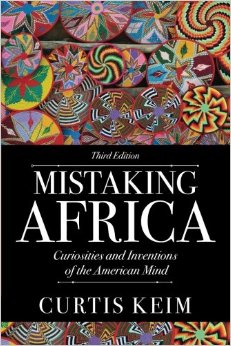

HBCU Money™ Business Book Feature – Mistaking Africa: Curiosities and Inventions of the American Mind

51V36fu133L._SY344_BO1,204,203,200_

For many Americans the mention of Africa immediately conjures up images of safaris, ferocious animals, strangely dressed “tribesmen,” and impenetrable jungles. Although the occasional newspaper headline mentions genocide, AIDS, malaria, or civil war in Africa, the collective American consciousness still carries strong mental images of Africa that are reflected in advertising, movies, amusement parks, cartoons, and many other corners of society. Few think to question these perceptions or how they came to be so deeply lodged in American minds. Curtis Keim’s Mistaking Africa looks at the historical evolution of this mind-set and examines the role that popular media plays in its creation. Keim addresses the most prevalent myths and preconceptions and demonstrates how these prevent a true understanding of the enormously diverse peoples and cultures of Africa.

Updated throughout, the third edition includes a new chapter, “Where Is the Real Africa,” discussing the multifaceted nature of the question and the importance of not grasping onto stereotypes of Africa’s mythical past. Keim also includes new examples and new images to expand the visual narrative of western views about Africa. Mistaking Africa is an important book for African studies courses and for anyone interested in unraveling American misperceptions about the continent.

HBCU Money™ Dozen 2/2 – 2/6

5+9+11+037

Did you miss HBCU Money™ Dozen via Twitter? No worry. We are now putting them on the site for you to visit at your leisure. We have made some changes here at HBCU Money™ Dozen. We are now solely focused on research and central bank articles from the previous week.

Research

State-sponsored Chinese hackers suspected in Anthem breach l Computerworld ow.ly/IzSMS

IBM brings more Watson smarts to developers l Computerworld ow.ly/IzSRv

Sail, fish, hike, swim & more in the 28 National Estuarine Research Reserves l NOAA Digital Coast 1.usa.gov/1y6rlPt

How can a particle accelerator help scientists understand the history of a glacier? l Symmetry ow.ly/IzTd5

5 top enterprise-grade business gadgets l Network Worldbit.ly/1I9RqXT

Direct measurement of key molecule will increase accuracy of combustion models l Phys.org ow.ly/IzT2G

Federal Reserve, Central Banks, & Financial Departments

Measuring the effects of consumer bankruptcy protection l NBER bit.ly/1BXkRE2

Is the youth labor force participation rate dropping because people are staying in school? l St. Louis Fed bit.ly/1DCF2t0

“It’s not us versus the machines; it’s us and the machines.” l World Economic Forum wef.ch/1yLKI0M

House passes bipartisan regulatory reform bill l Housing Wire hwi.re/8Py83d

An opportunity for East #Asia in plunging #oil prices l World Economic Forum wef.ch/18QWpwR

Explore arts’ vital contributions to the economy l Atlanta Fedgoo.gl/V9UcFf

Thank you as always for joining us on Saturday for HBCU Money™ Dozen. The 12 most important research and finance articles of the week.

The HBCU Money™ Weekly Market Watch

Our Money Matters /\ February 6, 2015

A weekly snapshot of African American owned public companies and HBCU Money™ tracked African stock exchanges.

NAME TICKER PRICE (GAIN/LOSS %)

African American Publicly Traded Companies

Citizens Bancshares Georgia (CZBS) $8.60 (0.00% UNCH)

M&F Bancorp (MFBP) $4.50 (0.00% UNCH)

Radio One (ROIA) $2.09 (5.02% UP)

African Stock Exchanges

Bourse Regionale des Valeurs Mobilieres (BRVM)  254.33 (0.37% UP)

Botswana Stock Exchange (BSE)  9 457.70 (0.03% DN)

Ghana Stock Exchange (GSE)  2 149.80 (4.92% DN)*

Nairobi Stock Exchange (NSE)  168.19 (N/A)

Johannesburg Stock Exchange (JSE) 51 998.32 (0.60% UP)

International Stock Exchanges

New York Stock Exchange (NYSE) 10 847.51 (0.45% DN)

London Stock Exchange (LSE)  3 681.48 (0.15% DN)

Tokyo Stock Exchange (TOPIX)  1 417.19 (0.50% UP)

Commodities

Screen Shot 2015-02-06 at 5.19.54 PM


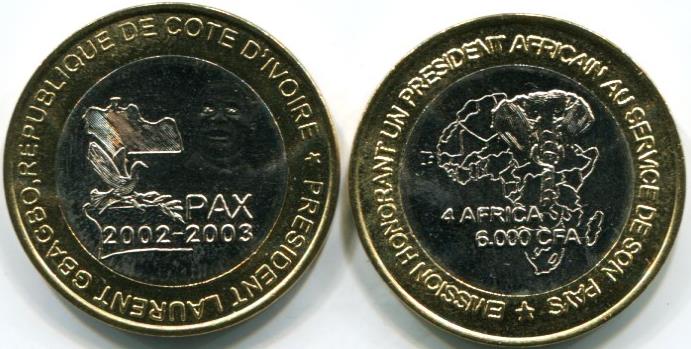
Currencies Of The African Diaspora – Cote d’Ivoire

iv-map

Cote d’Ivoire is heavily dependent on agriculture and related activities, which engage roughly two-thirds of the population. Cote d’Ivoire is the world’s largest producer and exporter of cocoa beans and a significant producer and exporter of coffee and palm oil. Consequently, the economy is highly sensitive to fluctuations in international prices for these products and in climatic conditions. Cocoa, oil, and coffee are the country’s top export revenue earners, but the country is also producing gold. The country also produces oil and boasted two offshore oil finds in 2012. Since the end of the civil war in 2003, political turmoil has continued to damage the economy, resulting in the loss of foreign investment and slow economic growth. In June 2012, the IMF and the World Bank announced $4.4 billion in debt relief for Cote d’Ivoire under the Highly Indebted Poor Countries Initiative. Cote d’Ivoire’s long-term challenges include political instability and degrading infrastructure.

ci1

ci2

ci3

ci4

Source: Economy provided by CIA World Factbook Africa