Category Archives: Lists

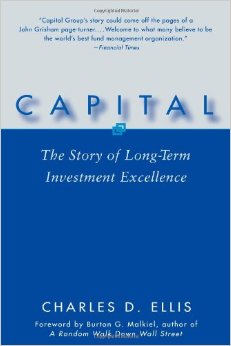
HBCU Money™ Business Book Feature – Capital: The Story of Long-Term Investment Excellence

41aC-UjZdCL._SY344_BO1,204,203,200_

Go inside the elite investment firm with Capital.

The Capital Group is one of the world’s largest investment management organizations, but little is known about it because the company has shunned any type of publicity. This compelling book, for the first time, takes you inside one of the most elite and private investment firms out there?the Capital Group Companies?a value investment firm par excellence. It digs deeps to reveal the corporate culture and long-term investment strategies that have made Capital the one organization where most investment professionals would like to work and would most recommend as long-term investment managers for their family and friends.

HBCU Money™ Business Book Feature -State of Peril: Race and Rape in South African Literature

9780199796373

Considering fiction from the colonial era to the present, State of Peril offers the first sustained, scholarly examination of rape narratives in the literature of a country that has extremely high levels of sexual violence.

Lucy Graham demonstrates how, despite the fact that most incidents of rape in South Africa are not interracial, narratives of interracial rape have dominated the national imaginary. Seeking to understand this phenomenon, the study draws on Michel Foucault’s ideas on sexuality and biopolitics, as well as Judith Butler’s speculations on race and cultural melancholia. Historical analysis of the body politic provides the backdrop for careful, close readings of literature by Olive Schreiner, Sol Plaatje, Sarah Gertrude Millin, Njabulo Ndebele, J.M. Coetzee, Zoë Wicomb and others.

Ultimately, State of Peril argues for ethically responsible interpretations that recognize high levels of sexual violence in South Africa while parsing the racialized inferences and assumptions implicit in literary representations of bodily violation.

HBCU Money™ B-School: Types of Brokerage Accounts

banner_overview_brokerage_acct

By Investor.gov & Securities Exchange Commission

A cash account is a type of brokerage account in which the investor must pay the full amount for securities purchased. In a cash account, you are not allowed to borrow funds from your broker to pay for transactions in the account.

A margin account is a type of brokerage account in which your brokerage firm can lend you money to buy securities, with the securities in your portfolio serving as collateral for the loan. As with any other loan, you will incur interest costs when you buy securities on margin.

There are risks involved in purchasing securities on margin. For example, if you buy on margin and the value of your securities declines, your brokerage firm can require you to deposit cash or securities to your account immediately. It can also sell any of the securities in your account to cover any shortfall, without informing you in advance. The brokerage firm decides which of your securities to sell. Even if the brokerage firm notifies you that you have a certain number of days to cover the shortfall, it still may sell your securities before then. A brokerage firm may at any time change the threshold at which customers are subject to a margin call.

HBCU Money™ Business Book Feature – Keynes Hayek: The Clash that Defined Modern Economics

41mwseI2rkL._SY344_BO1,204,203,200_

“In Keynes Hayek Nicholas Wapshott sets himself the formidable task of explaining important and abstruse ideas clearly, reliably and entertainingly. He succeeds well.” The Times Nicholas Wapshott s new book, Keynes Hayek, does an excellent job of setting out the broader history behind this revival of the old debates. Wapshott brings the personalities to life, provides more useful information on the debates than any other source, and miraculously manages to write for both the lay reader and the expert at the same time. Virtually every page is gripping, and yet even the professional economist will glean some insight… –Tyler Cowen “It [Keynes Hayek] harnesses the author’s skills as a journalist in a lucid and accessible introduction to Hayek’s work…Again, the author has done his homework in getting on top of the vast literature about Keynes…” The Guardian “His [Nicholas Wapshott’s] account of the origins and early application of the competing theories is readable, intelligent, and even-handed.” Reuters “I heartily recommend Nicholas Wapshott’s new book, Keynes Hayek: The Clash that Defined Modern Economics… Many books have been written about Keynes, but nobody else has told the story properly of his relationship with Hayek. Nick has filled the gap in splendid fashion, and I defy anybody – Keynesian, Hayekian, or uncommitted – to read his work and not learn something new.” – John Cassidy, The New Yorker

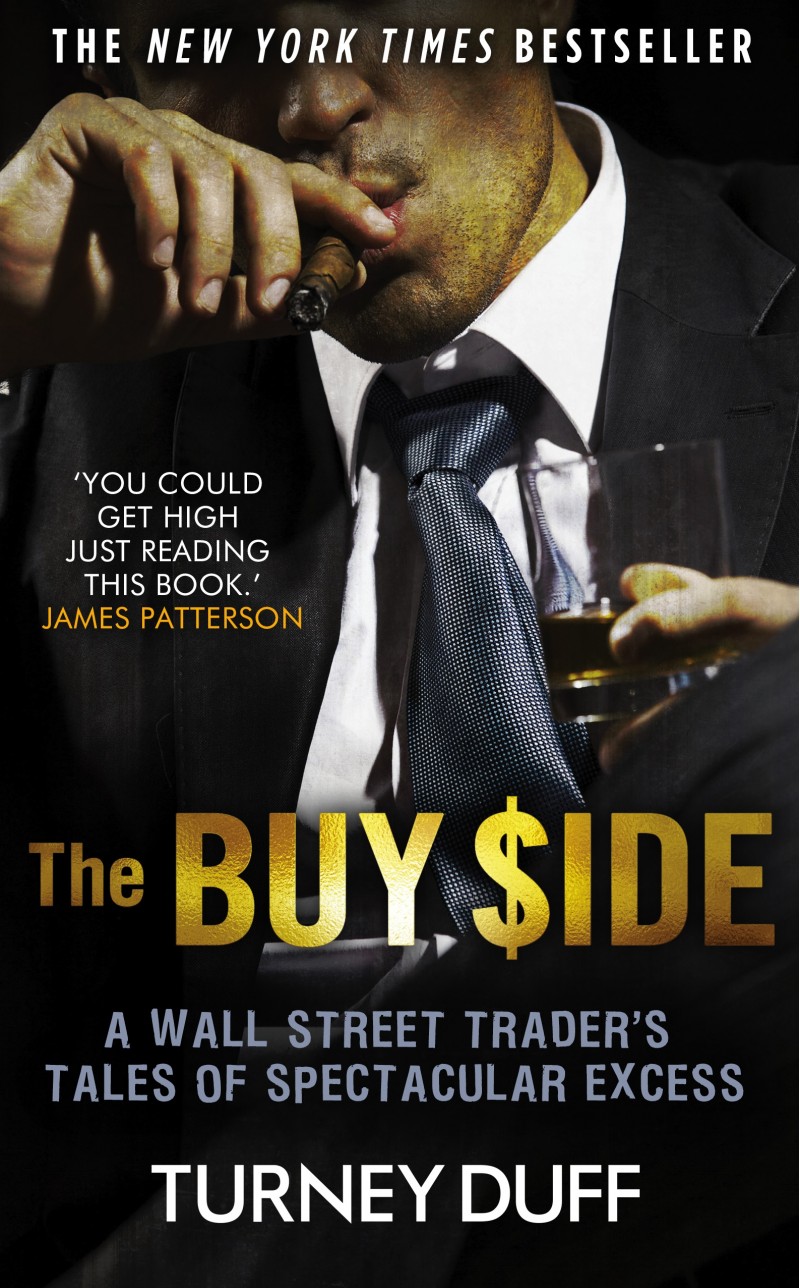
HBCU Money™ Business Book Feature – The Buy Side: A Wall Street Trader’s Tale of Spectacular Excess

9781472112385

The Buy Side, by former Galleon Group trader Turney Duff, portrays an after-hours Wall Street culture where drugs and sex are rampant and billions in trading commissions flow to those who dangle the most enticements.  A remarkable writing debut, filled with indelible moments, The Buy Side shows as no book ever has the rewards – and dizzying temptations – of making a living on the Street.

Growing up in the 1980’s Turney Duff was your average kid from Kennebunk, Maine, eager to expand his horizons. After trying – and failing – to land a job as a journalist, he secured a trainee position at Morgan Stanley and got his first feel for the pecking order that exists in the trading pits.  Those on the “buy side,” the traders who make large bets on whether a stock will rise or fall, are the “alphas” and those on the “sell side,” the brokers who handle their business, are eager to please.

How eager to please was brought home stunningly to Turney in 1999 when he arrived at the Galleon Group, a colossal hedge-fund management firm run by secretive founder Raj Rajaratnam.  Finally in a position to trade on his own, Turney was encouraged to socialize with the sell side and siphon from his new broker friends as much information as possible.  Soon he was not just vacuuming up valuable tips but also being lured into a variety of hedonistic pursuits.  Naïve enough to believe he could keep up the lifestyle without paying a price, he managed to keep an eye on his buy-and-sell charts and, meanwhile, pondered the strange goings on at Galleon, where tens of millions were being made each week in sometimes mysterious ways.

At his next positions, at Argus Partners and J.L. Berkowitz, Turney climbed to even higher heights – and, as it turned out, plummeted to even lower depths – as, by day, he solidified his reputation one of the Street’s most powerful healthcare traders, and by night, he blazed a path through the city’s nightclubs, showing off his social genius and voraciously inhaling any drug that would fill the void he felt inside.

A mesmerizingly immersive journey through Wall Street’s first millennial decade, and a poignant self portrait by a young man who surely would have destroyed himself were it not for his decision to walk away from a seven-figure annual income, The Buy Side is one of the best coming-of-age-on-the-Street books ever written.