Category Archives: Lists

HBCU Money™ B-School: 14 Little Known Facts About The Federal Reserve

federal-reserve

Just 14 things that you may or may not know about the Federal Reserve Bank that were shared by FederalReserveEducation.org’s outreach to teach citizens more and more about how and what the Federal Reserve role actually is in their day to day lives. Our Editor-In-Chief William A. Foster, IV got 10 out of 15 correct on their quiz. Looks like he may need to go back to business school and take a few refresher courses.

  1. The profit (revenues in excess of costs) of the Federal Reserve is given to the U.S. Treasury.
  2. Managing the federal deficit is NOT a function of the Federal Reserve.
  3. The Board of Governors, the governing body of the Federal Reserve System, is set up to consist of 7 members.
  4. Congress is the organization that established the Federal Reserve System.
  5. 38 percent of commercial banks in the U.S. are members of the Federal Reserve System.
  6. 12 districts make up the Federal Reserve System.
  7. The San Francisco Federal Reserve district serves the largest number of states.
  8. Member banks are NOT required to hold stock in Reserve Banks.
  9. Federal Reserve head offices each have a 9 member board of directors. 
  10. Federal Reserve Bank employees are NOT considered to be government employees.
  11. State Advisory Council is NOT an advisory council to the Federal Reserve Board of Governors.
  12. Each Federal Reserve District president reports to the board of directors. 
  13. The Federal Reserve is the 3rd attempt at our nation’s central bank.
  14. The Federal Reserve’s primary source of income is interest on government securities. 
HBCU Money™ Business Book Feature – How To Start A Vending Business

mQNt_9s_ORXPWmYV5DDbYaQ

How to Start A Vending Business provides information and advice about starting a bulk vending route, covering how to buy a route, how to run a route, candy choices, vending machine brands and related topics. Here is what you will discover in this book. How to find cheap vending machines with these 3 simple techniques. 3 little known, yet simple ways to find locations for your vending machines. Secrets of expert bulk vendors that few people ever know about. 3 proven steps to a successful vending route. 2 simple keys (that are right in front of your eyes) to finding the cheapest candy for your route. Warning: 3 things you should never do when it comes to bulk vending, how to not pay commissions to your vending locations, when to buy a vending route from someone and how to do it. 7 everyday, but often overlooked tips and tricks for getting free locations. How often to change your candy and keep track your expenses. The once famous but forgotten secret that instantly allows you to double your vending route in months. Antoine Cameron actually runs a vending business; this is not some theory book with a whole bunch of fluff, this guy knows his stuff.

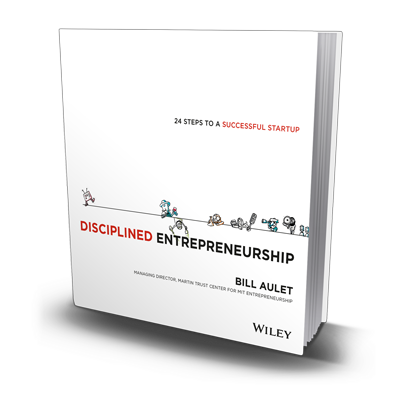
HBCU Money™ Business Book Feature – Disciplined Entrepreneurship: 24 Steps to a Successful Startup

book-clear-300

24 Steps to Success!

Disciplined Entrepreneurship will change the way you think about starting a company. Many believe that entrepreneurship cannot be taught, but great entrepreneurs aren’t born with something special – they simply make great products. This book will show you how to create a successful startup through developing an innovative product. It breaks down the necessary processes into an integrated, comprehensive, and proven 24-step framework that any industrious person can learn and apply.

You will learn:

  • Why the “F” word – focus – is crucial to a startup’s success
  • Common obstacles that entrepreneurs face – and how to overcome them
  • How to use innovation to stand out in the crowd – it’s not just about technology

Whether you’re a first-time or repeat entrepreneur, Disciplined Entrepreneurship gives you the tools you need to improve your odds of making a product people want.

Author Bill Aulet is the managing director of the Martin Trust Center for MIT Entrepreneurship as well as a senior lecturer at the MIT Sloan School of Management.

HBCU Money™ Business Book Feature – The African American Entrepreneur: Then and Now


9780313351112_500X500

African American entrepreneurship has been an integral part of the American economy since the 1600s. On the eve of the Civil War, the collective wealth of free blacks was approximately $50 million. In 2006, African Americans earned a whopping $744 billion, a figure that exceeds the gross domestic product of all but 15 nations of the 192 independent countries in the world. As W. Sherman Rogers so ably demonstrates, African Americans have achieved these economic gains under difficult circumstances. Slavery, segregation, and legally limited access to property, education, and other opportunities have taken a heavy toll, even to this day. Besides providing a penetrating glimpse into the world of black entrepreneurship both past and present, this book urges African Americans to gain financial independence as entrepreneurs. Business ownership, Rogers argues, will bring security, wealth that can be passed to successive generations, and educated offspring with much greater earning power.

The African American Entreprenuer: Then and NoW</i> explores the lower economic status of black Americans in light of America’s legacy of slavery, segregation, and rampant discrimination. Its main purpose is to shine a light on the legal, historical, sociological and political factors that together help to explain the economic condition of black people in America from their arrival in America to the present. In the process, the book spotlights the many amazing breakthroughs made by black entrepreneurs even before the Civil War and Emancipation. Profiles of business people from the Post-civil War period through today include Booker T. Washington, pioneer banker and insurer A.G. Gaston, hair care entrepreneur Madame C.J. Walker, Ebony publisher John H. Johnson, Black Entertainment Television founder Robert L. Johnson, publisher Earl Graves, music producer Damon Dash, rapper Sean Combs, former basketball stars Dave Bing and Magic Johnson, food entrepreneur Michelle Hoskins, broadcast personality Cathy Hughes, former Beatrice Foods head Reginald Lewis, Oprah Winfrey, and many more. As Rogers points out, reading about remarkable African American entrepreneurs can inspire readers to adopt an entrepreneurial mindset. To further that goal and help readers take the plunge, he outlines many of the skills, tools and information necessary for business success-success that can help chart a new path to prosperity for all African Americans.

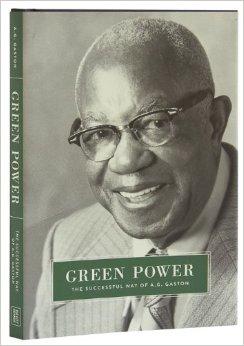
HBCU Money™ Business Book Feature – Green Power: The Successful Way of A.G. Gaston

51tkZSZeDQL._SY344_BO1,204,203,200_

“Green Power” is the story of Arthur George Gaston, a man who became one of the greatest entrepreneurs of the 20th century. His is the classic story of the American Dream, but what he achieved came not merely in the face of poverty or challenging circumstances. Dr. Gaston also had to overcome the hope-crushing segregation of the Jim Crow South. At the time of this republishing of “Green Power,” 50 years have come and gone since the height of the struggle for civil rights in his hometown of Birmingham, Ala. As we commemorate the strength of those who struggled for equality a half century ago, we should include Dr. Gaston in that discussion.