Category Archives: Lists

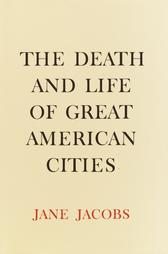
HBCU Money™ Business Book Feature – The Death and Life of Great American Cities

deathandlife

A direct and fundamentally optimistic indictment of the short-sightedness and intellectual arrogance that has characterized much of urban planning in this century, The Death and Life of Great American Cities has, since its first publication in 1961, become the standard against which all endeavors in that field are measured. In prose of outstanding immediacy, Jane Jacobs writes about what makes streets safe or unsafe; about what constitutes a neighborhood, and what function it serves within the larger organism of the city; about why some neighborhoods remain impoverished while others regenerate themselves. She writes about the salutary role of funeral parlors and tenement windows, the dangers of too much development money and too little diversity.

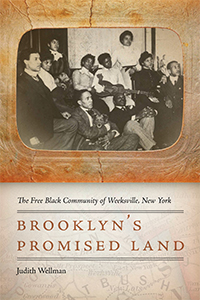
HBCU Money™ Business Book Feature – Brooklyn’s Promised Land: The Free Black Community of Weeksville, New York

9780814724156_full

In 1966 a group of students, Boy Scouts, and local citizens rediscovered all that remained of a then virtually unknown community called Weeksville: four frame houses on Hunterfly Road. The infrastructure and vibrant history of Weeksville, an African American community that had become one of the largest free black communities in nineteenth century United States, were virtually wiped out by Brooklyn’s exploding population and expanding urban grid.

Weeksville was founded by African American entrepreneurs after slavery ended in New York State in 1827. Located in eastern Brooklyn, Weeksville provided a space of physical safety, economic prosperity, education, and even political power for its black population, who organized churches, a school, orphan asylum, home for the aged, newspapers, and the national African Civilization Society. Notable residents of Weeksville, such as journalist and educator Junius P. Morell, participated in every major national effort for African American rights, including the Civil War.

In Brooklyn’s Promised Land, Judith Wellman not only tells the important narrative of Weeksville’s growth, disappearance, and eventual rediscovery, but also highlights the stories of the people who created this community. Drawing on maps, newspapers, census records, photographs, and the material culture of buildings and artifacts, Wellman reconstructs the social history and national significance of this extraordinary place. Through the lens of this local community, Brooklyn’s Promised Land highlights themes still relevant to African Americans across the country.

HBCU Money™ Business Book Feature – The 10% Entrepreneur: Live Your Startup Dream Without Quitting Your Day Job

512yyp-6fhl-_sx332_bo1204203200_

Choosing between the stability of a traditional career and the upside of entrepreneurship?
Why not have both?

Becoming a full-time entrepreneur can look glamorous from the outside. Who doesn’t want to chase their dreams, be their own boss, and do what they love? But the truth is that entrepreneurship is often a slog, with no regular hours, no job security, and very little pay.

What if there was a way to have the stability of a day job with the excitement of a startup? All of the benefits of entrepreneurship with none of the pitfalls? In The 10% Entrepreneur, Patrick McGinnis shows you how, by investing just 10% of your time and resources, you can become an entrepreneur without losing a steady paycheck.

McGinnis details a step-by-step plan that takes you from identifying your first entrepreneurial project to figuring out the smartest way to commit resources to it. He shows you how to select and engage in projects that will provide you with upside outside the office while making your better at your day job. He also profiles real-world 10% Entrepreneurs such as…
•Luke Holden, a cash-strapped recent college graduate, who started his own lobster-roll empire and oversaw much of its first year of operations, all while working full time in corporate America
•Dipali Patwa, a designer and mom whose side project designing and selling infant clothing is now a sensation.
•A group of friends who met at a 6am Bible study class and went on to start a brewery that now generates millions in sales .

A successful 10% Entrepreneur himself, McGinnis explains the multiple paths you can follow to invest your cash, time, and expertise in a start-up—including as a founder, angel, adviser, or aficionado. Most importantly, you don’t have to have millions in disposable income to become a 10% Entrepreneur. When you put McGinnis’s 10% principles into action, you’ll quickly start racking up small wins, then watch as they snowball into your new (and far more entrepreneurial) life.

HBCU Money™ Business Book Feature – Owning the Earth: The Transforming History of Land Ownership

41c8g5cviql-_sx331_bo1204203200_

Barely two centuries ago, most of the world’s productive land still belonged either communally to traditional societies or to the higher powers of monarch or church. But that pattern, and the ways of life that went with it, were consigned to history by the most creative and simultaneously destructive cultural force in the modern era: the idea of individual, exclusive ownership of land.

Spreading from both shores of the north Atlantic, it laid waste to traditional communal civilizations, displacing entire peoples from their homelands, and brought into being a unique concept of individual freedom and a distinct form of representative government. By contrast, as Linklater demonstrates, other great civilizations, in Russia, China, and the Islamic world, evolved very different structures of land ownership and thus very different forms of government and social responsibility. The history and evolution of this concept is a fascinating chapter in the history of civilization, offering unexpected insights about how various forms of democracy and capitalism developed, as well as a revealing analysis of a future where the Earth must sustain nine billion lives. Owning the Earth presents a radically new view of mankind’s place on the planet and the history behind it.

Baker Hughes November Rig Count – HBCU Territories

screen-shot-2016-12-08-at-2-07-35-pm

HBCU states and territories are vital to the energy production of United States and the world these days. The latest Baker Hughes rig count shows that the U.S. currently has 597 active rigs, with 478 or 80.1 percent of those being in HBCU territories. Energy continues to be a vital part of the economic landscape where HBCUs are located and is a barometer for how the economies of those states may very well be doing now and going forward.

Gas rigs are denoted by an orange triangle. – 98

Oil rigs are denoted by a blue triangle. – 380