Category Archives: Books

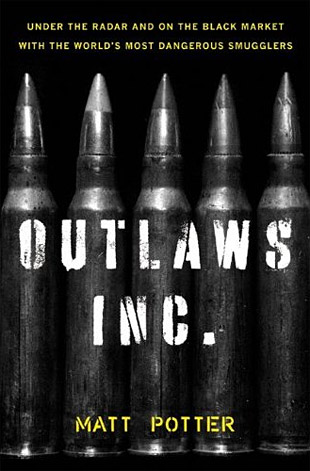
HBCU Money™ Business Book Feature – The Outlaws Inc.: Black Market with the World’s Most Dangerous Smugglers

outlaws_inc

This riveting account reveals the secret corners of our supposedly flat world: black markets where governments are never seen but still spend outrageous amounts of money. Journalist Matt Potter tells the story of Yuri and his crew, a gang of Russian military men who, after the collapse of the Soviet Union found themselves without work or prospects. So they bought a decommissioned Soviet plane-at liquidation prices, straight from the Russian government-and started a shipping business. It wasn’t long before Yuri, and many pilots like him, found themselves an unlikely (and ethically dubious) hub of global trading. Men like these are paid by the U.S., the Taliban, and blue-chip multinational companies to bring supplies- some legal, some not-across dangerous borders.

In a feat of daring reportage, Potter gets onto the flight deck with these outlaws and tells the story of their fearless missions. Dodging gunfire, Potter is taken from place to place by men trafficking everything from illicit weapons to emergency aid, making enemies everywhere but no reliable friends. As the world changes, we see the options for the crew first explode, then slowly diminish, until, in a desperate maneuver, they move their operations to the most lawless corners of Africa, where they operate to this day.

The story of these outlaws is a microcosm of the world since the end of the cold war: secret contracts, guerrilla foreign policy, and conflicts too thorny to be handled in public. Potter uses the story of these men to articulate an underground history of the globalized world. At once thrilling, provocative, and morally circumspect, this book is a must-read for anyone with an interest in espionage, or in how the world works today.
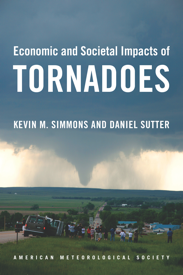
HBCU Money™ Business Book Feature – Economic and Societal Impacts of Tornadoes

AMS_Tornadoes

For almost a decade, economists Kevin M. Simmons and Daniel Sutter have been studying the economic impacts and social consequences of the approximately 1,200 tornadoes that touch down across the United States annually. During this time, Simmons and Sutter have been compiling information from sources such as the National Oceanic and Atmospheric Administration and the U.S. Census in order to examine the casualties caused by tornadoes and to evaluate the National Weather Service’s efforts to reduce these casualties. In Economic and Societal Impacts of Tornadoes, Simmons and Sutter present their findings. This analysis will be extremely useful to anyone studying meteorology and imperative for anyone working in emergency disaster management.

HBCU Money™ Business Book Feature – Forbidden Creatures: Inside the World of Animal Smuggling and Exotic Pets

8173496

On the heels of his acclaimed The Dangerous World of Butterflies, investigative journalist Peter Laufer is back to chronicle his worldwide quest to penetrate the underworld of international animal smuggling. In Forbidden Creatures, Laufer exposes the network of hunters, traders, breeders, and customers who constitute this nefarious business—which, estimated at $10 to $20 billion annually, competes with illegal drug and weapons trafficking in the money it earns criminals.

            Laufer asks: What is being smuggled, from where and why? What is being done to stop the illegal trading and irresponsible breeding? Taking readers to exotic and often lawless locales, Laufer introduces brazen and dangerous traders and wealthy customers whose greed and mindless self-interest perpetuate what is now a crisis of survival for a growing number of wild species.

            Woven throughout with riveting stories from law enforcement officials and federal prosecutors, Forbidden Creatures is a compelling, first-person narrative written in Laufer’s hallmark conversational, entertaining style.

HBCU Money™ Business Book Featuere – Who Rules America? Challenges to Corporate and Class Dominance

254509

Drawing from a power elite perspective and the latest empirical data, this classic text is an invaluable tool for teaching students about how power operates in U.S. society. Domhoff argues that the owners and top-level managers in large income-producing properties are far and away the dominant figures in the U.S. Their corporations, banks, and agribusinesses come together as a corporate community that dominates the federal government in Washington and their real estate, construction, and land development companies form growth coalitions that dominate most local governments. By providing empirical evidence for his argument, Domhoff encourages students to think critically about the power structure in American society and its implications for our democracy.

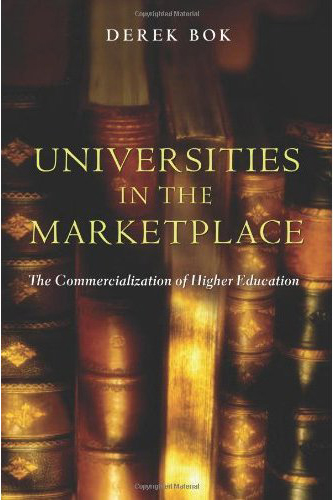
HBCU Money™ Business Book Feature – Universities in the Marketplace

Universities in the Marketplace

Is everything in a university for sale if the price is right? In this book, one of America’s leading educators cautions that the answer is all too often “yes.” Taking the first comprehensive look at the growing commercialization of our academic institutions, Derek Bok probes the efforts on campus to profit financially not only from athletics but increasingly, from education and research as well. He shows how such ventures are undermining core academic values and what universities can do to limit the damage.

Commercialization has many causes, but it could never have grown to its present state had it not been for the recent, rapid growth of money-making opportunities in a more technologically complex, knowledge-based economy. A brave new world has now emerged in which university presidents, enterprising professors, and even administrative staff can all find seductive opportunities to turn specialized knowledge into profit.

Bok argues that universities, faced with these temptations, are jeopardizing their fundamental mission in their eagerness to make money by agreeing to more and more compromises with basic academic values. He discusses the dangers posed by increased secrecy in corporate-funded research, for-profit Internet companies funded by venture capitalists, industry-subsidized educational programs for physicians, conflicts of interest in research on human subjects, and other questionable activities.

While entrepreneurial universities may occasionally succeed in the short term, reasons Bok, only those institutions that vigorously uphold academic values, even at the cost of a few lucrative ventures, will win public trust and retain the respect of faculty and students. Candid, evenhanded, and eminently readable, Universities in the Marketplace will be widely debated by all those concerned with the future of higher education in America and beyond.