Category Archives: Books

HBCU Money™ Business Book Feature – The Comanche Empire

9780300126549

In the eighteenth and early nineteenth centuries, a Native American empire rose to dominate the fiercely contested lands of the American Southwest, the southern Great Plains, and northern Mexico. This powerful empire, built by the Comanche Indians, eclipsed its various European rivals in military prowess, political prestige, economic power, commercial reach, and cultural influence. Yet, until now, the Comanche empire has gone unrecognized in American history. This compelling and original book uncovers the lost story of the Comanches. It is a story that challenges the idea of indigenous peoples as victims of European expansion and offers a new model for the history of colonial expansion, colonial frontiers, and Native-European relations in North America and elsewhere. Pekka Hämäläinen shows in vivid detail how the Comanches built their unique empire and resisted European colonization, and why they fell to defeat in 1875. With extensive knowledge and deep insight, the author brings into clear relief the Comanches’ remarkable impact on the trajectory of history.
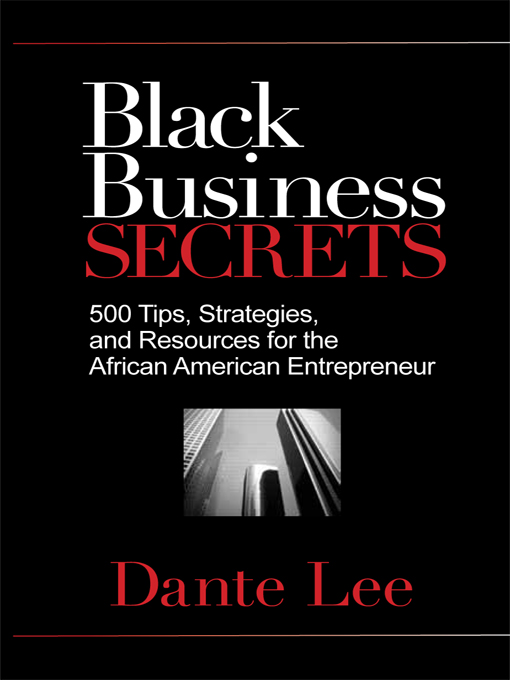
HBCU Money™ Business Book Feature – Black Business Secrets: Resources for the African American Entrepreneur

Black-Business-Secrets-book
“Should I lower my price point? Give my new product away for free online? How do I compete when my goods, services, or business model might be duplicated?” In this candid, 21st-century-savvy guide, Dante Lee illustrates how passion can become profit by addressing the questions that every businessperson needs to ask. Black Business Secrets discusses the entrepreneurial skills that African-American business owners must master in order to compete in a world where most new companies fail within three years.

Whether you’re a weekend entrepreneur or a career-changing professional, Lee’s motto—“don’t be a worrier, be a warrior”—applies. From personal branding to best practices, this empowering blueprint offers surefire tips and strategies designed to ensure business survival and success.

HBCU Money™ Business Book Feature – Hawaii – The Fake State: a nation in captivity

9781425175245_p0_v1_s260x420

The book comes from an evaluation of findings after more than
twenty eight years of political review and lawful study; investigation and determining facts of law; and, of actual events and of unlawful actions by the Federal United States Government; its deceptive and fraudulent claim over a foreign, sovereign and “neutral” nation; actual evidence of misleading legal documents of false claim for a Statehood in the American Union of States that does not lawfully exist and that can never exist. It is a revelation of past historical events with supporting documentation revealing to a new generation of Americans and Hawaiian Citizens on how they have lost their birth names and birthrights, as well as their Citizenship as “Private Citizens” within their respective nations. How they have been deviously removed from their birth State’s Constitutions and “State’s common-law” and their National Constitutions (of the American Republic of States and of the Hawaiian Kingdom) to a lesser Washington D. C. “Federal Emancipated Slave citizenship” (14th Amendment) under Article 1 Section 8 of that very same Constitution of the American Republic and its Union of States.

HBCU Money™ Business Book Feature – Time Zones, Communications Networks, and International Trade

9781136805561_p0_v1_s260x420

Advances in digital technology have driven large decreases in the costs of data transfer and telecommunications. There is a consequent increase in many kinds of international trade. One of the fastest-growing parts of this industry is “remote maintenance” whereby Indian companies debug software for companies in other parts of the world, often taking advantage of time zone differences to offer overnight service.

In the existing literature on trade theory, however, relatively few attempts have been made to address the theme of communications networks and the role of time zones. The main purpose of this book is to illustrate, with simple models of international trade, how the introduction of communications networks and the utilization of time zone differences can affect both the structure of international trade and world welfare. Other technological aspects of recent international trade (e.g., competition between international standards, the impact of switching costs on imported products’ introduction) are also examined.

HBCU Money™ Business Book Feature – Tower of Basel: The Shadowy History of the Secret Bank that Runs the World

basel

Tower of Basel is the first investigative history of the world’s most secretive global financial institution. Based on extensive archival research in Switzerland, Britain, and the United States, and in-depth interviews with key decision-makers—including Paul Volcker, the former chairman of the US Federal Reserve; Sir Mervyn King, governor of the Bank of England; and former senior Bank for International Settlements managers and officials—Tower of Basel tells the inside story of the Bank for International Settlements (BIS): the central bankers’ own bank.

Created by the governors of the Bank of England and the Reichsbank in 1930, and protected by an international treaty, the BIS and its assets are legally beyond the reach of any government or jurisdiction. The bank is untouchable. Swiss authorities have no jurisdiction over the bank or its premises. The BIS has just 140 customers but made tax-free profits of $1.17 billion in 2011–2012.

Since its creation, the bank has been at the heart of global events but has often gone unnoticed. Under Thomas McKittrick, the bank’s American president from 1940–1946, the BIS was open for business throughout the Second World War. The BIS accepted looted Nazi gold, conducted foreign exchange deals for the Reichsbank, and was used by both the Allies and the Axis powers as a secret contact point to keep the channels of international finance open.

After 1945 the BIS—still behind the scenes—for decades provided the necessary technical and administrative support for the trans-European currency project, from the first attempts to harmonize exchange rates in the late 1940s to the launch of the Euro in 2002. It now stands at the center of efforts to build a new global financial and regulatory architecture, once again proving that it has the power to shape the financial rules of our world. Yet despite its pivotal role in the financial and political history of the last century and during the economic current crisis, the BIS has remained largely unknown—until now.