Category Archives: Books

HBCU Money™ Business Book Feature – Idea Man: A Memoir by the Cofounder of Microsoft

paul_allen_idea_man

“The entire conversation took five minutes. When it was over, Bill and I looked at each other. It was one thing to talk about writing a language for a microprocessor and another to get the job done….If we’d been older or known better, Bill and I might have been put off by the task in front of us. But we were young and green enough to believe that we just might pull it off.”

Paul Allen, best known as the cofounder of Microsoft, has left his mark on numerous fields, from aviation and science to rock ‘n’ roll, professional sports, and philanthropy. His passions and curiosity have transformed the way we live. In 2007 and again in 2008, Time named him one of the hundred most influential people in the world.

It all started on a snowy day in December 1974, when he was twenty-one years old. After buying the new issue of Popular Electronics in Harvard Square, Allen ran to show it to his best friend from Seattle, Bill Gates, then a Harvard undergrad. The magazine’s cover story featured the Altair 8800, the first true personal computer; Allen knew that he and Gates had the skills to code a programming language for it. When Gates agreed to collaborate on BASIC for the Altair, one of the most influential partnerships in the digital era was up and running.

While much has been written about Microsoft’s early years, Allen has never before told the story from his point of view. Nor has he previously talked about the details of his complex relationship with Gates or his behind-closed-doors perspective on how a struggling start-up became the most powerful technology company in the world. Idea Man is the candid and long-awaited memoir of an intensely private person, a tale of triumphant highs and terrifying lows.

After becoming seriously ill with Hodgkin’s lymphoma in 1982, Allen began scaling back his involvement with Microsoft. He recovered and started using his fortune—and his ideas—for a life of adventure and discovery, from the first privately funded spacecraft (SpaceShipOne) to a landmark breakthrough in neuroscience (the Allen Brain Atlas). His eclectic ventures all begin with the same simple question: What should exist? As Allen has written:

To me, that’s the most exciting question imaginable….From technology to science to music to art, I’m inspired by those who’ve blurred the boundaries, who’ve looked at the possibilities, and said, “What if…?” In my own work, I’ve tried to anticipate what’s coming over the horizon, to hasten its arrival, and to apply it to people’s lives in a meaningful way…The varied possibilities of the universe have dazzled me since I was a child, and they continue to drive my work, my investments, and my philanthropy.

Idea Man is an astonishing true story of ideas made real.

HBCU Money™ Business Book Feature -The First Billion Is the Hardest: Reflections on a Life of Comebacks and America’s Energy Future

The-First-Billion-Is-the-Hardest-T-Boone-Pickens-abridged-compact-discs-Random-House-Audiobooks

With a Plan for Reducing U.S. Oil Dependency

It’s never too late to top your personal best.

Now eighty years old, T. Boone Pickens is a legendary figure in the business world. Known as the “Oracle of Oil” because of his uncanny ability to predict the direction of fuel prices, he built Mesa Petroleum, one of the largest independent oil companies in the United States, from a $2,500 investment. In the 1980s, Pickens became a household name when he executed a series of unsolicited buyout bids for undervalued oil companies, in the process reinventing the notion of shareholders’ rights. Even his failures were successful in that they forced risk-averse managers to reconsider the way they did business.

When Pickens left Mesa at age sixty-eight after a spectacular downward spiral in the company’s profits, many counted him out. Indeed, what followed for him was a painful divorce, clinical depression, a temporary inability to predict the movement of energy prices, and the loss of 90 percent of his investing capital. But Pickens was far from out.

From that personal and professional nadir, Pickens staged one of the most impressive comebacks in the industry, turning his investment fund’s remaining $3 million into $8 billion in profit in just a few years. That made him, at age seventy-seven, the world’s second-highest-paid hedge fund manager. But he wasn’t done yet. Today, Pickens is making some of the world’s most colossal energy bets. If he has his way, most of America’s cars will eventually run on natural gas, and vast swaths of the nation’s prairie land will become places where wind can be harnessed for power generation. Currently no less bold than he was decades ago when he single-handedly transformed America’s oil industry, Pickens is staking billions on the conviction that he knows what’s coming. In this book, he spells out that future in detail, not only presenting a comprehensive plan for American energy independence but also providing a fascinating glimpse into key resources such as water—yet another area where he is putting billions on the line.

From a businessman who is extraordinarily humble yet is considered one of the world’s most visionary, The First Billion Is the Hardest is both a riveting account of a life spent pulling off improbable triumphs and a report back from the front of the global energy and natural-resource wars—of vital interest to anyone who has a stake in America’s future.

HBCU Money™ Business Book Feature – Start with Why: How Great Leaders Inspire Everyone to Take Action

7108725

“A powerful and penetrating exploration of what separates great companies and great leaders from the rest.”
-Polly LaBarre, coauthor of Mavericks at Work

Why are some people and organizations more innovative, more influential, and more profitable than others? Why do some command greater loyalty?

In studying the leaders who’ve had the greatest influence in the world, Simon Sinek discovered that they all think, act, and communicate in the exact same way-and it’s the complete opposite of what everyone else does. People like Martin Luther King Jr., Steve Jobs, and the Wright Brothers might have little in common, but they all started with why.

Drawing on a wide range of real-life stories, Sinek weaves together a clear vision of what it truly takes to lead and inspire.

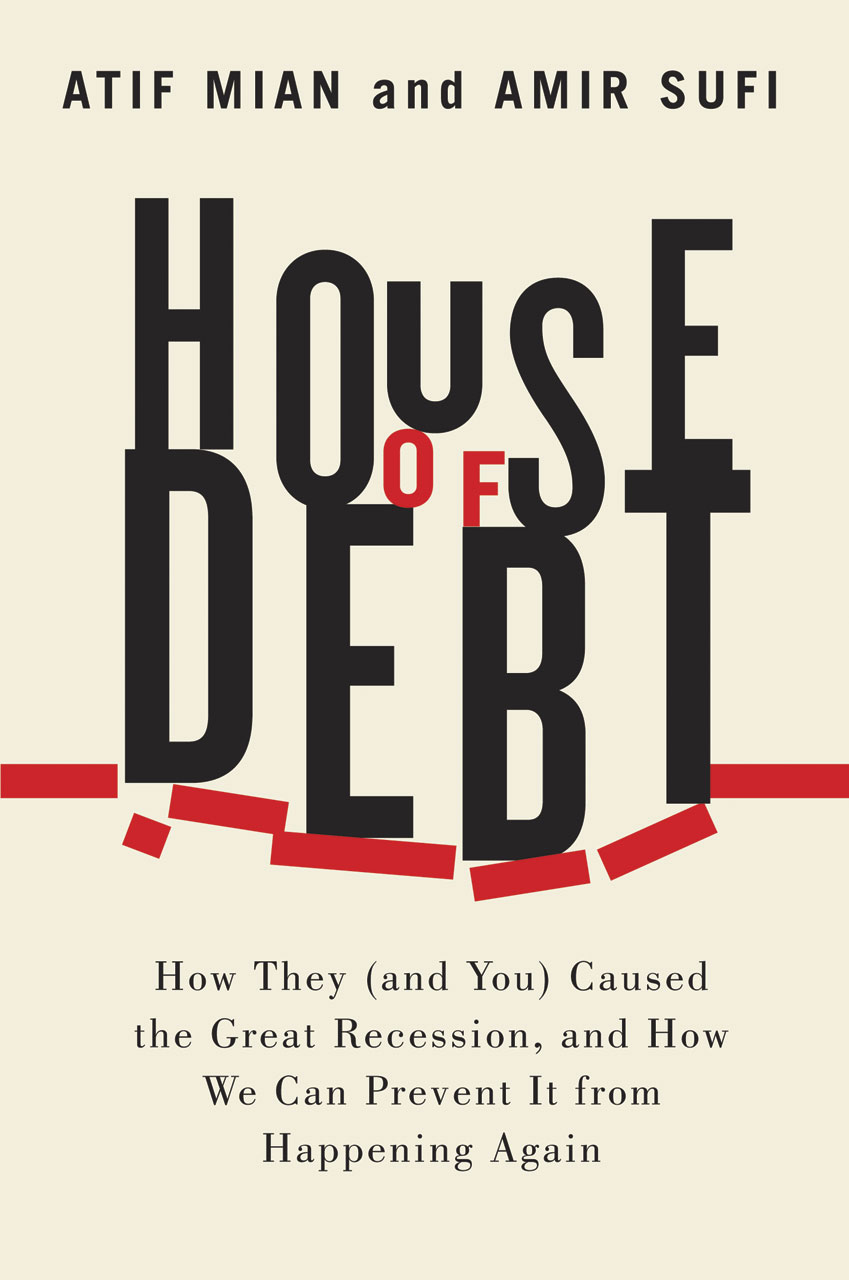
HBCU Money™ Business Book Feature – House of Debt: How They (and You) Caused the Great Recession


9780226081946

The Great American Recession resulted in the loss of eight million jobs between 2007 and 2009. More than four million homes were lost to foreclosures. Is it a coincidence that the United States witnessed a dramatic rise in household debt in the years before the recession—that the total amount of debt for American households doubled between 2000 and 2007 to $14 trillion? Definitely not. Armed with clear and powerful evidence, Atif Mian and Amir Sufi reveal in House of Debt how the Great Recession and Great Depression, as well as the current economic malaise in Europe, were caused by a large run-up in household debt followed by a significantly large drop in household spending.

Though the banking crisis captured the public’s attention, Mian and Sufi argue strongly with actual data that current policy is too heavily biased toward protecting banks and creditors. Increasing the flow of credit, they show, is disastrously counterproductive when the fundamental problem is too much debt. As their research shows, excessive household debt leads to foreclosures, causing individuals to spend less and save more. Less spending means less demand for goods, followed by declines in production and huge job losses. How do we end such a cycle? With a direct attack on debt, say Mian and Sufi.  More aggressive debt forgiveness after the crash helps, but as they illustrate, we can be rid of painful bubble-and-bust episodes only if the financial system moves away from its reliance on inflexible debt contracts. As an example, they propose new mortgage contracts that are built on the principle of risk-sharing, a concept that would have prevented the housing bubble from emerging in the first place.

Thoroughly grounded in compelling economic evidence, House of Debt offers convincing answers to some of the most important questions facing the modern economy today: Why do severe recessions happen? Could we have prevented the Great Recession and its consequences? And what actions are needed to prevent such crises going forward?

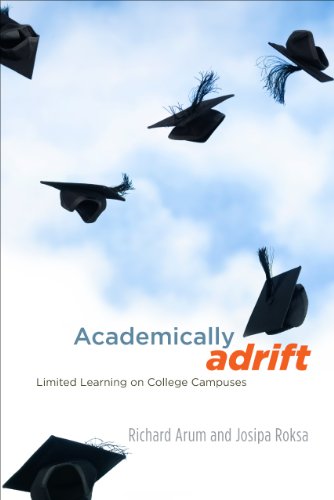
HBCU Money™ Business Book Feature – Academically Adrift: Limited Learning on College Campuses

academically-adrift

In spite of soaring tuition costs, more and more students go to college every year. A bachelor’s degree is now required for entry into a growing number of professions. And some parents begin planning for the expense of sending their kids to college when they’re born.

Almost everyone strives to go, but almost no one asks the fundamental question posed byAcademically Adrift: are undergraduates really learning anything once they get there? For a large proportion of students, Richard Arum and Josipa Roksa’s answer to that question is a definitive “no.”

Their extensive research draws on survey responses, transcript data, and, for the first time, the state-of-the-art Collegiate Learning Assessment, a standardized test administered to students in their first semester and then again at the end of their second year. According to their analysis of more than 2,300 undergraduates at twenty-four institutions, forty-five percent of these students demonstrate no significant improvement in a range of skills – including critical thinking, complex reasoning, and writing – during their first two years of college. As troubling as their findings are, Arum and Roksa argue that for many faculty and administrators they will come as no surprise – instead, they are the expected result of a student body distracted by socializing or working and an institutional culture that puts undergraduate learning close to the bottom of the priority list.

Academically Adrift holds sobering lessons for students, faculty, administrators, policy makers, and parents – all of whom are implicated in promoting or at least ignoring contemporary campus culture. Higher education faces crises on a number of fronts, but Arum and Roksa’s report that colleges are failing at their most basic mission will demand the attention of us all.