Category Archives: Books

HBCU Money™ Business Book Feature – Becoming Dad: Black Men and the Journey to Fatherhood

51KiFisNAJL._SY344_BO1,204,203,200_

The fatherless black family is a problem that grows to bigger proportions every year as generations of black children grow up without an adult male in their homes. As this dire pattern grows worse, what can men do who hope to break it, when there are so few models and so little guidance in their own homes and communities? Where can they learn to “become Dad?”  When Pulitzer Prize-winning columnist Pitts—who himself grew up with an abusive father whose absences came as a relief—interviewed dozens of men across the country, he found both discouragement and hope, as well as deep insights into his own roles as son and father. An unflinching investigation, both personal and journalistic, of black fatherhood in America, this is the best, most pivotal book on this profoundly important issue.

HBCU Money™ Business Book Feature – American Mojo: Lost and Found: Restoring our Middle Class

51BHlKiPaAL._SY344_BO1,204,203,200_

In American Mojo: Lost and Found, Peter D. Kiernan, New York Times bestselling and award-winning author, focuses on America’s greatest challenge―and opportunity―restoring the middle class to its full promise and potential.

Our educated, skilled, and motivated middle class was the cornerstone of America’s postwar economic might, but the country’s dynamic core has struggled and changed dramatically through the last three decades. Kiernan’s extensively researched story, told through individual histories, shows how the middle class flourished under unique circumstances following World War II and details how our middle class has been rocked and shaped by events abroad as much as at home. By excluding too many Americans, the middle class we reverently recall was fractured from the beginning.

What emerges through his storytelling is a picture of middle-class decline and opportunity that is fuller, more moving and profound, and ultimately more useful in terms of charting a path forward than other examinations. His unique global perspective is a vital ingredient in charting the way ahead. This new frontier thesis shows that middle-class greatness is again within our grasp―if we take some powerful medicine and seize the global opportunity. America possesses the skills and talent the world needs. Americans must embrace what brought our middle class to prominence in the first place―our American Mojo―before it is too late and other countries steal the march.

All that is at stake is the soul of our nation.

HBCU Money™ Business Book Feature – The Bogleheads’ Guide to Investing

{29C98C91-102B-43EB-9939-E5B45D9C4B74}Img400

The irreverent guide to investing, Boglehead style

The Boglehead’s Guide to Investing is a DIY handbook that espouses the sage investment wisdom of John C. Bogle. This witty and wonderful book offers contrarian advice that provides the first step on the road to investment success, illustrating how relying on typical “common sense” promoted by Wall Street is destined to leave you poorer. This updated edition includes new information on backdoor Roth IRAs and ETFs as mainstream buy and hold investments, estate taxes and gifting, plus changes to the laws regarding Traditional and Roth IRAs, and 401k and 403b retirement plans. With warnings and principles both precisely accurate and grandly counterintuitive, the Boglehead authors show how beating the market is a zero-sum game.

Investing can be simple, but it’s certainly not simplistic. Over the course of twenty years, the followers of John C. Bogle have evolved from a loose association of investors to a major force with the largest and most active non-commercial financial forum on the Internet. The Boglehead’s Guide to Investing brings that communication to you with comprehensive guidance to the investment prowess on display at Bogleheads.org. You’ll learn how to craft your own investment strategy using the Bogle-proven methods that have worked for thousands of investors, and how to:

  • Choose a sound financial lifestyle and diversify your portfolio
  • Start early, invest regularly, and know what you’re buying
  • Preserve your buying power, keeping costs and taxes low
  • Throw out the “good” advice promoted by Wall Street that leads to investment failure

Financial markets are essentially closed systems in which one’s gain garners another’s loss. Investors looking for a roadmap to successfully navigating these choppy waters long-term will find expert guidance, sound advice, and a little irreverent humor in The Boglehead’s Guide to Investing.

HBCU Money™ Business Book Feature – The Power of the Past: Understanding Cross-Class Marriages

41Hwkvyf0TL._SY344_BO1,204,203,200_

In an era in which class divisions are becoming starker than ever, some individuals are choosing to marry across class. The Power of the Past traces the lives of a subset of these individuals – highly-educated adults who married a partner raised in a class different from their own, primarily between those from blue- and white-color backgrounds. Drawing upon detailed interviews with spouses who revealed the inner workings of their marriages, Jessi Streib shows that crossing class lines is not easy, and that even though these couples shared bank accounts, mortgages, children, and friends, each spouse was still shaped by the class of their past, and consequently, so was their marriage.

Streib reveals what was rarely apparent to the husbands and wives she interviewed. The class of their past did not only matter in determining the amount of money they had as children or what job their parents went off to each morning; It also mattered in more subtle ways, by systematically shaping their ideas of how to go about their daily lives. Upwardly mobile spouses who grew up in blue-collar families learned to take a laissez-faire approach to the world around them: they preferred to go with the flow, make the most of the moment, and avoid self-imposed constraints. Their spouses, who grew up in professional white-collar families, however, wanted to manage the world around them: they organized, planned, monitored, and oversaw. Living with a spouse who was born into a different class means navigating these differences – differences that appeared across nearly every aspect of their lives, from how they manage their finances, to how they manage their time – both at home and on vacation – to ideas about how their children should be raised.

The Power of the Past illustrates that when individuals are raised in different classes, merged lives do not lead to merged ideas about how to lead those lives. Individuals can come together across class lines, but their enduring class characteristics cannot be left behind.

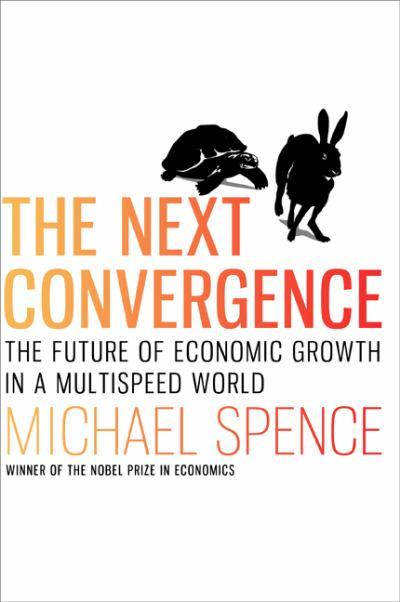
HBCU Money™ Business Book Feature – The Future of Economic Growth in a Multispeed World

spence-next-convergence-future-economic-growth-multispeed-world
A Washington Post Notable Nonfiction Book for 2011

With the British Industrial Revolution, part of the world’s population started to experience extraordinary economic growth—leading to enormous gaps in wealth and living standards between the industrialized West and the rest of the world. This pattern of divergence reversed after World War II, and now we are midway through a century of high and accelerating growth in the developing world and a new convergence with the advanced countries—a trend that is set to reshape the world.

Michael Spence, winner of the Nobel Prize in Economic Sciences, explains what happened to cause this dramatic shift in the prospects of the five billion people who live in developing countries. The growth rates are extraordinary, and continuing them presents unprecedented challenges in governance, international coordination, and ecological sustainability. The implications for those living in the advanced countries are great but little understood.

Spence clearly and boldly describes what’s at stake for all of us as he looks ahead to how the global economy will develop over the next fifty years. The Next Convergence is certain to spark a heated debate how best to move forward in the post-crisis period and reset the balance between national and international economic interests, and short-term fixes and long-term sustainability.