-
Recent Posts
- Public Transportation & Infrastructure: Apple Should Help Kill The Car Not Invest In It
- Beyond the College Fair: How HBCU Alumni Chapters Must Reimagine Recruitment
- The Seven (Internal) Barriers to Building Sustainable African American Philanthropic Infrastructure
- How Black Communities and HBCUs Are Missing the Boat on Artificial Intelligence — and Why That’s a Dangerous Mistake
- The Institutional Imperative: Moving Beyond Individual Black Wealth Narratives
Archives
- March 2026
- February 2026
- January 2026
- December 2025
- November 2025
- October 2025
- September 2025
- August 2025
- July 2025
- June 2025
- May 2025
- April 2025
- March 2025
- February 2025
- January 2025
- December 2024
- October 2024
- August 2024
- July 2024
- June 2024
- May 2024
- April 2024
- March 2024
- February 2024
- January 2024
- December 2023
- November 2023
- October 2023
- September 2023
- August 2023
- July 2023
- June 2023
- May 2023
- April 2023
- March 2023
- February 2023
- January 2023
- December 2022
- November 2022
- October 2022
- September 2022
- August 2022
- June 2022
- May 2022
- April 2022
- March 2022
- January 2022
- November 2021
- October 2021
- May 2021
- March 2021
- February 2021
- January 2021
- December 2020
- November 2020
- September 2020
- August 2020
- July 2020
- June 2020
- May 2020
- April 2020
- February 2020
- December 2019
- November 2019
- October 2019
- September 2019
- August 2019
- July 2019
- June 2019
- May 2019
- April 2019
- March 2019
- February 2019
- January 2019
- December 2018
- November 2018
- October 2018
- September 2018
- August 2018
- June 2018
- April 2018
- March 2018
- February 2018
- October 2017
- September 2017
- August 2017
- July 2017
- June 2017
- May 2017
- April 2017
- March 2017
- February 2017
- January 2017
- December 2016
- November 2016
- October 2016
- September 2016
- August 2016
- July 2016
- June 2016
- May 2016
- April 2016
- March 2016
- February 2016
- December 2015
- November 2015
- October 2015
- September 2015
- August 2015
- July 2015
- June 2015
- May 2015
- April 2015
- March 2015
- February 2015
- January 2015
- December 2014
- November 2014
- October 2014
- September 2014
- August 2014
- July 2014
- June 2014
- May 2014
- April 2014
- March 2014
- February 2014
- January 2014
- December 2013
- November 2013
- October 2013
- September 2013
- August 2013
- July 2013
- June 2013
- May 2013
- April 2013
- March 2013
- February 2013
- January 2013
- December 2012
- November 2012
- October 2012
- September 2012
- August 2012
- July 2012
- June 2012
- May 2012
- April 2012
- March 2012
- February 2012
- December 2011
- November 2011
Categories
Meta
Category Archives: Lifestyle
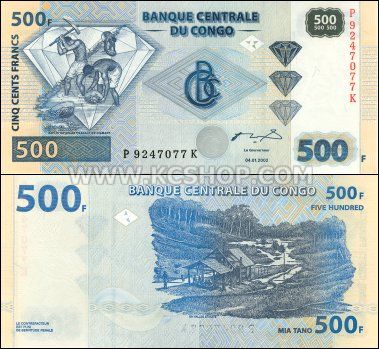
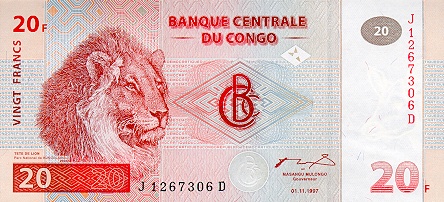
Currencies Of The African Diaspora – Republic Of The Congo
The economy is a mixture of subsistence hunting and agriculture, an industrial sector based largely on oil and support services, and government spending. Oil has supplanted forestry as the mainstay of the economy, providing a major share of government revenues and exports. Natural gas is increasingly being converted to electricity rather than being flared, greatly improving energy prospects. New mining projects, particularly iron ore, that entered production in late 2013 may add as much as $1 billion to annual government revenue. Economic reform efforts have been undertaken with the support of international organizations, notably the World Bank and the IMF, including recently concluded Article IV consultations. The current administration faces difficult economic challenges of stimulating recovery and reducing poverty. The drop in oil prices during the global crisis reduced oil revenue by about 30%, but the subsequent recovery of oil prices boosted the economy’s GDP from 2009-13. Officially the country became a net external creditor as of 2011, with external debt representing only about 16% of GDP and debt servicing less than 3% of government revenue.
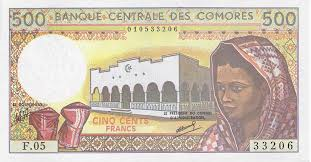
Currencies Of The African Diaspora – Comoros
One of the world’s poorest countries, Comoros is made up of three islands that have inadequate transportation links, a young and rapidly increasing population, and few natural resources. The low educational level of the labor force contributes to a subsistence level of economic activity, high unemployment, and a heavy dependence on foreign grants and technical assistance. Agriculture, including fishing, hunting, and forestry, contributes 50% to GDP, employs 80% of the labor force, and provides most of the exports. Export income is heavily reliant on the three main crops of vanilla, cloves, and ylang-ylang; and Comoros’ export earnings are easily disrupted by disasters such as fires. The country is not self-sufficient in food production; rice, the main staple, accounts for the bulk of imports. The government – which is hampered by internal political disputes – lacks a comprehensive strategy to attract foreign investment and is struggling to upgrade education and technical training, privatize commercial and industrial enterprises, improve health services, diversify exports, promote tourism, and reduce the high population growth rate. Political problems have inhibited growth. Remittances from 150,000 Comorans abroad help supplement GDP. In December 2012, IMF and the World Bank’s International Development Association supported $176 million in debt relief for Comoros, resulting in a 59% reduction of its future external debt service over a period of 40 years.
Source: Economy overview provided by CIA Factbook
Currencies Of The African Diaspora – Chad
Chad’s primarily agricultural economy will continue to be boosted by major foreign direct investment projects in the oil sector that began in 2000. Economic conditions have been positive in recent years, with real GDP growth reaching 13% in 2010 because of high international prices for oil and a strong local harvest. GDP growth for 2012 was 5%. However, Chad’s investment climate remains challenging due to limited infrastructure, a lack of trained workers, extensive government bureaucracy, and corruption. At least 80% of Chad’s population relies on subsistence farming and livestock raising for its livelihood. The government of Chad is determined to improve agricultural production through modernization and mechanization over the next three years, and hosted a national Rural Development Forum in 2012 to promote investment in agriculture. Chad’s economy has long been handicapped by its landlocked position, high energy costs, and a history of instability. Chad relies on foreign assistance and foreign capital for most public and private sector investment projects. Remittances are also an important source of income. The Libyan conflict disrupted inflows of remittances to Chad’s impoverished western region that relies on income from Chadians living in Libya. A consortium led by two US companies has been investing $3.7 billion to develop oil reserves – estimated at 1.5 billion barrels – in southern Chad. Chinese companies are also expanding exploration efforts and have completed a 311-km pipeline and the country’s first refinery. The nation’s total oil reserves are estimated at 1.5 billion barrels. Oil production came on stream in late 2003. Chad began to export oil in 2004. Cotton, cattle, and gum arabic provide the bulk of Chad’s non-oil export earnings.
Source: Economy overview provided by CIA Factbook
Currencies Of The African Diaspora – Central African Republic
Subsistence agriculture, together with forestry and mining, remains the backbone of the economy of the Central African Republic (CAR), with about 60% of the population living in outlying areas. The agricultural sector generates more than half of GDP. Timber and diamonds account for most export earnings, followed by cotton. Important constraints to economic development include the CAR’s landlocked position, a poor transportation system, a largely unskilled work force, and a legacy of misdirected macroeconomic policies. Factional fighting between the government and its opponents remains a drag on economic revitalization. Since 2009 the IMF has worked closely with the government to institute reforms that have resulted in some improvement in budget transparency, but other problems remain. The government’s additional spending in the run-up to the election in 2011 worsened CAR’s fiscal situation. Distribution of income is extraordinarily unequal. Grants from France and the international community can only partially meet humanitarian needs. In 2012 the World Bank approved $125 million in funding for transport infrastructure and regional trade, focused on the route between CAR’s capital and the port of Douala in Cameroon. After a two year lag in donor support, the IMF’s first review of CAR’s extended credit facility for 2012-15 praised improvements in revenue collection but warned of weak management of spending.
Source: Economy overview provided by CIA Factbook
The Myth Of The Overpaid Pro Athlete: Teachers Actually Make More Than NFL Players
Truth is a gem that is found at a great depth; whilst on the surface of the world all things are weighed by the false scale of custom. – Lord Byron
Quick, who is the eleventh man on your favorite pro basketball team? No answer. How about the backup long snapper on your favorite pro football team? Still nothing, huh? You certainly must know the utility infielder of your favorite baseball team? Crickets you say. One more, name the backup defenseman on your pro hockey team? Thankfully, there was no gun to your head during this brief quiz. The reality is that professional sports is made up of more of these guys and less of the well-heeled Kobe Bryant, Alex Rodriguez, and Peyton Manning’s whose salaries get tossed around on ESPN and average Joe/Jane sees these numbers and somehow translates that into all athletes must be making gazillionbajillion dollars.
The owners’ seem to get a pass on how much they make in perpetuity off the short-lived labor of these athletes. Many have been trained for a lifetime for a career that normally is over well before any of them will see a second contract. So which owners make the most? That would go to NFL owners’ whose median profits (the money they get to take home after all the bills are paid) at $28.9 million. In fact, the NFL is the only league where the owners annual median profits exceeds the salaries of the highest paid players in the league. The best part for NFL owners is they get to make their money without ever taking a brutal hit. Following the NFL is surprisingly, Major League Baseball with owners bringing in $14.6 million in median profits, next is the National Basketball Association whose owners pull an annual median of $12 million, and lastly the National Hockey League where owners see $5.5 million in median profits. It is worth noting that on a profit per game basis that National Football League owners dramatically come out on top making approximately $1.8 million profit per game, while National Basketball Association owners pull approximately $150 000 profit per game, Major League Baseball owners $90 000 profit per game, and National Hockey League owners squeak out a paltry almost but not quite $70 000 profit per game. Now you can see why NFL owners would love to add a game or two to the season.
This is a tale of social caution. First, just because it looks like a lot does not always mean that it is. No athlete plays forever and only a very select handful have endorsements that can carry them beyond their playing days. More importantly, it is a cautionary tale of how much hope we place on young African American men whose families often see them as ways out of poverty or the local coaches see them as their own meal ticket to a big time (and well paid) coaching gig. This is often done at the sake of developing them intellectually. Less thinking and more playing could be the athlete’s creed. The problem is the athlete does not realize this and the leeches around him due to their own interest reinforce it. Hoping to enjoy the ride of fame, glory, and short lived fortune with these athletes.
Numbers may not lie, but they can sure be misleading. A normal work career for anyone starts around 22 and retirement comes at 65. Career earnings tend to increase with time, experience, and promotions. However, what if you had to earn all of your earnings in under six years and it had to last you until you were 65. Like a lot of professions athletes have pensions they receive once they get to the retirement age of 65. Unfortunately, it is no small task getting there as most are ill-equipped to handle finances and tend to hire poor advisors and make very bad investments as we saw on ESPN’s 30 for 30 on the broke athlete. Again, many who have trained their whole lives just to play sports tend to have very limited career opportunities post sports and very few make the transition well. An examination of their earnings spread out to 65 paints a very different picture of what these athletes truly earn. Taking into account athletes average careers in each sport, median earnings, gross pay, taxes (which pay at the highest tax – owners do not though) and fees to advisors, and dividing that out over the number of years to 65 shows us a much more accurate picture of athletes incomes.
Athletes’ Median Salaries If Spread Out Until Age 65
-
NFL Players – $34 200
-
NBA Players – $144 000
-
MLB Players – $85 600
-
NHL Players – $81 300
Given this reality, it is not hard to imagine then why athletes go broke (especially NFL athletes – yikes). Most are the only income in their household and living lifestyles as we know well above the salary figures we see above. Again, perception sometimes runs counter to reality despite the airs many athletes put on of being well off. The national median salary for an elementary teacher is $53 173 or 55.5 percent greater than what the NFL median salary is. A dentist median salary is $150 000 making them even higher paid than NBA players who go broke at a 60 percent clip. How often do you hear of a broke dentist? Exactly.
There is nothing wrong with earning a living playing sports. Someone has to entertain us, right? Sports have been a glorified part of humanity since man’s existence on this Earth and I do not foresee that changing anytime soon. However, like many gladiators of Rome and those of today, the fame presents a false reality and the true spoils go to the men in the shadows. Are you not entertained?


![cn-map[1]](https://hbcumoney.com/wp-content/uploads/2014/03/cn-map1.gif?w=278&h=300)