-
Recent Posts
- Institutional Agriculture: How HBCUs and Black Banks Can Build a Farm Credit System of Our Own
- HBCUs Can Fill the Void: How America’s Retreat from Polar Research Creates an Unprecedented Opportunity for Black Academic Leadership
- College: Once A Space For Human Exploration Has Been Trampled By Corporate Conditioning
- With So Much Oil In HBCU States – Where Are HBCU Alumni Owned Energy Firms?
- I Woke Up in a New Bugatti: Rap’s Poverty Promotion and the Illusion of Wealth Transfer
Archives
- December 2025
- November 2025
- October 2025
- September 2025
- August 2025
- July 2025
- June 2025
- May 2025
- April 2025
- March 2025
- February 2025
- January 2025
- December 2024
- October 2024
- August 2024
- July 2024
- June 2024
- May 2024
- April 2024
- March 2024
- February 2024
- January 2024
- December 2023
- November 2023
- October 2023
- September 2023
- August 2023
- July 2023
- June 2023
- May 2023
- April 2023
- March 2023
- February 2023
- January 2023
- December 2022
- November 2022
- October 2022
- September 2022
- August 2022
- June 2022
- May 2022
- April 2022
- March 2022
- January 2022
- November 2021
- October 2021
- May 2021
- March 2021
- February 2021
- January 2021
- December 2020
- November 2020
- September 2020
- August 2020
- July 2020
- June 2020
- May 2020
- April 2020
- February 2020
- December 2019
- November 2019
- October 2019
- September 2019
- August 2019
- July 2019
- June 2019
- May 2019
- April 2019
- March 2019
- February 2019
- January 2019
- December 2018
- November 2018
- October 2018
- September 2018
- August 2018
- June 2018
- April 2018
- March 2018
- February 2018
- October 2017
- September 2017
- August 2017
- July 2017
- June 2017
- May 2017
- April 2017
- March 2017
- February 2017
- January 2017
- December 2016
- November 2016
- October 2016
- September 2016
- August 2016
- July 2016
- June 2016
- May 2016
- April 2016
- March 2016
- February 2016
- December 2015
- November 2015
- October 2015
- September 2015
- August 2015
- July 2015
- June 2015
- May 2015
- April 2015
- March 2015
- February 2015
- January 2015
- December 2014
- November 2014
- October 2014
- September 2014
- August 2014
- July 2014
- June 2014
- May 2014
- April 2014
- March 2014
- February 2014
- January 2014
- December 2013
- November 2013
- October 2013
- September 2013
- August 2013
- July 2013
- June 2013
- May 2013
- April 2013
- March 2013
- February 2013
- January 2013
- December 2012
- November 2012
- October 2012
- September 2012
- August 2012
- July 2012
- June 2012
- May 2012
- April 2012
- March 2012
- February 2012
- December 2011
- November 2011
Categories
Meta
Category Archives: Histronomics
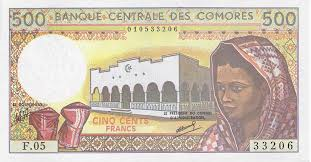
Currencies Of The African Diaspora – Comoros
One of the world’s poorest countries, Comoros is made up of three islands that have inadequate transportation links, a young and rapidly increasing population, and few natural resources. The low educational level of the labor force contributes to a subsistence level of economic activity, high unemployment, and a heavy dependence on foreign grants and technical assistance. Agriculture, including fishing, hunting, and forestry, contributes 50% to GDP, employs 80% of the labor force, and provides most of the exports. Export income is heavily reliant on the three main crops of vanilla, cloves, and ylang-ylang; and Comoros’ export earnings are easily disrupted by disasters such as fires. The country is not self-sufficient in food production; rice, the main staple, accounts for the bulk of imports. The government – which is hampered by internal political disputes – lacks a comprehensive strategy to attract foreign investment and is struggling to upgrade education and technical training, privatize commercial and industrial enterprises, improve health services, diversify exports, promote tourism, and reduce the high population growth rate. Political problems have inhibited growth. Remittances from 150,000 Comorans abroad help supplement GDP. In December 2012, IMF and the World Bank’s International Development Association supported $176 million in debt relief for Comoros, resulting in a 59% reduction of its future external debt service over a period of 40 years.
Source: Economy overview provided by CIA Factbook
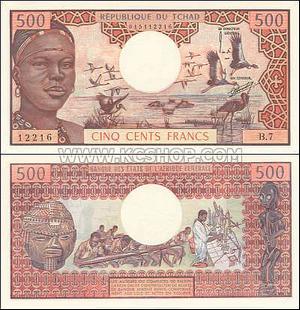
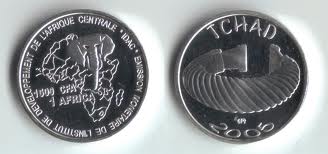
Currencies Of The African Diaspora – Chad
Chad’s primarily agricultural economy will continue to be boosted by major foreign direct investment projects in the oil sector that began in 2000. Economic conditions have been positive in recent years, with real GDP growth reaching 13% in 2010 because of high international prices for oil and a strong local harvest. GDP growth for 2012 was 5%. However, Chad’s investment climate remains challenging due to limited infrastructure, a lack of trained workers, extensive government bureaucracy, and corruption. At least 80% of Chad’s population relies on subsistence farming and livestock raising for its livelihood. The government of Chad is determined to improve agricultural production through modernization and mechanization over the next three years, and hosted a national Rural Development Forum in 2012 to promote investment in agriculture. Chad’s economy has long been handicapped by its landlocked position, high energy costs, and a history of instability. Chad relies on foreign assistance and foreign capital for most public and private sector investment projects. Remittances are also an important source of income. The Libyan conflict disrupted inflows of remittances to Chad’s impoverished western region that relies on income from Chadians living in Libya. A consortium led by two US companies has been investing $3.7 billion to develop oil reserves – estimated at 1.5 billion barrels – in southern Chad. Chinese companies are also expanding exploration efforts and have completed a 311-km pipeline and the country’s first refinery. The nation’s total oil reserves are estimated at 1.5 billion barrels. Oil production came on stream in late 2003. Chad began to export oil in 2004. Cotton, cattle, and gum arabic provide the bulk of Chad’s non-oil export earnings.
Source: Economy overview provided by CIA Factbook
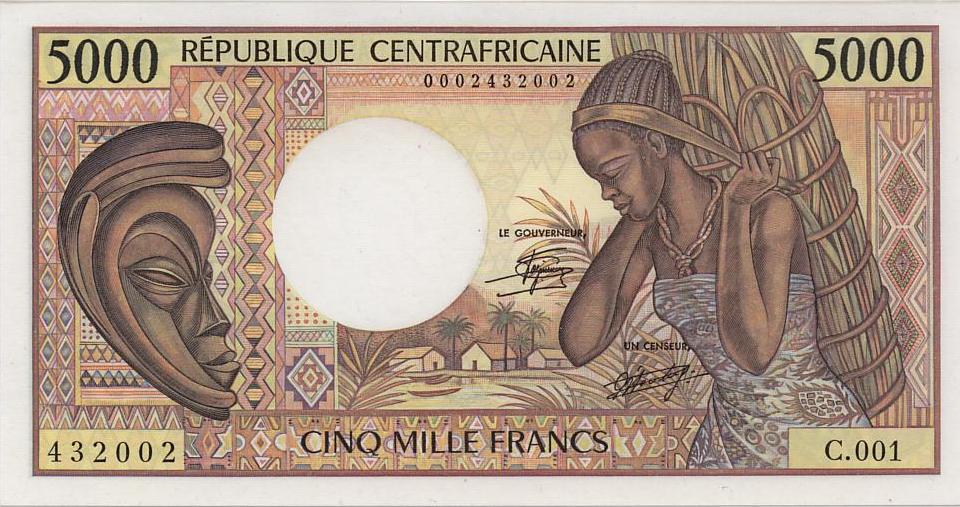
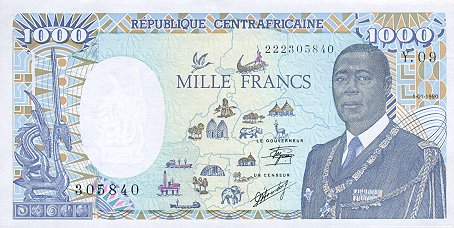
Currencies Of The African Diaspora – Central African Republic
Subsistence agriculture, together with forestry and mining, remains the backbone of the economy of the Central African Republic (CAR), with about 60% of the population living in outlying areas. The agricultural sector generates more than half of GDP. Timber and diamonds account for most export earnings, followed by cotton. Important constraints to economic development include the CAR’s landlocked position, a poor transportation system, a largely unskilled work force, and a legacy of misdirected macroeconomic policies. Factional fighting between the government and its opponents remains a drag on economic revitalization. Since 2009 the IMF has worked closely with the government to institute reforms that have resulted in some improvement in budget transparency, but other problems remain. The government’s additional spending in the run-up to the election in 2011 worsened CAR’s fiscal situation. Distribution of income is extraordinarily unequal. Grants from France and the international community can only partially meet humanitarian needs. In 2012 the World Bank approved $125 million in funding for transport infrastructure and regional trade, focused on the route between CAR’s capital and the port of Douala in Cameroon. After a two year lag in donor support, the IMF’s first review of CAR’s extended credit facility for 2012-15 praised improvements in revenue collection but warned of weak management of spending.
Source: Economy overview provided by CIA Factbook
Currencies Of The African Diaspora – Cabo Verde
The economy is service-oriented with commerce, transport, tourism, and public services accounting for about three-fourths of GDP. This island economy suffers from a poor natural resource base, including serious water shortages exacerbated by cycles of long-term drought and poor soil for agriculture on several of the islands. Although about 40% of the population lives in rural areas, the share of food production in GDP is low. About 82% of food must be imported. The fishing potential, mostly lobster and tuna, is not fully exploited. Cabo Verde annually runs a high trade deficit financed by foreign aid and remittances from its large pool of emigrants; remittances supplement GDP by more than 20%. Despite the lack of resources, sound economic management has produced steadily improving incomes. Continued economic reforms are aimed at developing the private sector and attracting foreign investment to diversify the economy and mitigate high unemployment. Future prospects depend heavily on the maintenance of aid flows, the encouragement of tourism, remittances, and the momentum of the government’s development program. Cabo Verde became a member of the WTO in July 2008.
Source: Economy overview provided by CIA Factbook
HBCU Money™ Histronomics: Martin Luther King, Jr’s Telegram To Betty Shabazz (Malcolm X’s Death)
Mrs. Malcolm X
Faith Temple Church
Harlem
New York, New York
FEB 26 1965
I was certainly saddened by the shocking and tragic assassination of your husband. While we did not always see eye to eye on methods to solve the race problem, I always had a deep affection for Malcolm and felt that he had the great ability to put his finger on the existence and root of the problem. He was an eloquent spokesman for his point of view and no one can honestly doubt that Malcolm had a great concern for the problems that we face as a race. While I know that this is a difficult hour for you, I am sure that God will give you the strength to endure. I will certainly be remembering you in my prayers and please know you have my deepest sympathy. Always consider me a friend and if I can do anything to ease the heavy load you are forced to carry at this time, please feel free to call on me.
Martin Luther King, Jr.
Posted in Histronomics
Tagged betty shabazz, jr., malcolm x's assassination, martin luther king, telegram
![cn-map[1]](https://hbcumoney.com/wp-content/uploads/2014/03/cn-map1.gif?w=278&h=300)


![cv-map[1]](https://hbcumoney.com/wp-content/uploads/2014/01/cv-map1.gif?w=278&h=300)
![CV46S[1]](https://hbcumoney.com/wp-content/uploads/2014/01/cv46s1.jpg?w=288&h=300)
![CVERSPEO[1]](https://hbcumoney.com/wp-content/uploads/2014/01/cverspeo1.jpg?w=300&h=292)
![CV63[1]](https://hbcumoney.com/wp-content/uploads/2014/01/cv631.jpg?w=290&h=300)
![CV54[1]](https://hbcumoney.com/wp-content/uploads/2014/01/cv541.jpg?w=300&h=296)
![Cv-c1[1]](https://hbcumoney.com/wp-content/uploads/2014/01/cv-c11.jpg?w=300&h=295)