Author Archives: hbcumoney

African America’s August Unemployment Report – 13.0%

jobs_pic

Overall Unemployment: 7.3% (7.4%)

African America Unemployment: 13.0% (12.6%)

Latino America Unemployment: 9.3% (9.4%)

European America Unemployment: 6.4% (6.6%)

Asian America Unemployment: 5.1% (5.7%)

Analysis: The unemployment rate overall dropped to 7.3 percent. African America is the only group to see their unemployment rate rise and maintains itself firmly in the double digits. Asian America has the most significant drop. Latino and European America saw negligible drops.

African American Male Unemployment: 13.5% (12.5%)

African American Female Unemployment: 10.6% (10.5%)

African American Teenage Unemployment: 38.2% (41.6%)

African American Male Participation: 66.6% (67.6%)

African American Female Participation: 61.5% (62.0%)

African American Teenage Participation: 28.9% (28.4%)

*Previous month in parentheses.

Analysis: The unemployment rate for African American men saw an significant uptick coupled with a dropping participation rate. African American women also experienced an uptick in their unemployment rate while participation rate dropped. Only the teenage group showed improvement in its unemployment rate and participation rate.

Conclusion: The economy added 169 000 new jobs overall. African America saw a decline a 210 000 in its employed ranks. It is the second lowest number of employed African Americans in the past five months and by far its biggest drop in employment over that same period. African America’s labor force is at its lowest in the past five months. The labor force number indicating that many African Americans are simply giving up on the chance of finding employment. The one bit of light in the coal mine is that African American teenagers picked up 30 000 jobs. Overall,  almost every piece of unemployment data is the worse it has been in five months. A frightening measure as many African American families head back into the school year needing to providing more not less.
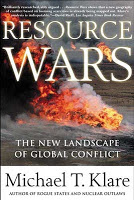
HBCU Money™ Business Book Feature – Resource Wars: The New Landscape of Global Conflict

resource_wars_cover

This sobering look at the future of warfare predicts that conflicts will now be fought over diminishing supplies of our most precious natural resources.

From the barren oilfields of Central Asia to the lush Nile delta, from the busy shipping lanes of the South China Sea to the uranium mines and diamond fields of sub-Saharan Africa, Resource Wars looks at the growing impact of resource scarcity on the military policies of nations. International security expert Michael T. Klare argues that in the early decades of the new millennium wars will be fought not over ideology but over resources, as states battle to control dwindling supplies of precious natural commodities. The political divisions of the Cold War, Klare asserts, are giving way to an immense global scramble for essential materials, such as oil, timber, minerals, and water. And as armies throughout the world define resource security as their primary mission, widespread instability is bound to follow, especially in those places where resource competition overlaps with long-standing disputes over territorial rights.

A much-needed assessment of a changed world, Resource Wars is a compelling look at the future of warfare in an era of heightened environmental stress and accelerated economic competition.

HBCU Money™ Dozen Links 9/2 – 9/6

img-thing

Did you miss HBCU Money™ Dozen via Twitter? No worry. We are now putting them on the site for you to visit at your leisure. We have made some changes here at HBCU Money™ Dozen. We are now solely focused on research and central bank articles from the previous week.

Research

NASA’s lunar mission could lead to Internet in space l ComputerWorld

Scientists confirm existence of largest single volcano on Earth l NSF

How the NSA gets around encryption – and the security holes it leaves behind l New Scientist

Better Data for Better Environmental Protection l EPA

Whooosh! How jets of air can alter your emotions l New Scientist

Childhood dream of being a tornado chaser helped blogger appreciate how weather & climate shape the environment l EPA

Federal Reserve, Central Banks, & Financial Departments

Employment rose by 169,000 in August; workforce now totals 136.13 million, highest in 5 years l St. Louis Fed

Fed hosting free audioconference on Entrepreneurship in rural America Sept. 10. Register l SF Fed

Consumer’s Guide to Credit Cards; try the calculator to see how long it takes to pay off l Chicago Fed

Florida city takes aim at unsightly foreclosures l Housing Wire

Young homeowners sidelined by employment woes l Housing Wire

Why were there fewer underwater mortgages in Texas during the Great Recession? l Dallas Fed

Thank you as always for joining us on Saturday for HBCU Money™ Dozen. The 12 most important research and finance articles of the week.

The HBCU Money™ Weekly Market Watch

Our Money Matters /\ September 6, 2013

A weekly snapshot of African American owned public companies and HBCU Money™ tracked African stock exchanges.

NAME TICKER PRICE (GAIN/LOSS %)

African American Publicly Traded Companies

Citizens Bancshares Georgia (CZBS) $6.49 (0.00% UNCH)

Radio One (ROIA) $2.35 (0.42% UP)

African Stock Exchanges

Bourse Regionale des Valeurs Mobilieres (BRVM)  N/A (N/A)

Botswana Stock Exchange (BSE)  8 558.62 (0.01% UP)

Ghana Stock Exchange (GSE)  1 989.97 (65.87% UP)*

Nairobi Stock Exchange (NSE)  122.30 (N/A)

Johannesburg Stock Exchange (JSE) 42 837.71 (0.09% UP)

International Stock Exchanges

New York Stock Exchange (NYSE) 9 457.57 (0.40% UP)

London Stock Exchange (LSE)  3 484.84 (0.26% UP)

Tokyo Stock Exchange (TOPIX)  1 147.82 (0.87% DN)

Commodities

Gold 1 387.80 (1.11 UP)

Oil 110.29 (1.77% UP)

*Ghana Stock Exchange shows current year to date movement. All others daily.

All quotes reported as of 4:00 PM Eastern Time Zone

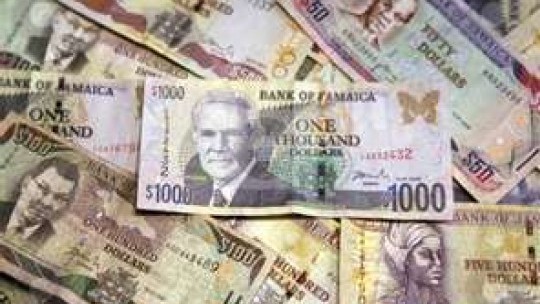
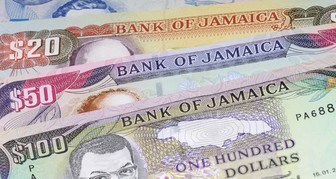
Currencies Of The African Diaspora – Jamaica

Up until the early 16th century, when the Spaniards colonized Jamaica, there had been little occasion for the use of a regular currency. Although there was a small amount of gold on the; island, the Taino Indians, Jamaica’s first inhabitants, used it; for decorative purposes rather than for trade, which was conducted by barter.

CHRISTIAN QUATTIES

The Negroes, who had become devout Christians did not think it appropriate to offer copper coins for collection. Because of their poverty, however, they could not afford the higher denominations and there was a shortage of lower denomination silver coins. In accordance with a resolution of the House of Assembly of 4 July 1834, British silver three pence and penny ha’penny pieces were imported in that year. The penny ha’penny became known as a ‘quartile’ or quarter real, and if we accept the value of the real as six-pence, we can easily see how the penny ha’penny came to be known as a ‘quattie’. Because of the specific need which these coins filled, they became known as “Christian quatties.”

THE FIRST JAMAICAN COINS

Following emancipation in 1838, when the freed slaves became wage earners, there was a greater need for ready cash, especially for values smaller than penny ha’penny. The copper and bronze coins of the British Imperial coinage were still unpopular among the Negro population who refused to use them, so an acceptable metal had to be found for coins of these denominations. Cupro-nickel, which was just gaining popularity as a metal for coinage was to provide the answer.

By the Order in Council and Proclamation of 11 November 1869, and by local laws, the penny and half-penny made of cupro-nickel were authorized to be struck for use in Jamaica. They weighed the same as the English coins of similar value, but had the Jamaican coat of arms on the reverse. As the British silver coins were accepted, there was no need for higher denominations of Jamaican coinage.

The pennies and half-pennies minted in 1869 constitute the first truly Jamaican coins. In 1880, the range of denominations was extended when a farthing was introduced. In 1937, when the worn coins were being replaced, the metal content was changed to nickel-brass. By this time, old fears and distrust had disappeared and there were no problems associated with this change. The farthing, first issued in 1880 was issued for the last time in 1952.

Alterations in the designs of these first Jamaican coins were made when British sovereigns changed, the sizes were reduced in 1937 and an up-dated version of the coat of arms was used in 1964 following independence in 1962.

images

images-1

jam50

jamaican_bank_notes7

plid_1995_Money_plid_1995_ii_dt_5458826 Jamaica_1_article

Source: Bank of Jamaica