-
Recent Posts
- America’s $100 Trillion Real Estate Empire: The Hidden Power Beneath the Ground
- The DEI Distraction: Why Black Business Leaders Are Defending the Wrong Battlefield
- Two Pillars Fall: The Loss of Columbia Savings and Adelphi Bank and What It Means for African American Communities
- HBCU Money’s 2025 African American Owned Bank Directory
- Mapping the Gap: The Geography of African American Banks and Credit Unions in 2025
Archives
- March 2026
- February 2026
- January 2026
- December 2025
- November 2025
- October 2025
- September 2025
- August 2025
- July 2025
- June 2025
- May 2025
- April 2025
- March 2025
- February 2025
- January 2025
- December 2024
- October 2024
- August 2024
- July 2024
- June 2024
- May 2024
- April 2024
- March 2024
- February 2024
- January 2024
- December 2023
- November 2023
- October 2023
- September 2023
- August 2023
- July 2023
- June 2023
- May 2023
- April 2023
- March 2023
- February 2023
- January 2023
- December 2022
- November 2022
- October 2022
- September 2022
- August 2022
- June 2022
- May 2022
- April 2022
- March 2022
- January 2022
- November 2021
- October 2021
- May 2021
- March 2021
- February 2021
- January 2021
- December 2020
- November 2020
- September 2020
- August 2020
- July 2020
- June 2020
- May 2020
- April 2020
- February 2020
- December 2019
- November 2019
- October 2019
- September 2019
- August 2019
- July 2019
- June 2019
- May 2019
- April 2019
- March 2019
- February 2019
- January 2019
- December 2018
- November 2018
- October 2018
- September 2018
- August 2018
- June 2018
- April 2018
- March 2018
- February 2018
- October 2017
- September 2017
- August 2017
- July 2017
- June 2017
- May 2017
- April 2017
- March 2017
- February 2017
- January 2017
- December 2016
- November 2016
- October 2016
- September 2016
- August 2016
- July 2016
- June 2016
- May 2016
- April 2016
- March 2016
- February 2016
- December 2015
- November 2015
- October 2015
- September 2015
- August 2015
- July 2015
- June 2015
- May 2015
- April 2015
- March 2015
- February 2015
- January 2015
- December 2014
- November 2014
- October 2014
- September 2014
- August 2014
- July 2014
- June 2014
- May 2014
- April 2014
- March 2014
- February 2014
- January 2014
- December 2013
- November 2013
- October 2013
- September 2013
- August 2013
- July 2013
- June 2013
- May 2013
- April 2013
- March 2013
- February 2013
- January 2013
- December 2012
- November 2012
- October 2012
- September 2012
- August 2012
- July 2012
- June 2012
- May 2012
- April 2012
- March 2012
- February 2012
- December 2011
- November 2011
Categories
Meta
Author Archives: hbcumoney
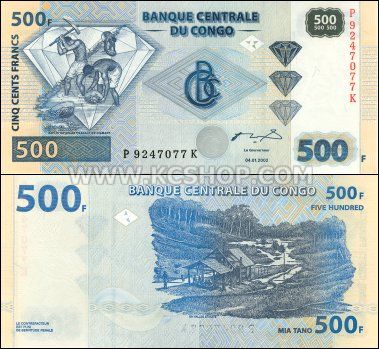
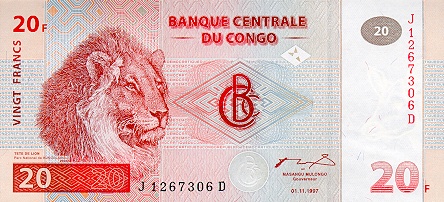
Currencies Of The African Diaspora – Republic Of The Congo
The economy is a mixture of subsistence hunting and agriculture, an industrial sector based largely on oil and support services, and government spending. Oil has supplanted forestry as the mainstay of the economy, providing a major share of government revenues and exports. Natural gas is increasingly being converted to electricity rather than being flared, greatly improving energy prospects. New mining projects, particularly iron ore, that entered production in late 2013 may add as much as $1 billion to annual government revenue. Economic reform efforts have been undertaken with the support of international organizations, notably the World Bank and the IMF, including recently concluded Article IV consultations. The current administration faces difficult economic challenges of stimulating recovery and reducing poverty. The drop in oil prices during the global crisis reduced oil revenue by about 30%, but the subsequent recovery of oil prices boosted the economy’s GDP from 2009-13. Officially the country became a net external creditor as of 2011, with external debt representing only about 16% of GDP and debt servicing less than 3% of government revenue.
The Economics Of Playing HBCU Championships At Pro Stadiums – When Winners Still Lose
Essentially, economics is the science of determining whether the interests of human beings are harmonious or antagonistic. – Claude-Frédéric Bastiat
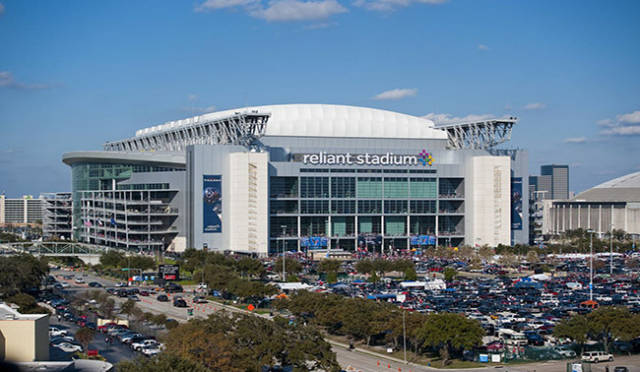
This past November, I attended the 2013 SWAC championship game with my father despite our family school, Prairie View A&M not being present. My father felt it was important to go out and support the SWAC. Our family annually attends the SWAC’s Labor Day Classic between Prairie View A&M University and Texas Southern University, which was eventually put out of Reliant it is rumored from poor attendance. A very sad indictment since Prairie View and Texas Southern are located 45 minutes and 15 minutes from the stadium, respectively. My father and I discussed why HBCUs have such a difficult time with attendance overall, save for a few select schools that travel really well. Even more importantly to me was whether the economics of playing the SWAC football championship in football at Reliant Stadium and the SWAC basketball championship at Toyota Center made dollars and sense. My father noted as he bought our tickets that the median ticket price was $35 that night and if the attendance came in well that the SWAC and both schools should do well. However, my question was could they do better?
The reported attendance at the game was 38 985 according to HBCU Digest. Calculated with the stated median price from above it equals out to approximately $1.37 million. Not a bad days haul on its first examination. Unfortunately, the SWAC does not own Reliant and therefore having a game there is not free. Based on the financial terms that were given for the UH-SMU game at Reliant, we can start to see just perhaps what that final figure might look like. There is a $75 000 license fee per game. Then there is the facility expense of $85 000 for 30 000 to attend plus $2 for every attendee over 30 000, bringing the total expense for the SWAC game to $177 970. All parking and concession revenue go to Reliant and 20 percent of merchandise sales also go to Reliant. Using a ratio of four people to a car, then the SWAC championship car attendance was 9 746 with parking cost at $10 or revenue of approximately $98 000. The median soda/beer cost at Reliant is $6.13 and a regular nacho (easily the most popular item at the SWAC championship – probably because it was the cheapest) was $7.00. Assuming that half of attendees will purchase at a minimum a drink and nacho that is worth approximately $256 000 based on the game’s attendance. This means that HBCUs are potentially only taking home 61 percent of the potential revenue (not including merchandise) when they play at professional stadiums if this is a standard deal. In the SWAC’s case a loss of revenue equal to $532 000 (not including merchandise) just for the football game.
My father’s argument was that if the game had not been played at the Reliant, then most fans would not come nor do most HBCU stadiums have the capacity for 40 000 fans. Prairie View’s stadium at best holds 5 000 comfortably. He argues that fans want to be in a nice venue, especially if you plan to get the fan who has no rooting interest to come to the game. There is some validity to this since the attendance for the SWAC championship when it was in Birmingham struggled mightily with attendance, even when Alabama A&M or Alabama State were in the game. There is also the issue of lodging, which for rural HBCUs tend to be lacking. That being said, I am not totally convinced.
I believe if the game was located in the central most urban geographic location to both schools playing in the championship, then an opportunity to collect a vast more of the pie could be accomplished. Could I be wrong in this? Absolutely. However, that we have not explored alternatives is an issue that we can ill afford. Given that conferences tend to share the revenues of these games throughout the conferencem it is worth an economic examination. Just as classics should be re-examined and the very questionable deal that HBCUs have with ESPN and the Disney SWAC/MEAC classic where attendance has consistently been less than stellar.
It often feels as if there is a lack of creativity to HBCU athletic departments. HBCU athletics will never be profitable because demographics simply do not allow for it. However, they can be less of a loss leader than they currently exhibit. Already underfunded, instead of trying out of the box scenarios that could draw larger crowds to generate higher revenues, we seem content to just mimic our counterparts who have vast resources and seven and eight figure boosters. Do we believe we can just walk by a penny on the ground? If we do, then we are in real denial about our financial crisis.

HBCU Money™ Business Book Feature – The Everything Store: Jeff Bezos and the Age of Amazon
The definitive story of Amazon.com, one of the most successful companies in the world, and of its driven, brilliant founder, Jeff Bezos.
Amazon.com started off delivering books through the mail. But its visionary founder, Jeff Bezos, wasn’t content with being a bookseller. He wanted Amazon to become the everything store, offering limitless selection and seductive convenience at disruptively low prices. To do so, he developed a corporate culture of relentless ambition and secrecy that’s never been cracked. Until now. Brad Stone enjoyed unprecedented access to current and former Amazon employees and Bezos family members, giving readers the first in-depth, fly-on-the-wall account of life at Amazon. Compared to tech’s other elite innovators–Jobs, Gates, Zuckerberg–Bezos is a private man. But he stands out for his restless pursuit of new markets, leading Amazon into risky new ventures like the Kindle and cloud computing, and transforming retail in the same way Henry Ford revolutionized manufacturing.
THE EVERYTHING STORE will be the revealing, definitive biography of the company that placed one of the first and largest bets on the Internet and forever changed the way we shop and read.
HBCU Money™ Dozen 3/17 – 3/21
Did you miss HBCU Money™ Dozen via Twitter? No worry. We are now putting them on the site for you to visit at your leisure. We have made some changes here at HBCU Money™ Dozen. We are now solely focused on research and central bank articles from the previous week.
Research
Tim Cook’s Approval Ranking Climbs One Spot in Top-50 CEO List l CIOonline trib.al/Kx7saeV
What VCs Look for in Big Data Startups l CIOonline trib.al/ZFzgJY8
This New Electric Car Is Demolishing The Competition In China l Clean Technica dlvr.it/5C9FgT
Europe’s home-grown space shuttle gears up for launch. We take an up-close look at it l New Scientist ow.ly/uPW4s
This is a great time to start a career in cybersecurity l Network World ow.ly/uQn0z
Scientist Nisha Sipes is looking at how a mother’s chemical exposures affect a developing embryo l EPA http://go.usa.gov/KVQx
Federal Reserve, Central Banks, & Financial Departments
Teachers: Attend “Getting to the Core through Economics and History” on June 17 l St. Louis Fed http://bit.ly/1pggZbh
The gap b/w the countries that perform best & worst in #trade logistics is still quite large l World Bank http://wrld.bg/uP75n
Podcast explains how to small towns manage to retain their best and brightest l St. Louis Fed http://bit.ly/1hTh0Ay
If you’re interested in how money is created this video explains l Bank of England http://ow.ly/uPtFr
How can entrepreneurs make use of #data when it isn’t open or doesn’t exist? l World Bank http://wrld.bg/uNQ1F
How can we improve educational outcomes for low-income youth? l Philadelphia Fed http://ow.ly/uQoXN
Thank you as always for joining us on Saturday for HBCU Money™ Dozen. The 12 most important research and finance articles of the week.
The HBCU Money™ Weekly Market Watch
Our Money Matters /\ March 21, 2014
A weekly snapshot of African American owned public companies and HBCU Money™ tracked African stock exchanges.
NAME TICKER PRICE (GAIN/LOSS %)
African American Publicly Traded Companies
Citizens Bancshares Georgia (CZBS) $8.04 (0.00% UNCH)
M&F Bancorp (MFBP) $3.67 (0.00% UNCH)
Radio One (ROIA) $4.84 (1.02% DN)
African Stock Exchanges
Bourse Regionale des Valeurs Mobilieres (BRVM) 239.76 (0.44% DN)
Botswana Stock Exchange (BSE) 8 933.27 (0.03% UP)
Ghana Stock Exchange (GSE) 2 388.74 (11.35% UP)*
Nairobi Stock Exchange (NSE) 144.50 (N/A)
Johannesburg Stock Exchange (JSE) 46 508.26 (0.00% UNCH)
International Stock Exchanges
New York Stock Exchange (NYSE) 10 392.22 (0.08% DN)
London Stock Exchange (LSE) 3 533.20 (0.10% UP)
Tokyo Stock Exchange (TOPIX) 1 145.97 (1.58% DN)
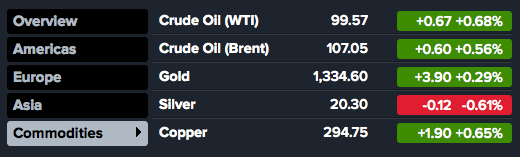
Commodities