Author Archives: hbcumoney

The Term HBCU Must Transcend More Than Colleges For African America

By William A. Foster, IV

I know no national boundary where the Negro is concerned. The whole world is my province until Africa is free. – Marcus Garvey
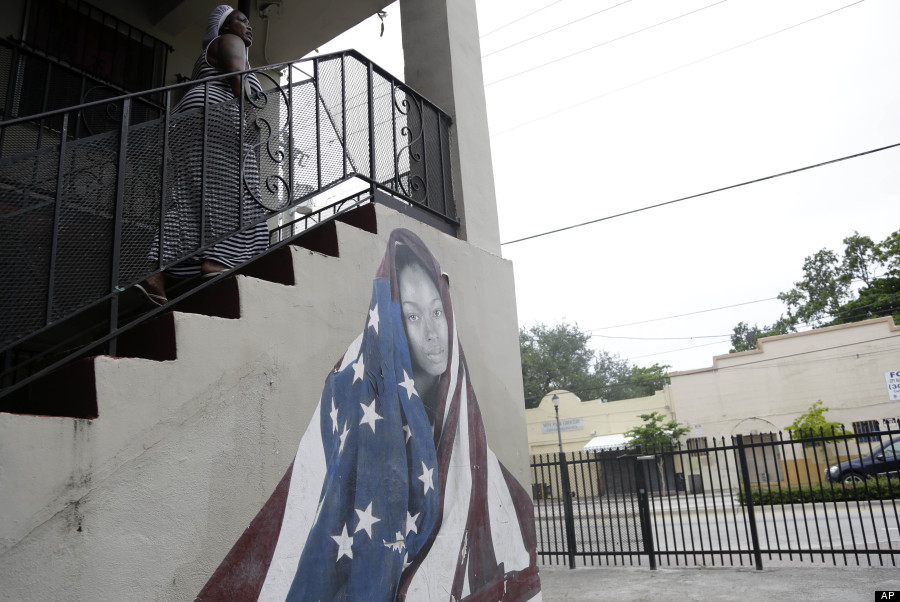
Village West Revitalization

I know no national boundary where the Negro is concerned. The whole world is my province until Africa is free.
Read more at http://www.brainyquote.com/quotes/quotes/m/marcusgarv390470.html#oSLCrTYbwfLYxdm7.99
I know no national boundary where the Negro is concerned. The whole world is my province until Africa is free.
Read more at http://www.brainyquote.com/quotes/quotes/m/marcusgarv390470.html#oSLCrTYbwfLYxdm7.99
I know no national boundary where the Negro is concerned. The whole world is my province until Africa is free.
Read more at http://www.brainyquote.com/quotes/quotes/m/marcusgarv390470.html#oSLCrTYbwfLYxdm7.99
I know no national boundary where the Negro is concerned. The whole world is my province until Africa is free.
Read more at http://www.brainyquote.com/quotes/quotes/m/marcusgarv390470.html#oSLCrTYbwfLYxdm7.99

Let me say this first – African America must define itself. Again, African American must define itself. It must not be defined by the federal government or those in ivory towers in lands far away. No, African America must define itself. That includes all institutions that have been created to serving our interest.

What is an HBCU? We know the acronym stands for Historically Black Colleges & Universities. We know that it was the federal government that defined an HBCU as an institution whose primary mission was to educate African Americans and established prior to 1964. This inflexible definition based on a founding year sounds a lot like what those in geostrategy would call containment. George F. Keenan, a career Foreign Service Officer, created the policy, strategy, and term of containment to deal with the Soviet Union after World War II. The strategy has been used in many different facets from the very macro level of countries to organizations on micro levels. It has been used by McDonald’s against Burger King and Wendy’s by a strategy of buying and controlling prime property locations when possible. By limiting what an HBCU can be, there seems to be a policy to contain African American institutional power. Unfortunately, HBCUs themselves are contributing to this containment themselves.

Chicago State, Charles Drew University, Martin College, Roxbury Community College, Medgar Ever College all serve predominantly African American populations, but are not considered HBCUs by the federal government and do not receive federal funding – more importantly there does not seem to be effort by traditional HBCUs themselves to include these institutions into the fabric. These schools are located in Illinois, California, Indiana, Massachusetts, and New York, respectively. All strategic geographic areas for African America. Instead, we allow for schools like Bluefield State College, West Virginia State University, and at least six other colleges who have federal HBCU designations, but have predominantly European American populations to receive federal funding under the guise of being HBCUs. They are historic certainly, but have long since not been under the control of African America. Even if we can not change the statute of the funding – debatable since that is what amendments are for – we can do a better job of expanding our geographic reach of what an HBCU is nationally by including the aforementioned schools rather than holding onto institutions we have long since lost control of.

Can HBCUs be more than colleges and universities though? I believe it can, if you believe that an HBCUs purpose in spirit is to serve the institutional development of African America. It can and should include predominantly African American cities and towns, neighborhoods, secondary schools, banks and credit unions, businesses (the reason for the creation of HBCU Chamber of Commerce), colleges and universities outside of the United States serving African Diaspora populations, and other institutions whose purpose are deemed to create an ecosystem of African America’s ability to circulate its social, economic, and political assets. By allowing the term HBCU to transcend colleges and universities it allows a flag of unity and interlocking to be established.

HBCUs are facing threats on a number of fronts. Some of these threats are internal like endowments, alumni giving, and some external like state and federal policies and outside influence looking to dilute and contain HBCUs as institutions of African American institutional power. The way to combat this is to expand not retrench. An HBCU manifest destiny I dare call it. The old saying a chain is only as strong as its weakest link, but what if the chain is not even interlocking? Outside of some loose conference interlocking, there seems to be very little interlocking of African American institutions with each other and HBCUs are no different. We could can help this by expanding the definition of HBCU and defining it ourselves. A definition based on inclusion of other institutions who are working towards the same goals and missions as HBCUs.

The HBCUpreneur Corner – Virginia State University’s Steven Knight & The Steven Knight Show


577291_437983786213263_1070599858_n

Name: Steven Knight

Alma Mater: Virginia State University

Business Name & Description: The Steven Knight Show – An internet-based radio talk show that covers the latest in entertainment news, sports, fashion, music, and movie reviews.

What year did you found your company? 2011

What has been the most exciting and/or fearful moment during your HBCUpreneur career? In the early days of the show, not knowing if I would attract enough listeners to support the show.

What made you want to start your own company? I was asked to do it based on my Facebook page. Initially, I turned down the offer but after considering the exposure for my own music and the opportunity to interview interesting people, I thought it was a good idea.

Who was the most influential person/people for you during your time in college? I had some great professors who led by example, but the most influential people were some of the students I had the opportunity to meet. Their diverse backgrounds, goals, and things they accomplished just while we were in school impacted me in ways they probably never knew.

me9

How do you handle complex problems? Well initially I pray for clarity, then do my research and consult with people within the same industry.

What is something you wish you had known prior to starting your company? How to get sponsors early on. That would have been very helpful.

What do you believe HBCUs can do to spur more innovation and entrepreneurship while their students are in school either as undergraduate or graduate students? I think the biggest thing is to support past graduates and influence them to mentor and be supportive of current students. If they can build those relationships it could be instrumental in the success of the school and past and present students.

How do you deal with rejection? In this field it is common. It’s really a numbers game. For every five people who reject you, one major guest is interested in being on your show. So it doesn’t bother me.

When you have down time how do you like to spend it? I don’t get much down time between my show, music, and working full time. I make time to workout most days of the week and there are certain days I will take off for a mental break.

What was your most memorable HBCU memory? Graduation day. I had a friend and we were really close for years, but we had a falling out and were not on speaking terms. The morning of graduation, he came over to my house and we had a chance to talk and relive the last four years. It really left everything on a good note. Plus, the accomplishment of completing school with people you went through so much with. That was a good day.

In leaving is there any advice you have for budding HBCUpreneurs? My advice would be that hard work really pays off. Even if the dream is never realized, something really great can really come from your hard work. I know that first hand.

The HBCU Money™ Business Book Feature – Currencies After the Crash: The Uncertain Future of the Global Paper-Based System

9780071784887

From the game-changing consequences of the U.S. dollar replacing the British sterling as the world’s reserve currency to the beginning and end of the Bretton Woods Agreement–exchange rate policy drastically changes the way we do business, consume goods and services, and create wealth. The global financial system is once again on the cusp of change, affected by the European debt crisis, the rebalancing of the Chinese economy, and the Federal Reserve’s controversial policy of quantitative easing, to name a few. To help investors in all walks of life understand and adapt to the changes ahead, Bloomberg Television’s Sara Eisen presents Currencies After the Crash.

In this insightful and timely book, Eisen brings together the world’s leading minds in the foreign exchange market. These brand-new, never-before-published essays from renowned academics and sought-after practitioners delve into the global financial system’s instability, potential solutions and surrounding controversies, and how specific changes will affect your future wealth. This complete resource gives you all the fundamental background needed to understand the more complex issues that follow, including:

  • Will the U.S. dollar lose its precious reserve currency status?
  • How have central bank policies affected the world’s major currencies?
  • How does China’s control over its currency affect the world?
  • What are the benefits and dangers of a shared currency like the euro?
  • How has the U.S. dollar’s prominence declined since the financial crisis?
  • What is the responsibility of global groups like the International Monetary Fund and G-20 in foreign exchange?
  • What role, if any, should gold play in the international monetary system?


Start adapting your investing strategies today based on tomorrow’s fiscal changes with Currencies After the Crash.

About the Author

Sara Eisen is a correspondent for Bloomberg Television. She appears on Bloomberg Surveillance, Bloomberg’s TV program that begins the day’s conversation on business, economics, finance, and investment. She also can be seen daily on Bloomberg TV’s Lunch Money mid-day program. Based in New York City, Eisen specializes in covering global macroeconomics, with a focus on foreign exchange and fixed income markets. She has extensively covered the European debt crisis, interviewing top political leaders and finance ministers from Germany to Greece; she also frequently moderates panels on international economics.

HBCU Money™ Dozen 3/24 – 3/28

12images

Did you miss HBCU Money™ Dozen via Twitter? No worry. We are now putting them on the site for you to visit at your leisure. We have made some changes here at HBCU Money™ Dozen. We are now solely focused on research and central bank articles from the previous week.

Research

How do the FBI and Secret Service know your network has been breached before you do? l NetworkWorld http://ow.ly/v6ecl

Effect of reduced feed intake on milk production in mares l KY Equine http://ow.ly/v6em3

Food & health educators, seafood professionals, & communicators: Workshop Apr 7-10 l Delaware Sea Grant http://darc.cms.udel.edu/sgseafood/

Genetic tree of bird life could solve the Noah’s Ark problem – which species to try to save l New Scientist http://ow.ly/v6fp3

Solar achieves price parity in Europe l Computerworld http://ow.ly/v6fA3

Inside the Shadowy World of Data Brokers l CIOonline http://trib.al/FYR1Ch4

Federal Reserve, Central Banks, & Financial Departments

A look at the recent economic histories of Japan, the U.S. & South Korea l St. Louis Fed http://bit.ly/1jYfgXe

Thoughts on Accommodative Monetary Policy, Inflation and Financial Instability l Chicago Fed http://ow.ly/v6gk6

Do property tax assessment caps have any effect on gentrification? l Atlanta Fed http://goo.gl/CQHU7A

Tackling air pollution would improve health and boost GDP l World Bank http://wrld.bg/v1aqe

Learn about data & market-based tools for neighborhood revitalization l Philly Fed Comm. Dev. http://ow.ly/v6gMw

High school teachers: Direct your students to the College 101 – College Planning l St. Louis Fed http://bit.ly/16NiVmp

Thank you as always for joining us on Saturday for HBCU Money™ Dozen. The 12 most important research and finance articles of the week.

The HBCU Money™ Weekly Market Watch

Our Money Matters /\ March 28, 2014

A weekly snapshot of African American owned public companies and HBCU Money™ tracked African stock exchanges.

NAME TICKER PRICE (GAIN/LOSS %)

African American Publicly Traded Companies

Citizens Bancshares Georgia (CZBS) $8.04 (0.00% UNCH)

M&F Bancorp (MFBP) $3.70 (0.00% UNCH)

Radio One (ROIA) $4.67 (1.50% UP)

African Stock Exchanges

Bourse Regionale des Valeurs Mobilieres (BRVM) 240.61 (0.38% UP)

Botswana Stock Exchange (BSE) 8 946.45 (0.03% UP)

Ghana Stock Exchange (GSE) 2 386.39 (11.24% UP)*

Nairobi Stock Exchange (NSE) 144.38 (N/A)

Johannesburg Stock Exchange (JSE) 47 930.03 (1.16% UP)

International Stock Exchanges

New York Stock Exchange (NYSE) 10 434.87 (0.59% UP)

London Stock Exchange (LSE) 3 559.44 (0.32% UP)

Tokyo Stock Exchange (TOPIX) 1 186.52 (0.82% UP)

Commodities

Screen Shot 2014-03-28 at 3.58.36 PM