Author Archives: hbcumoney

HBCU Money™ B-School: Investing Across Borders Interesting Facts

By World Bank Group

20121027_INC343

Investing Across Sectors

  • More than a quarter of the 87 countries surveyed by Investing Across Borders (IAB) have few or no sector-specific restrictions on foreign ownership of companies.
  • Smaller countries have fewer restrictions on foreign ownership of companies, while larger countries — such as China, Mexico, the Philippines, and Thailand — are among those with the most.
  • Countries in Eastern Europe and Central Asia and Latin America and the Caribbean tend to be the most open to foreign ownership of companies.
  • Though services account for a growing share of global foreign direct investment (FDI), foreign ownership of companies is more restricted in the service sector than in the primary and manufacturing sectors.
  • Worldwide, restrictions on foreign ownership are strictest in media, transportation, electricity, and telecommunications industries.
  • Most countries allow foreign ownership of equity in alternative energy companies — with some countries in Middle East and North Africa being notable exceptions.

Starting a Foreign Business

  • In most countries measured by Investing Across Borders (IAB), starting a foreign company takes longer and requires more steps than starting a domestic company.
  • The most common additional procedure required of foreign companies is the foreign investment approval or declaration, required in 48% of the 87 surveyed countries.
  • In Eastern Europe and Central Asia, the additional procedures required of foreign businesses add only 4 days on average to the total start-up time.
  • Georgia and Rwanda have the fastest process for starting a foreign business of all measured countries.
  • Only 3 of the 87 surveyed countries do not have their commercial laws and regulations publicly available online.
  • Companies are able to download business registration forms in 59% of all measured countries, but only 18% of them offer electronic registration services.
  • Four out of the 87 surveyed countries do not allow foreign companies to hold foreign currency bank accounts.
  • Haiti is the only IAB country where the minimum capital requirements are more favorable for foreign than domestic companies.

Accessing Industrial Land

  • In 1 in 4 of the countries surveyed by Investing Across Borders (IAB), foreign companies cannot own private land.
  • All the countries surveyed allow foreign-owned companies to lease land.
  • More than half the countries surveyed do not allow foreign companies to use land leases as collateral.
  • It takes as little as 10 days to lease private land in Armenia — and as many as 149 days in Nicaragua.
  • Across the 87 IAB countries the average time it takes to lease land from the government is more than twice that required to lease land from a private holder.
  • Nearly two-thirds of countries require an additional approval to authorize the lease of government-held land to foreign companies.
  • In only one-third of countries with both a land registry and cadastre are the two public agencies linked to share data, facilitating information access.
  • Less than half the countries do not provide accessible public documentation on previous environmental impact assessments conducted on industrial lands.

Arbitrating Commercial Disputes

  • All Investing Across Borders (IAB) countries recognize arbitration as a tool for resolving commercial disputes, and only 8 of the 87 countries do not have a specific arbitration law: Albania, Argentina, Bosnia and Herzegovina, Ethiopia, Liberia, Mali, Montenegro, and Poland.1
  • About half of IAB countries have laws that distinguish between domestic and international arbitration.
  • The Czech Republic and Mexico are among 17 IAB countries where businesses can conduct arbitration proceedings online.
  • In most countries in Latin America and the Caribbean, foreign lawyers without local bar membership are not permitted to represent parties in arbitration proceedings.
  • There are no functional arbitration institutions in Cambodia and Sierra Leone, while Colombia and Malaysia have many active institutions.
  • In most countries in East Asia and the Pacific, laws do not require courts to assist during arbitration proceedings with orders for production of evidence or appearance of witnesses. In contrast, 4 of the 5 IAB countries in South Asia legally require domestic courts to assist in arbitrations.
  • Many countries in Eastern Europe and Central Asia have adopted special rules to ensure fast enforcement proceedings of arbitration awards, such as establishing special authorities outside the judiciary to issue writs of execution.

http://iab.worldbank.org/Data/Interesting%20Facts

1.Source: Investing Across Borders 2010.

HBCU Money™ Business Book Feature – Age of Ambition: Chasing Fortune, Truth, and Faith in the New China

osnos age ambition

A vibrant, colorful, and revelatory inner history of China during a moment of profound transformation

From abroad, we often see China as a caricature: a nation of pragmatic plutocrats and ruthlessly dedicated students destined to rule the global economy—or an addled Goliath, riddled with corruption and on the edge of stagnation. What we don’t see is how both powerful and ordinary people are remaking their lives as their country dramatically changes.

As the Beijing correspondent for The New Yorker, Evan Osnos was on the ground in China for years, witness to profound political, economic, and cultural upheaval. In Age of Ambition, he describes the greatest collision taking place in that country: the clash between the rise of the individual and the Communist Party’s struggle to retain control. He asks probing questions: Why does a government with more success lifting people from poverty than any civilization in history choose to put strict restraints on freedom of expression? Why do millions of young Chinese professionals—fluent in English and devoted to Western pop culture—consider themselves “angry youth,” dedicated to resisting the West’s influence? How are Chinese from all strata finding meaning after two decades of the relentless pursuit of wealth?
Writing with great narrative verve and a keen sense of irony, Osnos follows the moving stories of everyday people and reveals life in the new China to be a battleground between aspiration and authoritarianism, in which only one can prevail.

HBCU Money™ Dozen 5/19 – 5/23

12

Did you miss HBCU Money™ Dozen via Twitter? No worry. We are now putting them on the site for you to visit at your leisure. We have made some changes here at HBCU Money™ Dozen. We are now solely focused on research and central bank articles from the previous week.

Research

How GE Uses Social Tools to Support its Digital Strategies l CIOonline http://trib.al/BS6UoMB

Does the CFO Need to Become a Technologist? l CIOonline http://ow.ly/xcUmz

Concentrating solar power research at PNN Lab & Sandia Labs l Energy http://t.co/39HC3izFD1

Deadline to apply for Illinois Coastal Management Program grants is in one week l IL-IN Sea Grant http://ow.ly/xcUFO

World’s Largest Tracking Solar PV Plant Completed In California l Clean Technica http://dlvr.it/5m2NFm

Check out these “5 Apps For A Citizen Science Summer” l Popular Science http://bit.ly/1gpDpIq

Federal Reserve, Central Banks, & Financial Departments

China’s economy will soon surpass the U.S.’s l St. Louis Fed http://bit.ly/RWnGWq

Teachers: Free interactive eBook to teach your students the basics of saving money l St. Louis Fed http://bit.ly/RHnRVq

Africa has 9% of the world’s water, and only 11% of the globe’s population l World Bank http://wrld.bg/xcfap

Watch: The New Geography of jobs l SF Fed http://ow.ly/xcVY6

Obama to announce Julian Castro’s nomination as HUD Secretary l Housing Wire http://hwi.re/5lxprg

Economists use micro-level banking data to shed light on global transmission of funding shocks l NY Fed http://nyfed.org/1ktRvYN

Thank you as always for joining us on Saturday for HBCU Money™ Dozen. The 12 most important research and finance articles of the week.

The HBCU Money™ Weekly Market Watch

Our Money Matters /\ May 23, 2014

A weekly snapshot of African American owned public companies and HBCU Money™ tracked African stock exchanges.

NAME TICKER PRICE (GAIN/LOSS %)

African American Publicly Traded Companies

Citizens Bancshares Georgia (CZBS) $8.91 (2.41% UP)

M&F Bancorp (MFBP) $4.85 (1.25% UP)

Radio One (ROIA) $4.10 (0.74% UP)

African Stock Exchanges

Bourse Regionale des Valeurs Mobilieres (BRVM)  232.31 (0.70% UP)

Botswana Stock Exchange (BSE)  9 047.48 (0.29% UP)

Ghana Stock Exchange (GSE)  2 243.70 (4.59% UP)*

Nairobi Stock Exchange (NSE)  149.80 (N/A)

Johannesburg Stock Exchange (JSE) 49 952.69 (0.12% UP)

International Stock Exchanges

New York Stock Exchange (NYSE) 10 681.87 (0.35% UP)

London Stock Exchange (LSE)  3 630.98 (0.01% DN)

Tokyo Stock Exchange (TOPIX)  1 180.44 (0.95% UP)

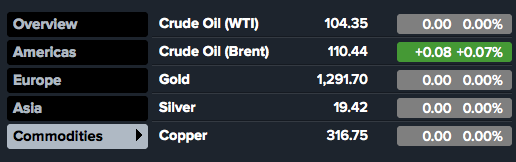
Commodities

Screen shot 2014-05-23 at 5.30.43 PM

Can HBCUs Produce Billionaires?

By Jarrett Carter, Sr.

Ideas can be life-changing. Sometimes all you need to open the door is just one more good idea. – Jim Rohn

forbes-400-22099215jpg

Oprah Winfrey (pictured above) – The only African American billionaire & HBCU alum. Her most recent Forbes’ net worth is $2.9 billion. Who will be the next HBCU alumni to join her?

Colleges With The Most Billionaire Alum & Combined Wealth: (Updated December 2024)

  • Harvard University – 29; combined wealth of $205 billion
  • University of Pennsylvania – 28; combined wealth of $285 billion
  • Stanford University. – 28; combined wealth of $124 billion
  • University of Michigan – 10; combined wealth of $181 billion
  • Columbia University – 11; combined wealth of $41 billion
  • M.I.T. – 14; combined wealth of $104 billion
  • Cornell University – 18; combined wealth of $65 billion
  • University Southern California – 15; combined wealth of $59 billion
  • Yale Univ. – 21; combined wealth of $141 billion
  • Princeton University – 11; combined wealth of $288 billion
  • Dartmouth College – 11; combined wealth of $49 billion
  • University of California, Berkeley – 10; combined wealth of $30 billion

Last year, Dillard University President Walter Kimbrough asked newly minted (allegedly) billionaire Dr. Dre about the missing love for historically Black colleges and universities following a sizable gift he made to the University of Southern California. The question was legitimate from most cultural angles – how does a Black man who made money making Black music for Black audiences boost the endowment of a predominantly white university?

But the question also demands a broader perspective on Black wealth and how it is created. Dr. Kimbrough’s argument was for the sake of Black wealth remaining in Black ecosystems of wealth creation. The center of those ecosystems, of course, is the Black college. But can the Black college serve as an economic engine powerful enough to create the next billionaire, or handful of billionaires?

On its surface, the answer would appear to be a resounding ‘no’. The HBCU was borne out of a white elitist obligation to make of former slaves and their descendants the teachers, preachers, and farmers that would serve as a generational of professional midwives to a humble, quiet existence amid the burgeoning industrial revolution. Along the way, HBCUs evolved into institutions where African-Americans would train to become physicians, engineers, combat heroes, scientists, lawyers, and pastors – all of the makings of a generation of emerging wealth for Black communities.

But as that generation was coming of age in industrial and financial independence, the nation again divided on the common problem of race, requiring the whole of its brain trust to dedicate mind and money to the cause of equity for all. At the end of the battle, desegregation was won. But the casualty of the battle was the cultural allegiances that birthed innovation and productivity for Black communities, and took the precious, dwindling commodity of racial pride out into predominantly white companies, neighborhoods, and values.

Today, the HBCU attracts but a portion of the best and the brightest from Black America; the rest remain lured by the false promises of diversity, equal opportunity, and post-racial societal ease. The training, nurturing, and programmatic development of the HBCUs falls on only a small segment of Black America’s collective and emerging intellectual capital. The youth are fractured, their networks are frayed and the genius that is unbridled innovation is capped by the promise of a six-figure job at a firm or company that, in rare cases, is owned by an African-American. To the last point, there are 5.7 million American firms with paid employees, but African Americans only own 1.9 percent of them.

The question is not if an HBCU can create a billionaire, but rather, can an HBCU create the network that helps to spawn billionaire potential? Facebook was founded, in part, by a group of friends at Harvard. Apple was founded by a group of college students. In fact, Silicon Valley was founded by Stanford University and originally known as Stanford Research Park. Other notable companies that have come out of colleges Google, Microsoft, Dell, and FedEx. Sam Walton and Jeff Bezos, titans of retail, were able to begin their careers thanks to sizable loans from family. The latter founded Amazon with a $300 000 loan from his parents.

Do HBCU students, families, and communities have the kind of commitment to pooling human and financial resources to cultivating substantial wealth? The answer is yes; but have HBCUs been built and marketed to serve as the incubators for this kind of thinking and development? Based upon current teaching, social and cultural structures on the Black college campus, the answer is no.

And that is something even Dr. Dre can’t cure.