Author Archives: hbcumoney

HBCU Money™ Business Book Feature – Becoming Dad: Black Men and the Journey to Fatherhood

51KiFisNAJL._SY344_BO1,204,203,200_

The fatherless black family is a problem that grows to bigger proportions every year as generations of black children grow up without an adult male in their homes. As this dire pattern grows worse, what can men do who hope to break it, when there are so few models and so little guidance in their own homes and communities? Where can they learn to “become Dad?”  When Pulitzer Prize-winning columnist Pitts—who himself grew up with an abusive father whose absences came as a relief—interviewed dozens of men across the country, he found both discouragement and hope, as well as deep insights into his own roles as son and father. An unflinching investigation, both personal and journalistic, of black fatherhood in America, this is the best, most pivotal book on this profoundly important issue.


HBCU Money™ Dozen 6/15 – 6/19

12STEPBALL_2

Did you miss HBCU Money™ Dozen via Twitter? No worry. We are now putting them on the site for you to visit at your leisure. We have made some changes here at HBCU Money™ Dozen. We are now solely focused on research and central bank articles from the previous week.

Research

These biologists drove across the Arctic to simulate the impact of humans on Mars l New Scientist http://ow.ly/Ouru7

Americans generated 254,000,000 tons of waste. Where does it go? l US EPA Research http://ow.ly/OutTy

The Pacific island of Palau is fighting Illegal fishing l Pew Environment http://wapo.st/1JOlmrc

Wearables and company wellness programs go hand-in-hand l Computerworld http://ow.ly/OuuDH

Number of Summer Food Service Program sites grew in 2014 l USDA Economic Research Services http://go.usa.gov/3E4u9

Is your company culture driving away women tech workers? l CIOonline http://trib.al/AjKuXm7

Federal Reserve, Central Banks, & Financial Departments

Which states are most affected by falling oil prices? l St. Louis Fed http://bit.ly/1J4HWNN

Which are #Africa’s most competitive economies? l World Economic Forum http://wef.ch/1JEolnG

Issues related to #homelessness in the U.S. and our region l Richmond Fed http://ow.ly/OuyDL

Foreclosure activity hits 19-month high on rise in REOs l Housing Wire http://hwi.re/BFf3pG

In #Africa, community-driven development tackles fragility from the ground up l World Bank http://bit.ly/1IQPdOz

Why businesses need to learn to share #water l World Economic Forum http://wef.ch/1dvxEbL

Thank you as always for joining us on Saturday for HBCU Money™ Dozen. The 12 most important research and finance articles of the week.

The HBCU Money™ Weekly Market Watch

Our Money Matters /\ June 19, 2015

A weekly snapshot of African American owned public companies and HBCU Money™ tracked African stock exchanges.

NAME TICKER PRICE (GAIN/LOSS %)

African American Publicly Traded Companies

Citizens Bancshares Georgia (CZBS) $10.00 (0.99% DN)

M&F Bancorp (MFBP) $4.36 (0.00% UNCH)

Radio One (ROIA) $3.70 (1.58% UP)

African Stock Exchanges

Bourse Regionale des Valeurs Mobilieres (BRVM)  272.62 (0.52% DN)

Botswana Stock Exchange (BSE)  10 586.37 (0.14% DN)

Ghana Stock Exchange (GSE)  2 368.85 (4.77% UP)*

Nairobi Stock Exchange (NSE)  162.40 (N/A)

Johannesburg Stock Exchange (JSE) 51 806.71 (0.18% DN)

International Stock Exchanges

New York Stock Exchange (NYSE) 11 046.25 (0.49% DN)

London Stock Exchange (LSE)  3 660.06 (0.04% UP)

Tokyo Stock Exchange (TOPIX)  1 631.01 (0.89% UP)

Commodities

Screen Shot 2015-06-19 at 2.23.29 PM

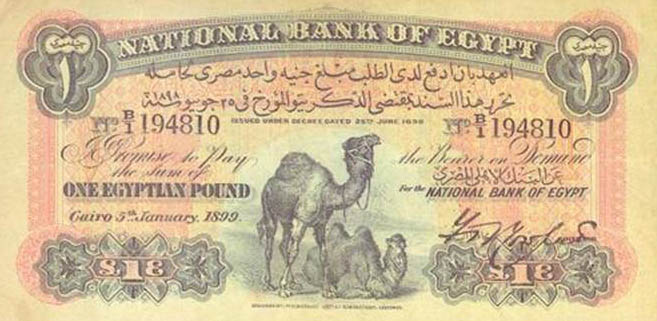
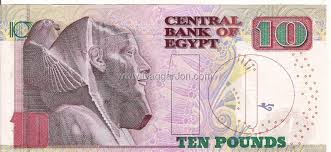
Currencies Of The African Diaspora – Egypt

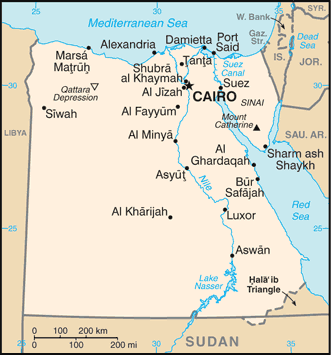
eg-map

Occupying the northeast corner of the African continent, Egypt is bisected by the highly fertile Nile valley, where most economic activity takes place. Egypt’s economy was highly centralized during the rule of former President Gamal Abdel NASSER but opened up considerably under former Presidents Anwar EL-SADAT and Mohamed Hosni MUBARAK. Cairo from 2004 to 2008 pursued business climate reforms to attract foreign investment and facilitate growth. Poor living conditions and limited job opportunities for the average Egyptian contribute to public discontent, a major factor leading to the January 2011 revolution that ousted Mubarak. The uncertain political, security, and policy environment since 2011 caused economic growth to slow significantly, hurting tourism, manufacturing, and other sectors and pushing up unemployment. Weak growth and limited foreign exchange earnings have made public finances unsustainable, leaving authorities dependent on expensive borrowing for deficit finance and on Gulf allies to help cover the import bill. Egypt’s current Constitution passed in a referendum that took place in January 2014.

GDP
$945.4 billion (2014 est.)
$925 billion (2013 est.)
$906 billion (2012 est.)
$284.9 billion (2014 est.)
GDP GROWTH
2.2% (2014 est.)
2.1% (2013 est.)
2.2% (2012 est.)
GDP COMPOSITION
agriculture: 14.6%
industry: 38.9%
services: 46.5% (2014 est.)
Egyptian_First_pound_bill
images
url
egypt_10_milliemes_1958
Source: Economy overview provided by CIA Factbook

HBCU Money™ Business Book Feature – American Mojo: Lost and Found: Restoring our Middle Class

51BHlKiPaAL._SY344_BO1,204,203,200_

In American Mojo: Lost and Found, Peter D. Kiernan, New York Times bestselling and award-winning author, focuses on America’s greatest challenge―and opportunity―restoring the middle class to its full promise and potential.

Our educated, skilled, and motivated middle class was the cornerstone of America’s postwar economic might, but the country’s dynamic core has struggled and changed dramatically through the last three decades. Kiernan’s extensively researched story, told through individual histories, shows how the middle class flourished under unique circumstances following World War II and details how our middle class has been rocked and shaped by events abroad as much as at home. By excluding too many Americans, the middle class we reverently recall was fractured from the beginning.

What emerges through his storytelling is a picture of middle-class decline and opportunity that is fuller, more moving and profound, and ultimately more useful in terms of charting a path forward than other examinations. His unique global perspective is a vital ingredient in charting the way ahead. This new frontier thesis shows that middle-class greatness is again within our grasp―if we take some powerful medicine and seize the global opportunity. America possesses the skills and talent the world needs. Americans must embrace what brought our middle class to prominence in the first place―our American Mojo―before it is too late and other countries steal the march.

All that is at stake is the soul of our nation.