Monthly Archives: November 2013

HBCU Money™ Dozen Links 11/4 – 11/8

12STEPBALL_2

Did you miss HBCU Money™ Dozen via Twitter? No worry. We are now putting them on the site for you to visit at your leisure. We have made some changes here at HBCU Money™ Dozen. We are now solely focused on research and central bank articles from the previous week.

Research

6 Top Picks for Small Business Collaboration Software l CIOonline http://ow.ly/qBICW

Germany Solar PV (Report) — A Must-Read For Any Energy Reporter l Clean Technica http://dlvr.it/4HCKY2

24-hour Power Solar and Heat Tech Gets $11.5 Million in Funding l Clean Technica http://dlvr.it/4HBCmM

Report: CIA pays AT&T for international call data l CIOonline

No big deal, just a physicist’s side project of creating the first video game l Brookehaven Lab http://bit.ly/1beIGv4

Scientists are working with Army on sustainability initiative to advance decontamination technologies l EPA http://go.usa.gov/W84W

Federal Reserve, Central Banks, & Financial Departments


House to boost disability pay for veterans l Floor Action http://bit.ly/19IvArt

Implications of Detroit’s bankruptcy and debate over using federal dollars to demolish properties l Cleveland Fed http://ow.ly/qBZep

Video: Watch “10 Things Everybody Should Know About #Financial Stability Analysis” l Cleveland Fed http://ow.ly/qBZjn

How does an increase in government purchases affect the economy? l Chicago Fed http://ow.ly/qBZmS

Incubators serve the entrepreneurial spirit within a community, creating jobs and creating wealth. l KC Fed http://ow.ly/qBZqn

Latest Fannie Mae payment to Treasury nearly evens out l Housing Wire http://hwi.re/4HC8F8

Thank you as always for joining us on Saturday for HBCU Money™ Dozen. The 12 most important research and finance articles of the week.

The HBCU Money™ Weekly Market Watch

Our Money Matters /\ November 8, 2013

A weekly snapshot of African American owned public companies and HBCU Money™ tracked African stock exchanges.

NAME TICKER PRICE (GAIN/LOSS %)

African American Publicly Traded Companies

Citizens Bancshares Georgia (CZBS) $5.61 (0.00% UNCH)

M&F Bancorp (MFBP) $3.35 (1.47% DN)

Radio One (ROIA) $3.20 (3.23% UP)

African Stock Exchanges

Bourse Regionale des Valeurs Mobilieres (BRVM)  216.40 (1.03% UP)

Botswana Stock Exchange (BSE)  8 768.25 (0.04% UP)

Ghana Stock Exchange (GSE)  2 135.51 (78.00% UP)*

Nairobi Stock Exchange (NSE)  134.71 (N/A)

Johannesburg Stock Exchange (JSE) 45 481.19 (1.27% DN)

International Stock Exchanges

New York Stock Exchange (NYSE) 10 002.97 (0.79% UP)

London Stock Exchange (LSE)  3 570.33 (0.04% DN)

Tokyo Stock Exchange (TOPIX)  1 176.42 (0.70% DN)

Commodities

Gold 1 283.60 (1.90% DN)

Oil 94.34 (0.15% UP)

*Ghana Stock Exchange shows current year to date movement. All others daily.

All quotes reported as of 2:00 PM Eastern Time Zone

Twitter’s IPO – African America Creates Billionaires, Just Not Themselves

To be thrown upon one’s own resources, is to be cast in the very lap of fortune. – Benjamin Franklin

tweet_grad-248x248_sq-6fb492867ca7533a1e1003e6a2ade57001b3a109-s6-c30

At this very moment, I am watching the Twitter IPO and there is money flowing into the streets. The company’s initial IPO price was set to be $15-17, then rose to $25-27 on the eve of its IPO, and upon its actual first trade opened at $45.10. Seventy million shares just went from a value of $1 billion to over $2 billion. Evan Williams, co-founder and largest shareholder, just saw his net worth climb by $2.5 billion. Goldman Sachs, the lead investment bank for Twitter’s IPO, is set to take home almost $30 million of the $60 million in fees this IPO generated. The New York Stock Exchange lands a coup for pulling a major tech IPO from under NASDAQ’s nose after their Facebook debacle. What is not in any of that money? African America. Well, sort of.

African America’s presence is in Twitter from the place it typically is – as a consumer. While African Americans account for 13 percent of the United States population, we account for 22 percent of Twitter users. In terms of daily usage, we account for 11 percent, while European Americans usage is 4 times less than that. To say we have a dominant presence on Twitter would be something of an understatement. If African Americans left Twitter in mass, investors would be clamoring for bomb shelters as the stock would probably fall a part. So why are we not present where it matters most? Do we even know where it matters most?

When it comes to the capital markets picture of Twitter, we are completely absent. There were no African American underwriters present on the company’s S-1 filing. Again, part of that $60 million dollar pie in fees. In terms of early money or venture capital, there were no African Americans with significant investment in the company. Although, it is at least rumored that P. Diddy at one point tried to buy the company. Commendable on one hand and laughable on the other given his financial worth. By the time this company would have even been on Diddy’s radar it was already being valued at upwards of $1 billion – twice his net worth. As Chris Rock often reminds us there is a difference between rich and wealthy.

Sadly, this IPO highlights an all too often reality in African America’s economic behavior. We often are the suppliers of the content, but rarely if ever control the mediums of distribution. We often consume the product, but rarely are we the finance or investment behind its creation. Much of what I am saying here is repeated old hat, but it is worth repeating over and over again until the mindset and behavior indicates some movement of change. These are just some things to ponder the next time you are sending out your next 140 characters.

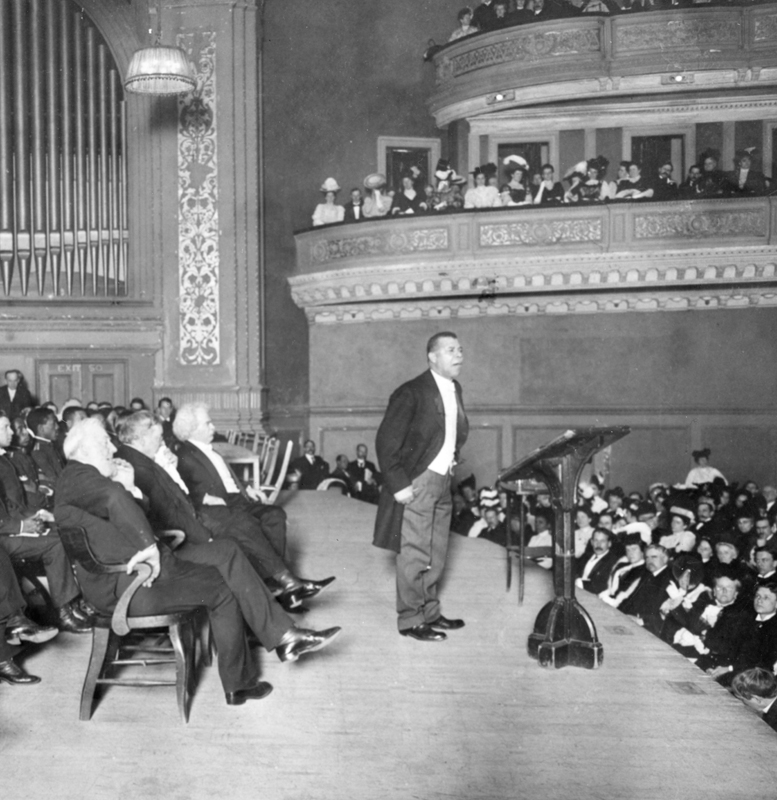
HBCU Money™ Histronomics: Booker T. Washington’s Atlanta Compromise

Booker_T._Washington_Lecture,_1906

Mr. President and gentlemen of the Board of Directors and citizens. One third of the population of the South is of the Negro race. No enterprise seeking the material, civil, or moral welfare of this section can disregard this element of our population and reach the highest success. I must convey to you, Mr. President and Directors, and Secretaries and masses of my race, when I say that in no way have the value and manhood of the American Negro been more fittingly and generously recognized, than by the managers of this magnificent exposition at every stage of its progress. It is a recognition that will do more to cement the friendship of the two races than any occurrence since the dawn of our freedom. Not only this, but the opportunities here afforded will awaken among us a new era of industrial progress.

Ignorant and inexperienced, it is not strange that in the first years of our new life we began at the top instead of the bottom, that a seat in Congress or the state legislature was more sought than real estate or industrial skill, that the political convention of some teaching had more attraction than starting a dairy farm or a stockyard.

A ship lost at sea for many days suddenly sighted a friendly vessel. From the mast of the unfortunate vessel was seen a signal: “Water, water. We die of thirst.” The answer from the friendly vessel at once came back: “Cast down your bucket where you are.” A second time, the signal, “Water, send us water!” went up from the distressed vessel. And was answered: “Cast down your bucket where you are.” A third and fourth signal for water was answered: “Cast down your bucket where you are.” The captain of the distressed vessel, at last heeding the injunction, cast down his bucket and it came up full of fresh, sparkling water from the mouth of the Amazon River.

To those of my race who depend on bettering their condition in a foreign land, or who underestimate the importance of preservating friendly relations with the southern white man who is their next door neighbor, I would say: “Cast down your bucket where you are.” Cast it down, making friends in every manly way of the people of all races, by whom you are surrounded.

To those of the white race who look to the incoming of those of foreign birth and strange tongue and habits for the prosperity of the South, were I permitted, I would repeat what I have said to my own race: “Cast down your bucket where you are.” Cast it down among the eight millions of Negroes whose habits you know, whose fidelity and love you have tested in days when to have proved treacherous meant the ruin of your fireside. Cast down your bucket among these people who have without strikes and labor wars tilled your fields, cleared your forests, builded your railroads and cities, brought forth treasures from the bowels of the earth, just to make possible this magnificent representation of the progress of the South.

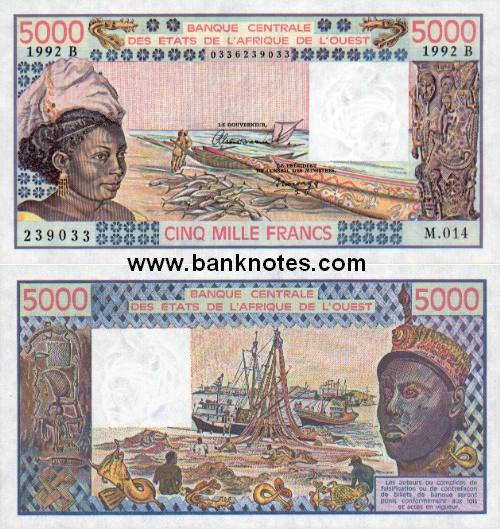
Currencies Of The African Diaspora – Benin

The economy of Benin remains underdeveloped and dependent on subsistence agriculture, cotton production, and regional trade. Growth in real output had averaged almost 4% before the global recession and it has returned to roughly that level in 2011-12. Inflation has subsided over the past several years. In order to raise growth, Benin plans to attract more foreign investment, place more emphasis on tourism, facilitate the development of new food processing systems and agricultural products, and encourage new information and communication technology. Specific projects to improve the business climate by reforms to the land tenure system, the commercial justice system, and the financial sector were included in Benin’s $307 million Millennium Challenge Account grant signed in February 2006. The 2001 privatization policy continues in telecommunications, water, electricity, and agriculture. The Paris Club and bilateral creditors have eased the external debt situation with Benin benefiting from a G-8 debt reduction announced in July 2005, while pressing for more rapid structural reforms. An insufficient electrical supply continues to adversely affect Benin’s economic growth though the government recently has taken steps to increase domestic power production. Private foreign direct investment is small, and foreign aid accounts for the majority of investment in infrastructure projects. Cotton, a key export, suffered from flooding in 2010-11, but high prices supported export earnings. The government agreed to a 25% increase in civil servant salaries in 2011, following a series of strikes, increasing pressure on the national budget. Benin has appealed for international assistance to mitigate piracy against commercial shipping in its territory.

Benin tourism destinations

WAS207B

WAS208B

WAS215B

ben-200f

Source: Economy overview provided by CIA Factbook