Monthly Archives: September 2013

HBCU Money™ Dozen Links 9/9 – 9/13

12

Did you miss HBCU Money™ Dozen via Twitter? No worry. We are now putting them on the site for you to visit at your leisure. We have made some changes here at HBCU Money™ Dozen. We are now solely focused on research and central bank articles from the previous week.

Research

14 Things You Need to Know About Data Storage Management l ComputerWorld

Voyager has left the system. “NASA Says Voyager 1 Is Now Officially in Interstellar Space” l Wired Science

Geothermal Power Used In British Columbia Residential Development l Clean Technica

Aquaculture a growing industry in the Midwest l IL-IN Sea Grant

FBI issues advisory to financial institutions, but customers should take notice too l ComputerWorld

Frack away, UK, it’s carbon neutral. Sort of l New Scientist

Federal Reserve, Central Banks, & Financial Departments

See the latest data on tax collections by your state l St. Louis Fed

Economics: the most under-taught subject in America? l CEE

GOP to push bill restoring work requirement for food stamps l Floor Action

Housing inventory grew in August l Housing Wire

The vulnerabilty of American families: 40% cannot come up with $2,000 in 30 days l FINRA

All 12 presidents submit joint letter to SEC encouraging money market mutual fund reform l Boston Fed

Thank you as always for joining us on Saturday for HBCU Money™ Dozen. The 12 most important research and finance articles of the week.

The HBCU Money™ Weekly Market Watch

Our Money Matters /\ September 13, 2013

A weekly snapshot of African American owned public companies and HBCU Money™ tracked African stock exchanges.

NAME TICKER PRICE (GAIN/LOSS %)

African American Publicly Traded Companies

Citizens Bancshares Georgia (CZBS) $5.65 (5.83% DN)

Radio One (ROIA) $2.55 (4.08% UP)

African Stock Exchanges

Bourse Regionale des Valeurs Mobilieres (BRVM)  204.92 (0.74% UP)

Botswana Stock Exchange (BSE)  8 575.95 (0.19% UP)

Ghana Stock Exchange (GSE)  2 012.38 (67.74% UP)*

Nairobi Stock Exchange (NSE)  122.86 (N/A)

Johannesburg Stock Exchange (JSE) 43 602.64 (0.34% DN)

International Stock Exchanges

New York Stock Exchange (NYSE) 9 630.32 (0.24% UP)

London Stock Exchange (LSE)  3 507.89 (0.03% DN)

Tokyo Stock Exchange (TOPIX)  1 185.28 (0.08% UP)

Commodities

Gold 1 308.40 (1.65% DN)

Oil 108.39 (0.19% DN)

*Ghana Stock Exchange shows current year to date movement. All others daily.

All quotes reported as of 4:00 PM Eastern Time Zone

Without Intervention, Syria Could Raise African American Unemployment

By William A. Foster, IV

Employment, which Galen calls nature’s physician, is so essential to human happiness that indolence is justly considered as the mother of misery. – Burton

I have often contended that African Americans struggle to look at things from their own interest. It is no secret that when most of America catches the proverbial cold, we seem to catch pneumonia as the saying goes. Often what is good for other communities is bad for us and vice versa, and what is bad for other communities can sometimes be worse for us. The latter seems to be the case of what will happen if America does not intervene in Syria.

Many African Americans are anti-war because of America’s history of imperialism. These concerns are justified but also misled. Nobody has suffered from America’s imperialism domestically more than African Americans. However, America’s ability to be so prosperous is its ability to control much of the resources around the world either through soft or hard power. While this leaves many chastising American policy abroad, rarely is anyone willing to give up their cushion way of American life. Even for African Americans we enjoy a way of life that many around the world wished they had and that we so often still try to integrate ourselves into. Things like running water, electricity, cheaper gas, and many other basic necessities.This happens because American power allows for the scales to be tilted in the favor of American citizens and their institutions. Unfortunately, we control and own very few of these institutions and tend to end up with the leftovers and scraps instead of the main meals of prosperity.

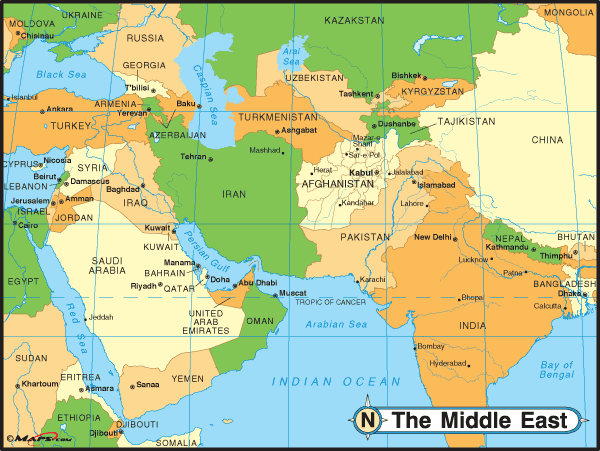
The current African American unemployment rate is 13.0 percent. If the Strait of Hormuz, where 20 percent of the world oil goes through and 35 percent of seaborne traded oil flows, expect American companies to react accordingly. An instant spike of product cost and transportation would most likely lead many companies to cutting labor to deal with the new expenses. Given our history of last hired and first fired due to our dependency on European American owned multinational companies, it would not be hard to imagine that many jobs that we hold in private companies would be in danger upon disruption of the oil supply.
middle_east

Syria on its face is not a major oil supplier and is fairly inconsequential to the actual global oil supply. Timothy Gardener from Reuters in a recent article points out, “Syria has not exported any oil since late 2011, when international sanctions came into force. Prior to the sanctions Syria produced 370,000 barrels per day (bpd), roughly 0.4 percent of global supplies, and exported less than 150,000 bpd, mainly to Europe.” The problem as it were with the Syria situation is just how quickly the situation could be prone to spread to other countries. This possibility alone has caused oil prices to spike more than $8 per barrel since the beginning of August. The many factions at play between Sunni/Shiite groups within Syria and outside influences like Al-qadea, Iran, and others make a complicated matter even more so.

In the end, African America will continue to push the flag of human rights and equality because it is a social value we hold dear in our community. The economic reality for us is another matter in itself and with August numbers showing African American employment at its worst in the past five months the situation in Syria could expedite the downward spiral. Many analyst have already predicted that a U.S. strike could bring oil prices back down. If we want to truly be beholden to our value of human rights, then we ourselves must obtain the economic independence to do so. Whether we like it or not for now, our  economic fate is indeed tied to America’s foreign policy.

African America’s August Unemployment Report – 13.0%

jobs_pic

Overall Unemployment: 7.3% (7.4%)

African America Unemployment: 13.0% (12.6%)

Latino America Unemployment: 9.3% (9.4%)

European America Unemployment: 6.4% (6.6%)

Asian America Unemployment: 5.1% (5.7%)

Analysis: The unemployment rate overall dropped to 7.3 percent. African America is the only group to see their unemployment rate rise and maintains itself firmly in the double digits. Asian America has the most significant drop. Latino and European America saw negligible drops.

African American Male Unemployment: 13.5% (12.5%)

African American Female Unemployment: 10.6% (10.5%)

African American Teenage Unemployment: 38.2% (41.6%)

African American Male Participation: 66.6% (67.6%)

African American Female Participation: 61.5% (62.0%)

African American Teenage Participation: 28.9% (28.4%)

*Previous month in parentheses.

Analysis: The unemployment rate for African American men saw an significant uptick coupled with a dropping participation rate. African American women also experienced an uptick in their unemployment rate while participation rate dropped. Only the teenage group showed improvement in its unemployment rate and participation rate.

Conclusion: The economy added 169 000 new jobs overall. African America saw a decline a 210 000 in its employed ranks. It is the second lowest number of employed African Americans in the past five months and by far its biggest drop in employment over that same period. African America’s labor force is at its lowest in the past five months. The labor force number indicating that many African Americans are simply giving up on the chance of finding employment. The one bit of light in the coal mine is that African American teenagers picked up 30 000 jobs. Overall,  almost every piece of unemployment data is the worse it has been in five months. A frightening measure as many African American families head back into the school year needing to providing more not less.

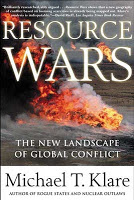
HBCU Money™ Business Book Feature – Resource Wars: The New Landscape of Global Conflict

resource_wars_cover

This sobering look at the future of warfare predicts that conflicts will now be fought over diminishing supplies of our most precious natural resources.

From the barren oilfields of Central Asia to the lush Nile delta, from the busy shipping lanes of the South China Sea to the uranium mines and diamond fields of sub-Saharan Africa, Resource Wars looks at the growing impact of resource scarcity on the military policies of nations. International security expert Michael T. Klare argues that in the early decades of the new millennium wars will be fought not over ideology but over resources, as states battle to control dwindling supplies of precious natural commodities. The political divisions of the Cold War, Klare asserts, are giving way to an immense global scramble for essential materials, such as oil, timber, minerals, and water. And as armies throughout the world define resource security as their primary mission, widespread instability is bound to follow, especially in those places where resource competition overlaps with long-standing disputes over territorial rights.

A much-needed assessment of a changed world, Resource Wars is a compelling look at the future of warfare in an era of heightened environmental stress and accelerated economic competition.