
“One truism in life my friend: when that Jones come down, it’ll be a muthafucka.” – Savon Garrison
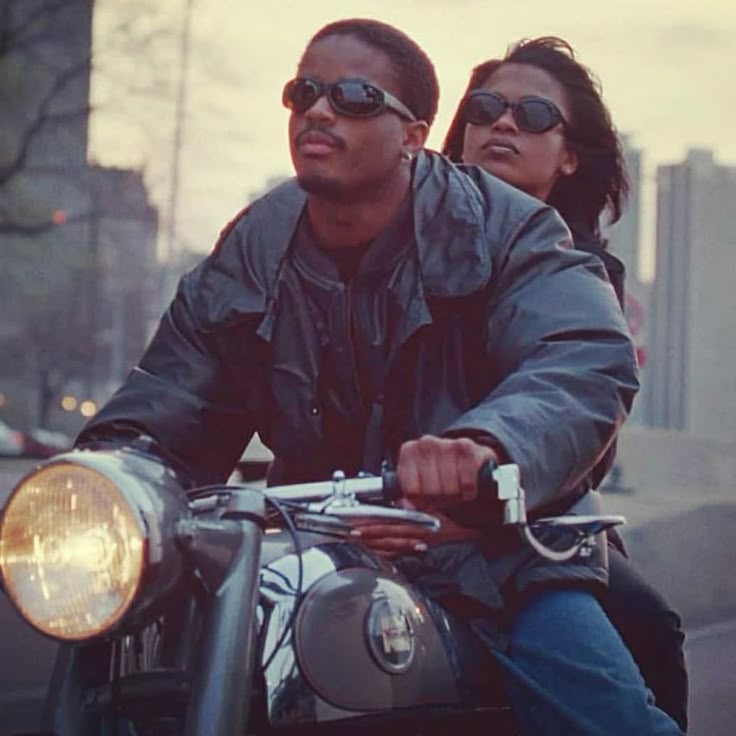
When Love Jones graced theaters in 1997, it wasn’t just a cinematic moment—it was a cultural declaration. Larenz Tate’s Darius Lovehall and Nia Long’s Nina Mosley weren’t just two beautiful Black lovers entangled in poetry and passion. They were symbols of an emerging class of young, urban, Black intellectuals trying to navigate romance, identity, and career ambition in a world that often didn’t see or value their depth. But underneath the flirtation and the jazz, Love Jones offered something more subtle and profound: a meditation on the precarious economics of the Black creative class. While we swooned at the soul-stirring soundtrack and resonated with the push-and-pull of a love uncertain, the film quietly threaded a financial storyline that resonates just as strongly today as it did nearly three decades ago. It revealed, through the lives of Darius and Nina, the hustle, instability, and emotional toll that come with choosing art over comfort—and how economic uncertainty can test even the most poetic of romances.
When we meet Darius Lovehall, he is perched between intellectual brilliance and economic instability. A gifted poet with aspirations of being published, Darius represents so many Black creatives who pursue their artistic passions not for wealth, but for expression, healing, and cultural preservation. Yet even as he recites evocative lines at Chicago’s Sanctuary club, we’re left to wonder: how does Darius pay the rent? There’s no corporate job in the background, no nine-to-five to anchor him. And while he moves through the city with confidence, there’s an economic precarity underneath it all that the film never fully confronts—but never needs to. Sisters, especially those who’ve loved or been the partner of a dreamer, know that love can’t always cover the bills. The apartment Darius lives in, modest but tastefully adorned, is not just a set—it’s an emblem of that in-between place so many artists occupy: not broke, but not stable. He’s a man whose wealth comes from words, not Wall Street. But in America, that often means existing at the margins. And this isn’t just a poetic dilemma—it’s a financial one. Black artistry isn’t free, and neither is the freedom to pursue it.
Then there’s Nina Mosley: elegant, driven, and navigating her own economic tightrope. A gifted photographer recovering from a failed engagement, Nina is the embodiment of Black women who refuse to settle—for a man or a paycheck. She’s offered an opportunity to move to New York to pursue her photography, a decision that becomes the emotional fulcrum of the film. But look deeper, and her dilemma is also deeply financial. Nina’s decision isn’t just about love or distance—it’s about upward mobility. Chicago has heart, but New York has exposure. As a Black female artist, Nina knows the kind of visibility and access that New York promises could redefine her career. She doesn’t just want passion—she wants a legacy. And that requires investment, not just of emotion, but of capital. She takes on the risk and costs associated with a move: new housing, job uncertainty, disconnection from a budding relationship. It’s the kind of professional leap many Black women make, often unsupported, as they chase their dreams in a world where they must be twice as good with half the resources. Nina’s economic choices reflect the balancing act so many Black women know intimately: the tension between love and livelihood, between being someone’s muse and being your own masterpiece.
Set in a romanticized Chicago, Love Jones serves as a time capsule for the ’90s Black bohemian scene—a pocket of resistance against mainstream narratives. The characters swirl in an ecosystem of spoken word nights, jazz bars, bookstores, and photography exhibitions. But unlike the myth of starving artists popularized in white narratives like Rent, Love Jones shows us something else: Black artists don’t just chase dreams—they make do, make culture, and make community. Still, the underlying economic reality lingers. No trust funds. No safety nets. No access to generational wealth. The characters in Love Jones live paycheck-to-paycheck in a way that is stylishly concealed but always implied. Wood, the bartender and Darius’ best friend, is grounded in the service economy. Savon, Darius’ married friend, works a steady job and seems a bit too comfortable, hinting at the financial sacrifices he’s made for stability. Isaiah Washington’s character even struggles with the banality of married life—perhaps a subtle nod to the emotional cost of financial security. In this world, choosing art is both rebellion and risk. And for Black creatives, the margin of error is razor-thin.
Throughout the film, we watch Darius and Nina test the elasticity of love when wrapped around two unstable careers. One of the most telling scenes comes when Darius discovers that Nina has moved back from New York but didn’t tell him. It’s an emotional bombshell—but underneath it lies a deeper truth: Nina’s move didn’t go as planned. Her New York dreams were met with reality—something many Black women face when leaving their support networks in search of bigger opportunities. Did the job fall through? Was the city too cold, too lonely, too expensive? We’re not told explicitly. But the implication is clear: even with talent, the path forward isn’t guaranteed. It’s a powerful moment that speaks volumes. Career ambitions don’t always land as we hope. And for Black creatives, especially women, the emotional cost of failure feels doubled—shame not just from missing the mark, but from daring to dream in the first place.
Love Jones is filled with silences—and many of those silences speak to the unsaid fears about money. The fear of not being enough. Of being passed over. Of choosing the wrong path and having nothing to show for it. It’s a fear many Black professionals know all too well. Nina’s return to Chicago is not just about love—it’s about recalibration. About coming home to herself and finding her worth beyond a zip code. Darius’ decision to finish his novel and send her a letter is his own form of economic declaration: that his art will not remain locked in smoky poetry lounges, but be shared with the world—and possibly monetized. We see in their journey the cost of deferred dreams, but also the power of believing in yourself enough to keep going.
For those of us who grew up on HBCU campuses or in communities where Black excellence wasn’t just a hashtag but a daily mandate, Love Jones offers more than just nostalgia. It offers a blueprint. It reminds us that love without foundation can fall. That art without strategy can become a burden. That chasing your dream is beautiful—but it’s also expensive. In a world where Black student debt is disproportionately high, where Black women lead in entrepreneurship but lag in venture capital access, where Black artists often die celebrated but live unsupported, the financial storyline in Love Jones is our own. It’s about how we navigate institutions that don’t value our brilliance. It’s about the choices we make between rent and risk. It’s about dating someone who sees your dream, even when it hasn’t materialized yet. It’s about being seen—not just as muses or lovers—but as full economic beings.
Darius and Nina don’t get a fairytale ending tied in a neat financial bow. There’s no scene with a book deal and a gallery opening. Instead, there’s a train station, a few humble words, and a shared gaze of possibility. It’s subtle. It’s mature. It’s Black. And that’s the point. Love Jones is an artistic triumph precisely because it reflects our truths—romantic and economic. It shows the pressure to succeed, the fear of failing publicly, and the heartbreak of watching love wither under financial stress. But it also shows us the possibility of growth. Of second chances. Of Black love and art finding a way, not in spite of struggle, but through it.
The price of the poem, the cost of the picture—these aren’t just metaphors. They’re the real-world calculations that artists make every day. Darius choosing to finish his novel instead of taking a real job. Nina investing in equipment, film, darkroom time. These are economic decisions wrapped in creative packaging. And the film honors that complexity without offering easy answers. It says: yes, love is beautiful. Yes, art is sacred. And yes, you still have to figure out how to eat.
What Love Jones understood—and what makes it essential viewing for anyone building wealth while pursuing passion—is that financial security and artistic integrity don’t have to be enemies. They can be partners in the same dance. Darius doesn’t have to give up poetry to be stable. Nina doesn’t have to abandon her camera to be loved. But they do have to be honest about what it takes. The late nights. The rejection letters. The choice between a new lens and rent. The awkward conversations about who’s paying for dinner. The weight of wanting to contribute equally when your income is inconsistent.
For those of us who’ve ever loved a dreamer—or been one—Love Jones is more than a mood. It’s a manual. It teaches us that supporting Black artists means understanding that creativity is labor. That galleries don’t pay for themselves. That publishing a book requires time that could be spent earning a paycheck. That the emotional toll of creating while broke is a weight that compounds daily. The film doesn’t preach financial literacy, but it models financial honesty. When Nina leaves for New York, she’s making a calculated risk. When she returns, she’s recalculating. That’s not failure—that’s financial planning.
There are lessons here that business schools don’t teach but that every Black creative needs to learn. Invest in your dream, but build infrastructure around it. Darius and Nina both chase artistic paths without clear support structures, and we see the strain. Art should be liberating, not enslaving, which means creating financial buffers, diversifying income streams, and building community that can catch you when grants fall through or galleries close. Relocation is an investment decision, not just a romantic one. Nina’s move to New York teaches us that not all career moves yield returns. Research the market. Network before you leap. Understand the cost of living. Don’t let FOMO or opportunity worship blind you to the spreadsheet.
Love requires economic transparency, especially when both partners are building from scratch. Financial insecurity can strain even the strongest connection. Be open about the realities of your hustle with your partner. Share your wins and your losses. Budget together. Dream together, but also plan together. And perhaps most importantly: recognize that the creative economy is real economy. Artists must see their work as economic production. Copyrights matter. Branding matters. Social media monetization isn’t selling out—it’s survival. The idea that real artists shouldn’t think about money is a myth designed to keep us broke.
What makes Love Jones radical is its refusal to pathologize Black struggle or romanticize Black poverty. The characters aren’t noble because they’re poor—they’re compelling because they’re trying. They’re not tragic because they’re artists—they’re complex because they’re human. The film shows us that you can have taste without wealth, community without capital, and love without financial security. But it also shows us the cost of those choices. The stress lines around Nina’s eyes when she talks about New York. The slight defensiveness in Darius’ voice when asked about his book. These are the small tells of people managing economic anxiety while trying to maintain dignity.
In the decades since Love Jones premiered, the economics of Black artistry have shifted but the fundamentals remain. Social media has democratized access but saturated markets. Streaming has created new revenue streams but devalued individual work. The gig economy has given flexibility but eliminated stability. The dream of being Darius or Nina—published, exhibited, celebrated—is more accessible and more elusive than ever. Which makes the film’s quiet insistence on both love and financial consciousness even more relevant.
This is a film that understands what it means to be brilliant and broke, talented and tired, creative and cash-strapped. It sees us—really sees us—in all our contradictions. We want the freedom to create and the security to rest. We want partners who understand our calling and can also contribute to the household. We want to honor our gifts and pay our bills. We want to be artists and also eat. Love Jones doesn’t pretend these tensions are easy to resolve. It just shows us that they’re worth navigating.
So when you watch Love Jones again—and you should—watch it with different eyes. Notice the economic subtext beneath every romantic gesture. The way Darius holds onto his integrity even when it might cost him comfort. The way Nina calculates her moves even as she follows her heart. The way their community sustains them even when institutions ignore them. This is a financial love letter to the struggle and triumph of Black artistry, dressed in poetry and jazz. It’s still one of the most honest portrayals of the emotional and economic labor it takes to love—and be—an artist. And in a world that constantly demands we choose between making art and making money, Love Jones reminds us that the real work is figuring out how to do both.
Disclaimer: This article was assisted by ClaudeAI.
 HBCU Money