Opportunity has power over all things. – Sophocles

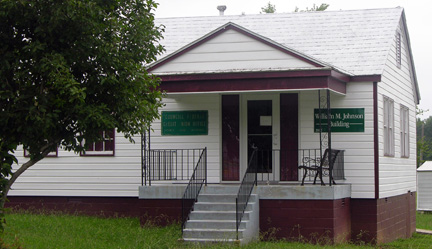
(Pictured Above: Councill Federal Credit Union at Alabama A&M University)
The release of the second annual HBCU Money African American Credit Union Directory allowed us to uncover two more HBCU-based credit unions. A total of eleven HBCU-based credit unions that control a combined $87 million in assets and have 17 099 in members. For comparison, Navy Federal Credit Union, America’s largest credit union has $63.7 billion in assets and 5.3 million members. Three years ago, I wrote on what forming a national HBCU credit union would look like and why it should be a reality. As it turns out, much of the infrastructure for this reality is already in place. Now the question is, what is holding us back?
- Southern Teachers & Parents (LA) – $28 million ($29 million)
- Florida A&M University (FL) – $19.6 million ($20.6 million)
- Howard University Employees (DC) – $11.3 million ($11.4 million)
- Virginia State University (VA) – $9.6 million ($10.6 million)
- Prairie View (TX) – $4.8 million ($5 million)
- Savastate Teachers (GA) – $3.6 million ($3.6 million)
- Councill (AL) – $3.4 million ($3.1 million)
- Xavier University (LA) – $2.4 million (N/A)
- Arkansas A&M College (AR) – $2.3 million (N/A)
- Tennessee State University (TN) – $1.4 million ($1.4 million)
- Shaw University (NC) – $0.5 million ($0.5 million)
If the eleven merged it would the eleventh largest credit union by assets and by members, and would be only the second African American financial institution with a national footprint. The other being OneUnited Bank, which covers Massachusetts, Florida, and California.The lack of products at HBCU-based credit unions continues to be a chief complaint of why so little deposits seem to remain in them. Everything from better web-presence, mobile banking, investment products, and small business loans could be rolled out in scale if the eleven merged.
Instead, six of the nine HBCU-based credit unions we reported from last year saw their assets drop. Median and average assets fell 1.7 percent and 1.4 percent, respectively among last year’s group of nine. In terms of membership, membership also declined in six of the nine HBCU-based credit unions as well. Membership overall fared into the red with median and average membership down 2.3 percent and 6.3 percent, respectively. Two trends you want to desperately avoid if you are any institution. The best performer was Councill Credit Union at Alabama A&M University who saw an increase of 8.5 percent in assets, this despite the second worse drop among the group in membership decline with a 17 percent drop. Tennessee State University’s Credit Union had the largest increase in membership with a 6.3 percent increase from 2014. However, it only resulted a 1.7 percent increase in assets. One of only three HBCU-based credit unions to see an increase of any sort in assets from the previous year so I guess the cup is half full if you want to see it as such.
Unfortunately, there also seems to be no urgency by these credit unions to do the things necessary to increase their membership and assets. Students entering into HBCUs today may be more financially illiterate than a generation ago, but they have more complex financial needs thanks in large part to student loans playing such a large role into today’s higher education finance. Not to mention the reduced role that social security will play in their long-term retirement planning. An issue that should be prompting more HBCU-based credit unions to find ways to help students reduce student loan debt and start retirement planning while in college. A hard task to give this group given the limited financial products and services they offer leave HBCU-based credit unions minute opportunity to serve the needs of students, faculty, campus organizations, or even the HBCUs themselves. These limited products and services are largely an issue of lacking scale. Instead of a credit union with at least $87 million in assets, the median is $3.6 million amongst eleven with declining assets and membership. Instead of students, faculty, and institutions who travel more today than ever to conferences, tournaments, etc. being able to access their money at one of the eleven branches or through mobile app banking along the way, they are limited to just one insular branch with technology that at best reminds you of AOL dial-up. Holding onto students is even more difficult with most returning to their hometowns or nearest major city upon graduation and only returning to the campus at most once a year for homecoming. Incentive to keep banking beyond graduation? None.
Lauryn Hill has a wonderful song called the Ex-Factor that I think often describes African America institutional strategic behavior and with HBCU-based credit unions it seems no different. “It could all be so simple, but you’d rather make it hard. Loving you is like a battle and we both end up with scars.” I still believe with the right vision, an HBCU credit union could rival the Navy Federal Credit Union and give African America a place of financial safety instead of the scars we constantly end up with from predatory financial services that come into communities because we are left with such meager choices from our own financial institutions. It really all could be so simple, but more than likely we will continue to make it hard.





 HBCU Money