
Category Archives: Lists

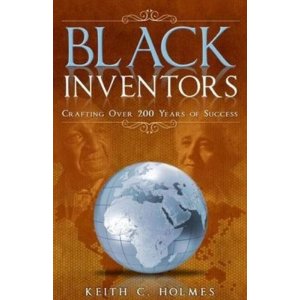
HBCU Money™ Business Book Feature: Black Inventors, Crafting Over 200 Years of Success

It is not widely known in the Virgin Islands that during the 1970s- 80s and 90s, Liston Abbott, of St. Thomas USVI, was instrumental in inventing solutions that improved television signal capacity. But it is quite ironic that Caribbean inventors have had so little recognition from their own countrymen. People from the Caribbean have had a major impact on the world of innovation and invention…More recognition should be given to Caribbean people who have enlightened the world with their innovations and inventions, writes Keith Holmes, author of the recently published book Black Inventors . In fact, his book has brought to day-light information that substantiates his statement: Caribbean inventors have filed patents for a significant number of inventions…and have received world recognition and awards. Holmes lists Caribbean inventors as early as 1769, from most countries in the region including Antigua, Bahamas, Barbados, Bermuda, Cuba, Santo Domingo, Guadeloupe, Haiti, Jamaica, Puerto Rico, Martinique, USVI, St. Vincent and Trinidad and Tobago. The author has spent almost 20 years to piece together information on black inventors. His work will undoubtedly increase readers awareness that on a global scale black inventors, both past and present, have contributed in large measure to the progress made by humanity. This book documents a large number of inventions, patents and labor saving devices conceived by black inventors. Africans, before the era of their enslavement, developed agricultural tools, building materials, medicinal herbs, cloth, and weapons, among many other inventions. Though many black people were brought to the United States, the Caribbean, Central and South America as slaves, it is not widely known that thousands of them created saving devices and inventions that spawned companies which generated money and jobs, worldwide. This book is divided in three main parts: the first explores the role played by ancient African inventors; the second part focuses on native African inventors; and part three delves into black inventors by geographical location, worldwide. The material available in this book is an introduction into the world of inventions by Black inventors. It gives the reader, researcher, librarian, student and teachers the materials needed to effectively understand that the Black inventor is not one dimensional but global occurrence. This book has certainly provided an invaluable tool for those who want to research this fascinating and fertile area of world history. His book proves that without the inventors, innovators, designers and laborers of African descent, in Africa as well as throughout the African Diaspora, western technology, as we know it today, would not exist. There are many significant facts to be learned from Holmes book, for example: the invention process did not originate in Europe; from 1900 to 1999, black inventors patented over 6,000 inventions (at least 400 of them by black women), and between 2000 and 2007, blacks patented over 5,000 inventions; nowadays American icons such as Oprah Winfrey has 61 trademarks; and a significant number of black inventors live in Europe where they have patented thousands of inventions. This fascinating book ends with a very useful bibliography and a detailed and useful index.
HBCU Money™ B-School: Mineral Rights

A landowner’s right to receive a portion of the profits of any minerals that are extracted from the land. Mineral rights apply to all types of resources, such as oil and gas, ores and metals or other raw materials. The term mineral rights describes the numerous beneficial ways the owner can profit from the resources in the ground.

Mineral rights give the landowner the right to sell or profit from minerals extracted from the ground in several ways. They can be sold, developed or leased, depending upon the landowner’s needs and desires. Many landowners allow oil or other mineral companies to extract the mineral from the ground in return for the royalty income from the revenue.

Learn more terms at http://www.investopedia.com/

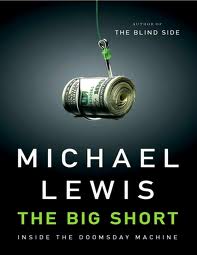
HBCU Money™ Business Book Feature – The Big Short: Inside the Doomsday Machine

The real story of the crash began in bizarre feeder markets where the sun doesn’t shine and the SEC doesn’t dare, or bother, to tread: the bond and real estate derivative markets where geeks invent impenetrable securities to profit from the misery of lower–and middle–class Americans who can’t pay their debts. The smart people who understood what was or might be happening were paralyzed by hope and fear; in any case, they weren’t talking.

Michael Lewis creates a fresh, character-driven narrative brimming with indignation and dark humor, a fitting sequel to his #1 bestseller Liar’s Poker. Out of a handful of unlikely–really unlikely–heroes, Lewis fashions a story as compelling and unusual as any of his earlier bestsellers, proving yet again that he is the finest and funniest chronicler of our time.

Master Government List of Federally Funded R&D Centers (FFRDCs)

There are 39 Federally Funded Research & Development Centers. There are none that are controlled by an HBCU or HBCU related entity. Some universities have set up “subsidiary” entities to manage their involvement in some of the FFRDCs  listed below.

These entities are funded by the federal tax pool that we all pay into. Yet, we are not represented at all institutionally in appropriation of any of these funds. Essentially leaving African Americans to pay into the federal tax pool but locked out of taking any of it out and paying into another community’s benefit.

Source: National Science Foundation

HBCU Money™ Business Book Feature – The Tragedy of Great Power Politics

A decade after the cold war ended, policy makers and academics foresaw a new era of peace and prosperity, an era in which democracy and open trade would herald the “end of history.” The terrorist attacks of September 11, 2001, sadly shattered these idyllic illusions, and John Mearsheimer’s masterful new book explains why these harmonious visions remain utopian. To Mearsheimer, great power politics are tragic because the anarchy of the international system requires states to seek dominance at one another’s expense, dooming even peaceful nations to a relentless power struggle. Mearsheimer illuminates his theory of offensive realism through a sweeping survey of modern great power struggles and reflects on the bleak prospects for peace in Europe and northeast Asia, arguing that the United States’s security competition with a rising China will intensify regardless of “engagement” policies. “This is the definitive work on offensive realism.”—Choice