Category Archives: Lists

HBCU Money™ B-School: Research Expenditure

Specialized and restricted-access networks dedicated to support universities, colleges, and other education and research institutions and their affiliates, as distinct from the commodity Internet. R&E networks are operated at the national, regional, and state levels, with numerous interconnections around the world. Institutions served by one or more R&E networks typically have a direct connection to the commodity Internet as well.

Learn more terms at http://www.educause.edu

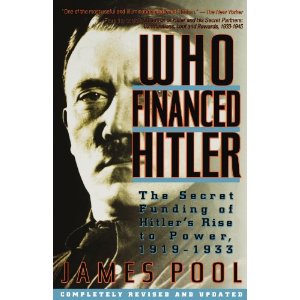
HBCU Money™ Business Book Feature – Who Financed Hitler: The Secret Funding of Hitler’s Rise to Power

Called “one of the most useful and illuminating studies of Nazism” by The New Yorker, this highly acclaimed work of history unravels the secret financial web which Hitler spun across Europe and around the globe to bankroll his dream of world domination.

HBCU Money™ B-School: House Poor

A situation that describes a person who spends a large proportion of his or her total income on home ownership, including mortgage payments, property taxes, maintenance and utilities. House poor individuals are short of cash for discretionary items and tend to have trouble meeting other financial obligations like vehicle payments.

People typically become house poor because they buy more house than they can afford, but there are other ways that people can become house poor as well. For example, some people will become house poor after the birth of a child, when one spouse decides to stay at home with the new addition, rather than going back to work.
Learn more terms at http://www.investopedia.com/

HBCU Money™ Business Book Feature – The Healing of America: A Global Quest for Better, Cheaper, & Fairer Health Care

How is it that all other industrialized democracies provide health care for their citizens as a reasonable cost-something the United States has never managed to do? In The Healing of America, New York Times bestselling author T.S. Reid shows how they do it, bringing to bear his talent for explaining complex issues in a clear, engaging way. In his global quest to find a prescription for American health care, Reid finds that it’s not all “socialized medicine” out there. Instead, many industrialized democracies rely on free-market models the U.S. could use to cure a health system that has failed us.

HBCU Money™ B-School: Portfolio

A grouping of financial assets such as stocks, bonds and cash equivalents, as well as their mutual, exchange-traded and closed-fund counterparts. Portfolios are held directly by investors and/or managed by financial professionals.

Prudence suggests that investors should construct an investment portfolio in accordance with risk tolerance and investing objectives. Think of an investment portfolio as a pie that is divided into pieces of varying sizes representing a variety of asset classes and/or types of investments to accomplish an appropriate risk-return portfolio allocation.

For example, a conservative investor might favor a portfolio with large cap value stocks, broad-based market index funds, investment-grade bonds and a position in liquid, high-grade cash equivalents. In contrast, a risk loving investor might add some small cap growth stocks to an aggressive, large cap growth stock position, assume some high-yield bond exposure, and look to real estate, international, and alternative investment opportunities for his or her portfolio.

Learn more terms at http://www.investopedia.com/