
Category Archives: Lists

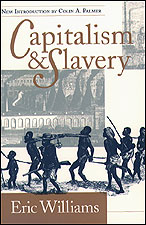
HBCU Money™ Business Book Feature – Capitalism and Slavery

Slavery helped finance the Industrial Revolution in England. Plantation owners, shipbuilders, and merchants connected with the slave trade accumulated vast fortunes that established banks and heavy industry in Europe and expanded the reach of capitalism worldwide.

Eric Williams advanced these powerful ideas in Capitalism and Slavery, published in 1944. Years ahead of its time, his profound critique became the foundation for studies of imperialism and economic development. Binding an economic view of history with strong moral argument, Williams’s study of the role of slavery in financing the Industrial Revolution refuted traditional ideas of economic and moral progress and firmly established the centrality of the African slave trade in European economic development. He also showed that mature industrial capitalism in turn helped destroy the slave system. Establishing the exploitation of commercial capitalism and its link to racial attitudes, Williams employed a historicist vision that set the tone for future studies. In a new introduction, Colin Palmer assesses the lasting impact of Williams’s groundbreaking work and analyzes the heated scholarly debates it generated when it first appeared.
HBCU Money™ B-School: Private Equity

Equity capital that is not quoted on a public exchange. Private equity consists of investors and funds that make investments directly into private companies or conduct buyouts of public companies that result in a delisting of public equity. Capital for private equity is raised from retail and institutional investors, and can be used to fund new technologies, expand working capital within an owned company, make acquisitions, or to strengthen a balance sheet.

The majority of private equity consists of institutional investors and accredited investors who can commit large sums of money for long periods of time. Private equity investments often demand long holding periods to allow for a turnaround of a distressed company or a liquidity event such as an IPO or sale to a public company.

The size of the private equity market has grown steadily since the 1970s. Private equity firms will sometimes pool funds together to take very large public companies private. Many private equity firms conduct what are known as leveraged buyouts (LBOs), where large amounts of debt are issued to fund a large purchase. Private equity firms will then try to improve the financial results and prospects of the company in the hope of reselling the company to another firm or cashing out via an IPO.

Learn more terms at http://www.investopedia.com/

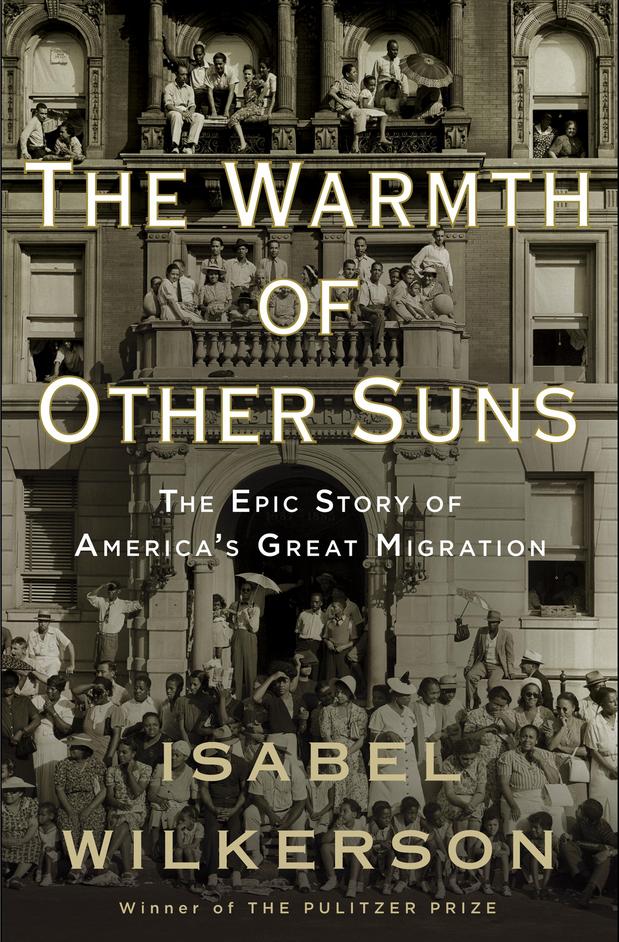
HBCU Money™ Business Book Feature – The Warmth of Other Suns: The Epic Story of America’s Great Migration

Starred Review. Ida Mae Brandon Gladney, a sharecropper’s wife, left Mississippi for Milwaukee in 1937, after her cousin was falsely accused of stealing a white man’s turkeys and was almost beaten to death. In 1945, George Swanson Starling, a citrus picker, fled Florida for Harlem after learning of the grove owners’ plans to give him a “necktie party” (a lynching). Robert Joseph Pershing Foster made his trek from Louisiana to California in 1953, embittered by “the absurdity that he was doing surgery for the United States Army and couldn’t operate in his own home town.” Anchored to these three stories is Pulitzer Prize–winning journalist Wilkerson’s magnificent, extensively researched study of the “great migration,” the exodus of six million black Southerners out of the terror of Jim Crow to an “uncertain existence” in the North and Midwest. Wilkerson deftly incorporates sociological and historical studies into the novelistic narratives of Gladney, Starling, and Pershing settling in new lands, building anew, and often finding that they have not left racism behind. The drama, poignancy, and romance of a classic immigrant saga pervade this book, hold the reader in its grasp, and resonate long after the reading is done.
Copyright © Reed Business Information, a division of Reed Elsevier Inc. All rights reserved.

Know Your Status – Land, Sea, Space, and Sun Grant HBCUs

Since new developments are the products of a creative mind, we must therefore stimulate and encourage that type of mind in every way possible. – George Washington Carer

Find your HBCU below and be sure to view the notes at the end for important additional information. These statuses allow colleges and universities to access exclusive federal research money that in turn often creates companies and wealth for its alum, the institutions, and communities.

Alabama A&M – Land, Space

Alcorn State University – Land

Bethune-Cookman University – Space

Central State University** – Land

Delaware State University – Land

Florida A&M University – Land, Space

Fort Valley State University – Land

Jackson State University – Sea

Kentucky State University – Land

Langston University – Land

Lincoln University (MO) – Land

Medgar Evers College – Space

Morgan State University – Space

North Carolina A&T University – Land

Prairie View A&M University – Land

South Carolina State University – Land, Sea

Southern University – Land

Tennessee State University – Land

Tuskegee* – Land, Space

University of Arkansas Pine-Bluff – Land, Space

University of District of Columbia – Land

University of Maryland Eastern Shore – Land, Space

University of Virgin Islands – Land

Virginia State University – Land

Notes:

*Tuskegee University is the only private HBCU and one of only three private schools in the nation to hold federal grant status of any sort.

**Central State University is currently applying for land-grant status.

There are nine universities in the country with triple grant status (Land, Sea, and Space). None are HBCUs.

There are two universities in the country with grant status in all four categories. Neither are HBCUs.

HBCU Money™ Business Book Feature – Fahrenheit 451: A Novel

Ray Bradbury’s internationally acclaimed novel Fahrenheit 451 is a masterwork of twentieth-century literature set in a bleak, dystopian future.

Guy Montag is a fireman. In his world, where television rules and literature is on the brink of extinction, firemen start fires rather than put them out. His job is to destroy the most illegal of commodities, the printed book, along with the houses in which they are hidden.

Montag never questions the destruction and ruin his actions produce, returning each day to his bland life and wife, Mildred, who spends all day with her television “family.” But then he meets an eccentric young neighbor, Clarisse, who introduces him to a past where people didn’t live in fear and to a present where one sees the world through the ideas in books instead of the mindless chatter of television.

When Mildred attempts suicide and Clarisse suddenly disappears, Montag begins to question everything he has ever known. He starts hiding books in his home, and when his pilfering is discovered, the fireman has to run for his life.