Category Archives: Lists

HBCU Money™ Business Book Feature – When Genius Failed: The Rise and Fall of Long-Term Capital Management

In this business classic—now with a new Afterword in which the author draws parallels to the recent financial crisis—Roger Lowenstein captures the gripping roller-coaster ride of Long-Term Capital Management. Drawing on confidential internal memos and interviews with dozens of key players, Lowenstein explains not just how the fund made and lost its money but also how the personalities of Long-Term’s partners, the arrogance of their mathematical certainties, and the culture of Wall Street itself contributed to both their rise and their fall.

When it was founded in 1993, Long-Term was hailed as the most impressive hedge fund in history. But after four years in which the firm dazzled Wall Street as a $100 billion moneymaking juggernaut, it suddenly suffered catastrophic losses that jeopardized not only the biggest banks on Wall Street but the stability of the financial system itself. The dramatic story of Long-Term’s fall is now a chilling harbinger of the crisis that would strike all of Wall Street, from Lehman Brothers to AIG, a decade later. In his new Afterword, Lowenstein shows that LTCM’s implosion should be seen not as a one-off drama but as a template for market meltdowns in an age of instability—and as a wake-up call that Wall Street and government alike tragically ignored.

HBCU Money™ Business Book Feature – The Case for Black Reparations

The groundbreaking first book on black reparations, essential reading for the twenty-first century

Originally published in 1972, Boris Bittker’s riveting study of America’s debt to African-Americans was well ahead of its time. Published by Toni Morrison when she was an editor, the book came from an unlikely source: Bittker was a white professor of law at Yale University who had long been ambivalent about the idea of reparations. Through his research into the history and theory of reparations-namely the development and enforcement of laws designed to compensate groups for injustices imposed on them-he found that it wasn’t a’crazy, far-fetched idea.’ In fact, beginning with post-Civil War demands for forty acres and a mule, African-American thinkers have long made the case that compensatory measures are justified not only for the injury of slavery but for the further setbacks of almost a century of Jim Crow laws and forced school and job segregation, measures that effectively blocked African-Americans from enjoying the privledges of citizenship.

The publication of important recent books by black scholars like Randall Robinson and the growth of a highly vocal reparations movement in the beginning of this century make this book, long unavailable, essential reading. Bittker carefully illuminates the historical provisions and statutes for legitimate claims to reparations, the national and international precedents for such claims, and most important, the obstacles to a national policy of reparations.

HBCU Money™ Business Book Feature – The Other Brahmins, Boston’s Black Upper Class (1750-1950)

This pioneering work explores race and the social caste system in an atypical northern environment over a period of two centuries. Cromwell identifies those blacks in Boston who exercised political, economic, and social leadership from the end of the eighteenth century to the middle of the twentieth, and effectively challenges the simplistic notions of hierarchy as they pertain to race.

HBCU Money™ Business Book Feature – Maat, The Moral Ideal in Ancient Egypt: History, Politics, Economics and Culture

This work is a critical examination of Maat, the moral ideal in ancient Egypt. It seeks to present Maat in the language of modern moral discourse while at the same time preserving and building on its distinctiveness as a moral ideal capable of inspiring and maintaining ethical philosophic reflection. The effort here is one of both interpretation and transmission of an ethical tradition, a project in which tradition is seen not simply as a precondition and process in which one comes, but also as an ongoing product of one’s efforts to understand it. Locating himself within the tradition, the author seeks to test the conceptual elasticity of its major categories and contentions and to establish its capacity for critical moral discourse.

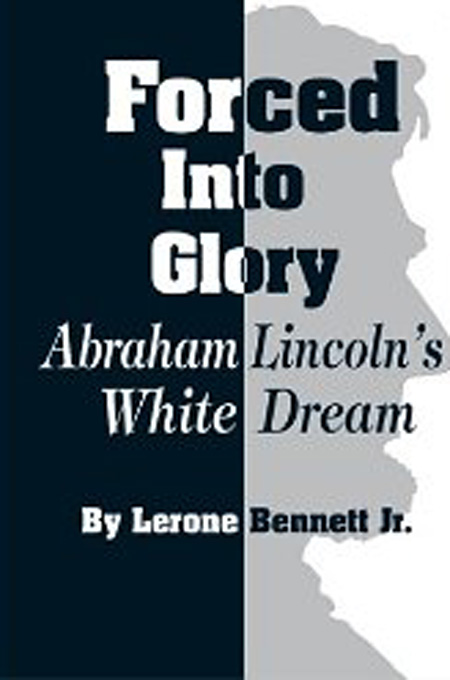
HBCU Money™ Business Book Feature – Forced Into Glory: Abraham Lincoln’s White Dream

Beginning with the argument that the Emancipation Proclamation did not actually free African American slaves, this dissenting view of Lincoln’s greatness surveys the president’s policies, speeches, and private utterances and concludes that he had little real interest in abolition. Pointing to Lincoln’s support for the fugitive slave laws, his friendship with slave-owning senator Henry Clay, and conversations in which he entertained the idea of deporting slaves in order to create an all-white nation, the book, concludes that the president was a racist at heart—and that the tragedies of Reconstruction and the Jim Crow era were the legacy of his shallow moral vision.