Category Archives: Lists

HBCU Money™ Business Book Feature – The Arab Invasion of Egypt: And the Last 30 Years of the Roman Dominion

1910279

It is significant that Alfred J, Butler’s book, The Arab Conquest of Egypt, and the Last Thirty Years of the Roman Dominion, first published in 1902, is being republished at this time. The African converts to Islam in Africa and those abroad have at last begun to lose some of their romanticism about the Arabs and Islam and are now asking some pertinent questions about this religion and it’s original propagators that they should have asked long ago.

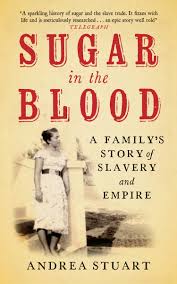
HBCU Money™ Business Book Feature – Sugar In The Blood: A Family’s Story of Slavery and Empire

images

In the late 1630s, lured by the promise of the New World, Andrea Stuart’s earliest known maternal ancestor, George Ashby, set sail from England to settle in Barbados. He fell into the life of a sugar plantation owner by mere chance, but by the time he harvested his first crop, a revolution was fully under way: the farming of sugar cane, and the swiftly increasing demands for sugar worldwide, would not only lift George Ashby from abject poverty and shape the lives of his descendants, but it would also bind together ambitious white entrepreneurs and enslaved black workers in a strangling embrace. Stuart uses her own family story—from the seventeenth century through the present—as the pivot for this epic tale of migration, settlement, survival, slavery and the making of the Americas.

As it grew, the sugar trade enriched Europe as never before, financing the Industrial Revolution and fuelling the Enlightenment. And, as well, it became the basis of many economies in South America, played an important part in the evolution of the United States as a world power and transformed the Caribbean into an archipelago of riches. But this sweet and hugely profitable trade—“white gold,” as it was known—had profoundly less palatable consequences in its precipitation of the enslavement of Africans to work the fields on the islands and, ultimately, throughout the American continents. Interspersing the tectonic shifts of colonial history with her family’s experience, Stuart explores the interconnected themes of settlement, sugar and slavery with extraordinary subtlety and sensitivity. In examining how these forces shaped her own family—its genealogy, intimate relationships, circumstances of birth, varying hues of skin—she illuminates how her family, among millions of others like it, in turn transformed the society in which they lived, and how that interchange continues to this day. Shifting between personal and global history, Stuart gives us a deepened understanding of the connections between continents, between black and white, between men and women, between the free and the enslaved. It is a story brought to life with riveting and unparalleled immediacy, a story of fundamental importance to the making of our world.

HBCU Money™ Presents: 2013’s HBCU Alumni NFL Players’ & Salaries

mathisjpg-5915c05f81e62761_large

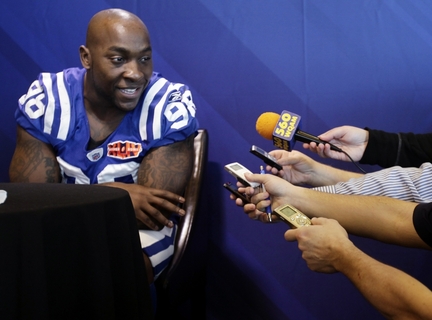
The top earning HBCU NFL player is Alabama A&M’s Robert Mathis (pictured above)

HBCU Money™ FACTS:

  • NFL teams spent $3.5 billion of 2013’s $4 billion available.
  • HBCU NFL players combine for $59.2 million in salaries or 1.7 percent of salaries spent. Estimated take home after taxes and agent/lawyer fees is $29. 6 million.
  • Hampton University leads the way with 4 NFL players.
  • 19 HBCUs are represented in the NFL.
  • SWAC/MEAC conferences both have 6 schools represented.
  • HBCU NFL players represent approximately 1.7 percent of roster positions available.
  • Average salary for HBCU NFL players is $2.1 million. In 2011, the average NFL salary was $1.9 million according to Bloomberg Businessweek.
  • Median salary for HBCU NFL players is $895 000. In 2011, the median NFL salary was $777 000 according to Bloomberg Businessweek.
  1. Robert Mathis – DE – Indianapolis Colts – $10 750 000
    (Alabama A&M)

  2. Kendall Langford – DE – St. Louis Rams – $6 000 000
    (Hampton)

  3. Antoine Bethea – S – Indianapolis Colts – $5 750 000
    (Howard)

  4. Jacoby Jones – WR – Baltimore Ravens – $4 900 000
    (Lane)

  5. Dimitri Patterson – CB – Miami Dolphins – $4 600 000
    (Tuskegee)

  6. Greg Toler – CB – Indianapolis Colts – $4 333 333
    (St. Paul’s)

  7. D. Rodgers-Cromartie – CB – Denver Broncos – $2 900 000
    (Tennessee State)

  8. Sammie Hill – DT – Tennessee Titans – $2 766 666
    (Stillman)

  9. Jason Hatcher – DT – Dallas Cowboys – $2 600 000
    (Grambling State)

  10. William Hayes – DE – St. Louis Rams – $2 050 000
    (Winston-Salem State)

  11. Junior Galette – OLB – New Orleans Saints – $1 700 000
    (Stillman)

  12. Eric Weems – WR – Chicago Bears – $1 415 000
    (Bethune-Cookman)

  13. Chris Baker – NT – Washington Redskins – $1 323 000
    (Hampton)

  14. Justin Durant – LB – Dallas Cowboys – $950 000
    (Hampton)

  15. Tavaris Jackson – QB – Seattle Seahawks – $840 000
    (Alabama State)

  16. Kenrick Ellis – DT – New York Jets – $707 500
    (Hampton)

  17. Don Carey – S – Detroit Lions – $680 000
    (Norfolk State)

  18. Phillip Adams – CB – Oakland Raiders – $630 000
    (South Carolina State)

  19. Terron Armstead – T – New Orleans Saints – $559 359
    (Arkansas Pine-Bluff)

  20. Rafael Bush – S – New Orleans Saints – $555 000
    (South Carolina State)

  21. Rashean Mathis – DB – Detroit Lions – $555 000
    (Bethune-Cookman)

  22. Joe Anderson – WR – Chicago Bears – $480 000
    (Texas Southern)

  23. Anthony Levine – S – Baltimore Ravens – $480 000
    (Tennessee State)

  24. Larry Donnell – TE – New York Giants – $405 000
    (Grambling State)

  25. Marquette King – P – Oakland Raiders – $405 000
    (Fort Valley State)

  26. Kevin Elliot – WR – Buffalo Bills – $303 000
    (Florida A&M)

  27. Adrian Hamilton – OLB – Baltimore Ravens – $303 000
    (Prairie View A&M)

  28. Saeed Lee – CB – Atlanta Falcons – $288 000
    (Alabama State)

Sources: NFL.com, The Guardian, Spotrac

HBCU Money™ B-School: Mission Of The United States Federal Reserve

federal-reserve

The Federal Reserve System is the central bank of the United States. It was founded by Congress in 1913 to provide the nation with a safer, more flexible, and more stable monetary and financial system. Over the years, its role in banking and the economy has expanded.

Today, the Federal Reserve’s duties fall into four general areas:

  • conducting the nation’s monetary policy by influencing the monetary and credit conditions in the economy in pursuit of maximum employment, stable prices, and moderate long-term interest rates
  • supervising and regulating banking institutions to ensure the safety and soundness of the nation’s banking and financial system and to protect the credit rights of consumers
  • maintaining the stability of the financial system and containing systemic risk that may arise in financial markets
  • providing financial services to depository institutions, the U.S. government, and foreign official institutions, including playing a major role in operating the nation’s payments system

Source: Federal Reserve

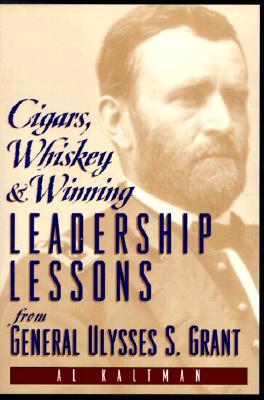
HBCU Money™ Business Book Feature – Cigars, Whiskey and Winning: Leadership Lessons from General Ulysses S. Grant

153543

Long before leadership became identified as the catalyst for corporate success, the Civil War’s winning general was showing the world how dynamic leadership is the crucial determinant of victory or defeat.

Ulysses S. Grant never sought fame of glory, nor did he try to tie his performance to personal reward. Instead, he concentrated on contribution and service. He looked upon being given increased responsibility not as increasing his power, but as increasing his ability to get the job done. “The great thing about Grant…is his perfect correctness and persistency of purpose.” (Abraham Lincoln)

In this masterful retelling of Grant’s story, Al Kaltman draws on Grant’s writings and life experiences to present a series of practical lessons on how to get superior performance from the troops.

Going beyond mere “how-to’s”, Cigars, Whiskey & Winning deals with character traits, core beliefs, and fundamental values to reveal the secrets to becoming a winning leader that are as much about “who to be” as “what to do”. And there isn’t a chart, table, or checklist in sight-just a handy index of lessons for ready inspiration on demand.