Category Archives: Books

HBCU Money™ Business Book Feature – The Library of Babel

“The Library of Babel” is one of the most memorable stories by the great Argentine writer Jorge Luis Borges. This slim book contains Andrew Hurley’s English translation of the story, eleven illustrations by Erik Desmazieres, and an introduction by Angela Giral.

“Library” is the quintessential “Borgesian” tale. The story concerns an infinite library, composed of endlessly connected hexagonal galleries, and populated by inhabitants among whom have risen various weird belief systems and subcultures. The first-person narrator is one of the library’s residents. “Library” is a masterpiece of the fantastic and the metaphysical.

Giral notes in her introduction that Desmaziere’s engravings are not literal representations of scenes from the story, but rather “the product of a parallel imagination, inspired to create in visual images his own, equivalent universe.” The etchings have an elegant, majestic, and sometimes whimsical quality that effectively complements Borges’ unique imagination. This book would make a nice gift for lovers of Borges, or of fantastic literature in general.

Courtesy of Michael J. Mazza

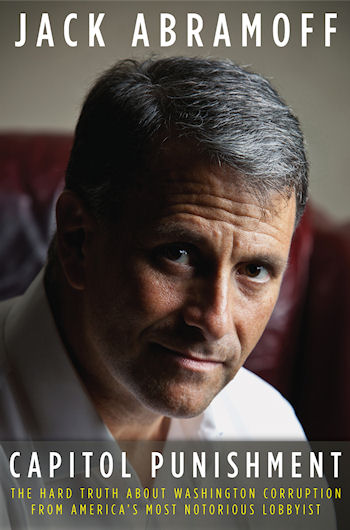
HBCU Money™ Business Book Feature – Capitol Punishment: The Hard Truth About Washington Corruption From America’s Most Notorious Lobbyist

The name Jack Abramoff is synonymous with Washington scandal, but the fascinating facts of his case are either largely unknown or wildly misunderstood. His memoir will serve as a corrective – an engrossing, informative work of political nonfiction that is also a gripping real-life thriller. The biggest surprise twist comes in the form of Abramoff himself, a smart, funny, charming, clear-eyed narrator who confounds every expectation of the media’s villainous portrait. He’s a perfect bundle of contradictions: an Orthodox Jew and upstanding family man with a staunch moral streak, caught in multiple scandals of bribery and corruption with an undercurrent of murder. Abramoff represented Indian tribes whose lucrative casinos were constantly under threat from proposed changes in law; though he charged the tribes many millions, he saved them billions by ensuring votes to support the livelihoods of their reservations. Much of Jack’s share was funneled not into his own coffers, but to charities. Abramoff on the front pages could not be further from the Jack Abramoff who’s ready to tell his honest and compelling story.

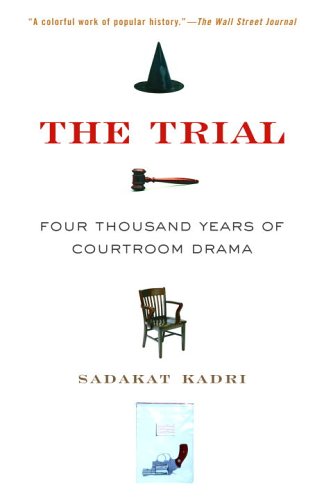
HBCU Money™ Business Book Feature – The Trial: Four Thousand Years of Courtroom Drama

For as long as accuser and accused have faced each other in public, criminal trials have been establishing far more than who did what to whom–and in this fascinating book, Sadakat Kadri surveys four thousand years of courtroom drama.

A brilliantly engaging writer, Kadri journeys from the silence of ancient Egypt’s Hall of the Dead to the clamor of twenty-first-century Hollywood to show how emotion and fear have inspired Western notions of justice–and the extent to which they still riddle its trials today. He explains, for example, how the jury emerged in medieval England from trials by fire and water, in which validations of vengeance were presumed to be divinely supervised, and how delusions identical to those that once sent witches to the stake were revived as accusations of Satanic child abuse during the 1980s.

Lifting the lid on a particularly bizarre niche of legal history, Kadri tells how European lawyers once prosecuted animals, objects, and corpses–and argues that the same instinctive urge to punish is still apparent when a child or mentally ill defendant is accused of sufficiently heinous crimes.

But Kadri’s history is about aspiration as well as ignorance. He shows how principles such as the right to silence and the right to confront witnesses, hallmarks of due process guaranteed by the U.S. Constitution, were derived from the Bible by twelfth-century monks. He tells of show trials from Tudor England to Stalin’s Soviet Union, but contends that “no-trials,” in Guantánamo Bay and elsewhere, are just as repugnant to Western traditions of justice and fairness. With governments everywhere eroding legal protections in the name of an indefinite war on terror, Kadri’s analysis could hardly be timelier.

At once encyclopedic and entertaining, comprehensive and colorful, The Trial rewards curiosity and an appreciation of the absurd but tackles as well questions that are profound. Who has the right to judge, and why? What did past civilizations hope to achieve through scapegoats and sacrifices–and to what extent are defendants still made to bear the sins of society at large? Kadri addresses such themes through scores of meticulously researched stories, all told with the verve and wit that won him one of Britain’s most prestigious travel-writing awards–and in doing so, he has created a masterpiece of popular history.

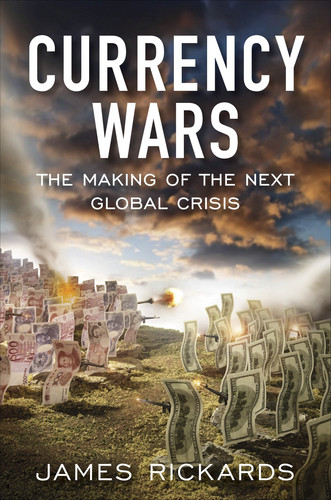
HBCU Money™ Business Book Feature – Currency Wars: The Making of the Next Global Crisis

In 1971, President Nixon imposed national price controls and took the United States off the gold standard, an extreme measure intended to end an ongoing currency war that had destroyed faith in the U.S. dollar. Today we are engaged in a new currency war, and this time the consequences will be far worse than those that confronted Nixon.

Currency wars are one of the most destructive and feared outcomes in international economics. At best, they offer the sorry spectacle of countries’ stealing growth from their trading partners. At worst, they degenerate into sequential bouts of inflation, recession, retaliation, and sometimes actual violence. Left unchecked, the next currency war could lead to a crisis worse than the panic of 2008.

Currency wars have happened before-twice in the last century alone-and they always end badly. Time and again, paper currencies have collapsed, assets have been frozen, gold has been confiscated, and capital controls have been imposed. And the next crash is overdue. Recent headlines about the debasement of the dollar, bailouts in Greece and Ireland, and Chinese currency manipulation are all indicators of the growing conflict.

As James Rickards argues in Currency Wars, this is more than just a concern for economists and investors. The United States is facing serious threats to its national security, from clandestine gold purchases by China to the hidden agendas of sovereign wealth funds. Greater than any single threat is the very real danger of the collapse of the dollar itself.

Baffling to many observers is the rank failure of economists to foresee or prevent the economic catastrophes of recent years. Not only have their theories failed to prevent calamity, they are making the currency wars worse. The U. S. Federal Reserve has engaged in the greatest gamble in the history of finance, a sustained effort to stimulate the economy by printing money on a trillion-dollar scale. Its solutions present hidden new dangers while resolving none of the current dilemmas.

While the outcome of the new currency war is not yet certain, some version of the worst-case scenario is almost inevitable if U.S. and world economic leaders fail to learn from the mistakes of their predecessors. Rickards untangles the web of failed paradigms, wishful thinking, and arrogance driving current public policy and points the way toward a more informed and effective course of action.

HBCU Money™ Business Book Feature – Capitalism and Slavery

Slavery helped finance the Industrial Revolution in England. Plantation owners, shipbuilders, and merchants connected with the slave trade accumulated vast fortunes that established banks and heavy industry in Europe and expanded the reach of capitalism worldwide.

Eric Williams advanced these powerful ideas in Capitalism and Slavery, published in 1944. Years ahead of its time, his profound critique became the foundation for studies of imperialism and economic development. Binding an economic view of history with strong moral argument, Williams’s study of the role of slavery in financing the Industrial Revolution refuted traditional ideas of economic and moral progress and firmly established the centrality of the African slave trade in European economic development. He also showed that mature industrial capitalism in turn helped destroy the slave system. Establishing the exploitation of commercial capitalism and its link to racial attitudes, Williams employed a historicist vision that set the tone for future studies. In a new introduction, Colin Palmer assesses the lasting impact of Williams’s groundbreaking work and analyzes the heated scholarly debates it generated when it first appeared.