Category Archives: Books

HBCU Money™ Business Book Feature – Ties That Bind: The Story of an Afro-Cherokee Family in Slavery and Freedom

This beautifully written book tells the haunting saga of a quintessentially American family. It is the story of Shoe Boots, a famed Cherokee warrior and successful farmer, and Doll, an African slave he acquired in the late 1790s. Over the next thirty years, Shoe Boots and Doll lived together as master and slave and also as lifelong partners who, with their children and grandchildren, experienced key events in American history–including slavery, the Creek War, the founding of the Cherokee Nation and subsequent removal of Native Americans along the Trail of Tears, and the Civil War. This is the gripping story of their lives, in slavery and in freedom.
Meticulously crafted from historical and literary sources, Ties That Bind vividly portrays the members of the Shoeboots family. Doll emerges as an especially poignant character, whose life is mostly known through the records of things done to her–her purchase, her marriage, the loss of her children–but also through her moving petition to the federal government for the pension owed to her as Shoe Boots’s widow. A sensitive rendition of the hard realities of black slavery within Native American nations, the book provides the fullest picture we have of the myriad complexities, ironies, and tensions among African Americans, Native Americans, and whites in the first half of the nineteenth century.
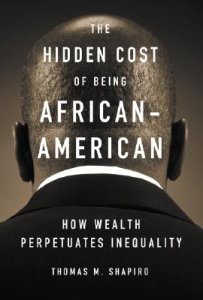
HBCU Money™ Business Book Feature: The Hidden Cost Of Being African American – How Wealth Perpetuates Inequality

Over the past three decades, racial prejudice in America has declined significantly and many African American families have seen a steady rise in employment and annual income. But alongside these encouraging signs, Thomas Shapiro argues in The Hidden Cost of Being African American, fundamental levels of racial inequality persist, particularly in the area of asset accumulation–inheritance, savings accounts, stocks, bonds, home equity, and other investments. Shapiro reveals how the lack of these family assets along with continuing racial discrimination in crucial areas like homeownership dramatically impact the everyday lives of many black families, reversing gains earned in schools and on jobs, and perpetuating the cycle of poverty in which far too many find themselves trapped.
Shapiro uses a combination of in-depth interviews with almost 200 families from Los Angeles, Boston, and St. Louis, and national survey data with 10,000 families to show how racial inequality is transmitted across generations. We see how those families with private wealth are able to move up from generation to generation, relocating to safer communities with better schools and passing along the accompanying advantages to their children. At the same time those without significant wealth remain trapped in communities that don’t allow them to move up, no matter how hard they work. Shapiro challenges white middle class families to consider how the privileges that wealth brings not only improve their own chances but also hold back people who don’t have them. This “wealthfare” is a legacy of inequality that, if unchanged, will project social injustice far into the future.
Showing that over half of black families fall below the asset poverty line at the beginning of the new century, The Hidden Cost of Being African American will challenge all Americans to reconsider what must be done to end racial inequality.

HBCU Money™ Business Book Feature – Family Wealth: Keeping It in the Family–How Family Members and Their Advisers Preserve Human, Intellectual, and Financial Assets for Generations

Reading James E. Hughes Jr.’s book is like sitting down in an easy chair with brass rivets gleaming in burgundy leather, in a trusted old family friend’s parlor, to obtain a kindly word of advice. You can almost smell the pipe tobacco and taste the brandy as you read. Hughes gently and wisely guides people who want to preserve their family’s wealth on how to think beyond the current fiscal year. This book is genuine and straightforward, with insights gained over many years. Hughes covers creating a family mission statement, instituting a family bank or private trust company, mentoring the next generation, family governance, philanthropy and much more. His most important contribution, however, is the perspective he offers on the human side of the equation. Even the richest families are doomed to squander their inheritances, he cautions, unless they recognize the importance of the intellectual and human development of their family members. We highly recommends this book of sage advice to anyone who hopes to keep it all in the family.
Courtesy of Rolf Dobelli

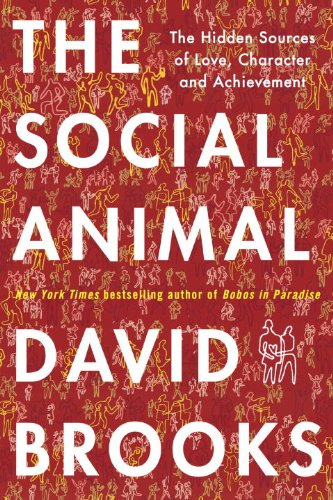
HBCU Money™ Business Book Feature – The Social Animal: The Hidden Sources of Love, Character, and Achievement

David Brooks has written an absolutely fascinating book about how we form our emotions and character. Standing at the intersection of brain science and sociology, and writing with the wry wit of a James Thurber, he explores the unconscious mind and how it shapes the way we eat, love, live, vacation, and relate to other people. In The Social Animal, he makes the recent revolution in neuroscience understandable, and he applies it to those things we have the most trouble knowing how to teach: What is the best way to build true relationships? How do we instill imaginative thinking? How do we develop our moral intuitions and wisdom and character? Brooks has always been a keen observer of the way we live. Now he takes us one layer down, to why we live that way.

–Walter Isaacson

HBCU Money™ Business Book Feature – Buyology: Truth And Lies About Why We Buy

How much do we know about why we buy? What truly influences our decisions in today’s message-cluttered world? An eye-grabbing advertisement, a catchy slogan, an infectious jingle? Or do our buying decisions take place below the surface, so deep within our subconscious minds, we’re barely aware of them?

In BUYOLOGY, Lindstrom, who was voted one of Time Magazine’s most influential people of 2009, presents the astonishing findings from his groundbreaking, three-year, seven-million-dollar neuromarketing study, a cutting-edge experiment that peered inside the brains of 2,000 volunteers from all around the world as they encountered various ads, logos, commercials, brands, and products. His startling results shatter much of what we have long believed about what seduces our interest and drives us to buy. Among the questions he explores:

Does sex actually sell? To what extent do people in skimpy clothing and suggestive poses persuade us to buy products?
Despite government bans, does subliminal advertising still surround us – from bars to highway billboards to supermarket shelves?
Can “Cool” brands, like iPods, trigger our mating instincts?
Can other senses – smell, touch, and sound – be so powerful as to physically arouse us when we see a product?
Do companies copy from the world of religion and create rituals – like drinking a Corona with a lime – to capture our hard-earned dollars?

Filled with entertaining inside stories about how we respond to such well-known brands as Marlboro, Nokia, Calvin Klein, Ford, and American Idol, BUYOLOGY is a fascinating and shocking journey into the mind of today’s consumer that will captivate anyone who’s been seduced – or turned off – by marketers’ relentless attempts to win our loyalty, our money, and our minds.