Category Archives: Books

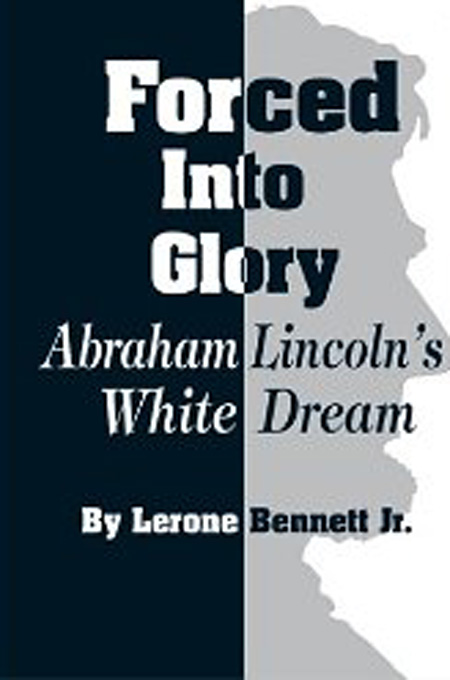
HBCU Money™ Business Book Feature – Forced Into Glory: Abraham Lincoln’s White Dream

Beginning with the argument that the Emancipation Proclamation did not actually free African American slaves, this dissenting view of Lincoln’s greatness surveys the president’s policies, speeches, and private utterances and concludes that he had little real interest in abolition. Pointing to Lincoln’s support for the fugitive slave laws, his friendship with slave-owning senator Henry Clay, and conversations in which he entertained the idea of deporting slaves in order to create an all-white nation, the book, concludes that the president was a racist at heart—and that the tragedies of Reconstruction and the Jim Crow era were the legacy of his shallow moral vision.

HBCU Money™ Business Book Feature – Kwame Nkrumah: The Father of African Nationalism

This is a good book on one of Africa’s greatest sons who had a clear vision of the direction that the continent should follow. Nkrumah led Ghana to its independence but as far as he was concerned, Ghana could not be fully independent until the whole continent was free. He also believed in economic emancipation of the African continent as well as African unity.

Nkrumah’s Pan-African credentials are second to none. His ideas were too far ahead of most other African leaders who were taking advantage of their newly found status to amass wealth for themselses and not to be interested on ideas about African unity or economic well being for their people. His ideas put him on collision course with the strong and developed Western powers. His doom was, therefore, sealed as he was ultimately overthrown in a military coup.

However, Nkrumah’s ideas have lived on. The African continent is now completely decolonised. However, the dream of African unity is still to be realised as well as the need to see economic empowerment of the African people. Nkrumah’s vision will continue to inspire people towards the realisation of unity and prosperity for the continent and its people.

Courtesy of Elijah Chingosho

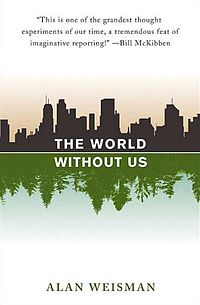
HBCU Money™ Business Book Feature – The World Without Us

If human beings disappeared instantaneously from the Earth, what would happen? How would the planet reclaim its surface? What creatures would emerge from the dark and swarm? How would our treasured structures–our tunnels, our bridges, our homes, our monuments–survive the unmitigated impact of a planet without our intervention? In his revelatory, bestselling account, Alan Weisman draws on every field of science to present an environmental assessment like no other, the most affecting portrait yet of humankind’s place on this planet.

HBCU Money Business Book Feature – The March of Folly: From Troy to Vietnam

In The March of Folly, two-time Pulitzer Prize winning historian Barbara Tuchman tackles the pervasive presence of folly in governments through the ages. Defining folly as the pursuit by governments of policies contrary to their own interests, despite the availability of feasible alternatives, Tuchman details four decisive turning points in history that illustrate the very heights of folly in government: the Trojan War, the breakup of the Holy See provoked by the Renaissance popes, the loss of the American colonies by Britain’s George III, and the United States’ persistent folly in Vietnam. The March of Folly brings the people, places, and events of history magnificently alive for today’s reader.

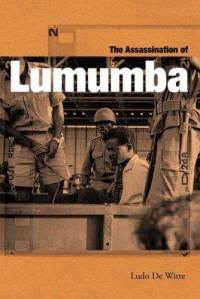
HBCU Money™ Business Book Feature – The Assassination of Lumumba

In January 1961, seven months after Congo won independence from Belgium, the country’s first elected head of state, Patrice Lumumba, was killed because of fears that he would nationalize Belgian corporate interests in Congo.

Patrice Lumumba, the first prime minister of the Republic of the Congo and a pioneer of African Unity, was assassinated on 17 January 1961. His crime had been to defy the Belgian Government which sought to maintain a covert imperialist hand over the country even after independence was finally won in June 1960. Ludo De Witte reveals the appalling mass of lies that have surrounded the murder. Making use of official sources and government testimony, he uncovers a network of complicity spreading from the Belgian government to the United Nations and the CIA. This book, already translated into four languages, prompted the Belgian parliament to establish an official commission of inquiry into Lumumba’s assassination. In his afterword to this new edition De Witte discusses its findings.