Category Archives: Books

HBCU Money™ Business Book Feature – Full Planet, Empty Plates: The New Geopolitics of Food Scarcity

fullplanet2

With food supplies tightening, countries are competing for the land and water resources needed to feed their people.

With food scarcity driven by falling water tables, eroding soils, and rising temperatures, control of arable land and water resources is moving to center stage in the global struggle for food security. “In this era of tightening world food supplies, the ability to grow food is fast becoming a new form of geopolitical leverage. Food is the new oil,” Lester R. Brown writes.

What will the geopolitics of food look like in a new era dominated by scarcity and food nationalism? Brown outlines the political implications of land acquisitions by grain-importing countries in Africa and elsewhere as well as the world’s shrinking buffers against poor harvests. With wisdom accumulated over decades of tracking agricultural issues, Brown exposes the increasingly volatile food situation the world is facing.

HBCU Money™ Business Book Feature – Planetwalker: 22 Years of Walking. 17 Years of Silence

image_preview

When the struggle to save oil-soaked birds and restore blackened beaches left him feeling frustrated and helpless, John Francis decided to take a more fundamental and personal stand—he stopped using all forms of motorized transportation. Soon after embarking on this quest that would span two decades and two continents, he took a vow of silence that endured for 17 years. It began as a silent environmental protest, but as a young African-American man, walking across the country in the early 1970s, his idea of “the environment” expanded beyond concern about pollution and loss of habitat to include how we humans treat each other and how we can better communicate and work together to benefit the earth.

Through his silence and walking, he learned to listen, and along the way, earned college and graduate degrees in science and environmental studies. An amazing human-interest story with a vital message, Planetwalker is also an engaging coming-of-age pilgrimage.

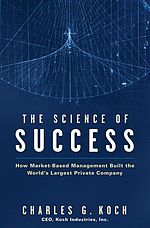
HBCU Money™ Business Book Feature – The Science of Success: How Market-Based Management Built the World’s Largest Private Company

150px-KochCover


Charles Koch may very well be the most successful businessman you’ve never heard of. Under his leadership, Koch Industries has become a dynamic and diverse enterprise that Forbes called “the world’s largest private company.”

This groundbreaking book includes the same material used by the leaders and employees of Koch companies to apply Market-Based Management (MBM) to get results. In it, Charles Koch outlines the unique management methodology developed and implemented by Koch Industries. Koch credits MBM for its 2,000-fold growth since 1967, with today having 80,000 employees in 60 countries and with $90 billion in revenues in 2006. MBM is a scientific approach to management that integrates theory and practice, and provides a framework for dealing with the ongoing challenges of growth and change. There really is a science behind success, and it can be applied to any organization.

MBM is rooted in the Science of Human Action, and is defined by five dimensions:

  • Vision—Determining where and how the organization can create the greatest long-term value
  • Virtue and Talents—Helping ensure that people with the right values, skills and capabilities are hired, retained and developed
  • Knowledge Processes—Creating, acquiring, sharing and applying relevant knowledge, and measuring and tracking profitability
  • Decision Rights—Ensuring the right people are in the right roles with the right authority to make decisions and holding them accountable
  • Incentives—Rewarding people according to the value they create for the organization

When these dimensions are applied in an integrated, mutually reinforcing manner, they create continuous transformation and positive growth. Any organization—corporation, small business, nonprofit, government agency—can apply these proven principles.

In addition to an in-depth discussion of MBM’s five dimensions, this book also draws on Koch’s candid examples of his company’s successes and failures. Born out of a life-long study of economics, science, philosophy, psychology, political theory and history, MBM is essentially a practical business application of the principles that have led to innovations and the most prosperous, peaceful, robust economies in history. Let this book show you how to apply the same management philosophy that has served Koch Industries so effectively. MBM will benefit you, your company, your customers and your employees. For more information about Market-Based Management, visit http://www.mbminstitute.org.

HBCU Money™ Business Book Feature – Liquidated: An Ethnography of Wall Street

hobook

Financial collapses—whether of the junk bond market, the Internet bubble, or the highly leveraged housing market—are often explained as the inevitable result of market cycles: What goes up must come down. In Liquidated, Karen Ho punctures the aura of the abstract, all-powerful market to show how financial markets, and particularly booms and busts, are constructed. Through an in-depth investigation into the everyday experiences and ideologies of Wall Street investment bankers, Ho describes how a financially dominant but highly unstable market system is understood, justified, and produced through the restructuring of corporations and the larger economy.

Ho, who worked at an investment bank herself, argues that bankers’ approaches to financial markets and corporate America are inseparable from the structures and strategies of their workplaces. Her ethnographic analysis of those workplaces is filled with the voices of stressed first-year associates, overworked and alienated analysts, undergraduates eager to be hired, and seasoned managing directors. Recruited from elite universities as “the best and the brightest,” investment bankers are socialized into a world of high risk and high reward. They are paid handsomely, with the understanding that they may be let go at any time. Their workplace culture and networks of privilege create the perception that job insecurity builds character, and employee liquidity results in smart, efficient business. Based on this culture of liquidity and compensation practices tied to profligate deal-making, Wall Street investment bankers reshape corporate America in their own image. Their mission is the creation of shareholder value, but Ho demonstrates that their practices and assumptions often produce crises instead. By connecting the values and actions of investment bankers to the construction of markets and the restructuring of U.S. corporations, Liquidated reveals the particular culture of Wall Street often obscured by triumphalist readings of capitalist globalization.

HBCU Money™ Business Book Feature – Debt: The First 5,000 Years

debt

Before there was money, there was debt

Every economics textbook says the same thing: Money was invented to replace onerous and complicated barter systems—to relieve ancient people from having to haul their goods to market. The problem with this version of history? There’s not a shred of evidence to support it.

Here anthropologist David Graeber presents a stunning reversal of conventional wisdom. He shows that for more than 5,000 years, since the beginnings of the first agrarian empires, humans have used elaborate credit systems to buy and sell goods—that is, long before the invention of coins or cash. It is in this era, Graeber argues, that we also first encounter a society divided into debtors and creditors.

Graeber shows that arguments about debt and debt forgiveness have been at the center of political debates from Italy to China, as well as sparking innumerable insurrections. He also brilliantly demonstrates that the language of the ancient works of law and religion (words like “guilt,” “sin,” and “redemption”) derive in large part from ancient debates about debt, and shape even our most basic ideas of right and wrong. We are still fighting these battles today without knowing it.

Debt: The First 5,000 Years is a fascinating chronicle of this little known history—as well as how it has defined human history, and what it means for the credit crisis of the present day and the future of our economy.