Category Archives: Books

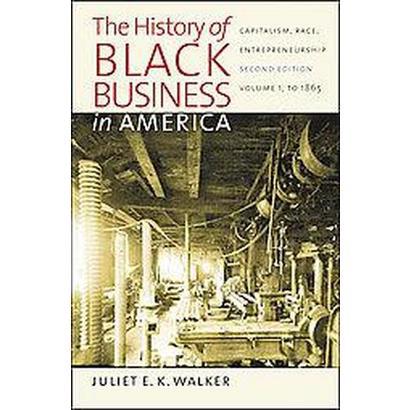
HBCU Money™ Business Book Feature – History of Black Business in America: Capitalism, Race, Entrepreneurship

12945355

Despite almost four centuries of black independent self-help enterprises, the agency of African Americans in attempting to forge their own economic liberation through business activities and entrepreneurship has remained noticeably absent from the historical record. Juliet Walker’s award-winning History of Black Business in America is the only source that provides a detailed study of the continuity, diversity, and multiplicity of independent self-help economic activities among African Americans.

This new, updated edition divides the original work into two volumes. The first volume covers African American business history through the end of the Civil War and features a new introduction, as well as the first comprehensive account of black business during the Civil War. By emphasizing the African origins of black business practices and highlighting the contributions of black women, enslaved and free, Walker casts aside the long-held assumption that a “lack of a business tradition” is responsible for the failure of African Americans to establish successful, large-scale enterprises.


HBCU Money™ Business Book Feature – African-American Business Leaders: A Biographical Dictionary

coverimage

The only biographical dictionary on African-American business leaders, this volume provides biographies on 123 individuals. Covering significant Black business leaders from the early days in America to the present, it includes many individuals who do not appear in general African-American biographical collections, and provides extensive information that is not available in other sources. Each biographical profile provides comprehensive coverage of the individual, and includes comprehensive bibliographical information. The volume also includes appendices classifying the business leaders by place of birth, principal place of business, type of business, and women business leaders. An extensive general bibliographical essay provides information on works giving background information, and the volume concludes with a full subject index.

HBCU Money™ Business Book Feature – Black Horizons: One Aviator’s Experience in the Post-Tuskegee Era

71LfYKe5fWL._SL1000_

Black Horizons is the memoir of an orphan who went from the bottom to become a pioneering aviator, businessman and politician in the post-Tuskegee Airmen era.

As a poor African-American youngster picking cotton in a 1930s Tennessee field, U.L. Rip Gooch would look to the sky as airplanes flew overhead and think about escaping to a better life. Soon after World War II, he earned his pilot’s license with “Chief” C. Alfred Anderson, but found that racist hiring practices among airlines and other companies did not allow employment of black aviators, even those who gained fame as Tuskegee Airmen.

Rip fought back using business principles instead of violence. In time he built a million-dollar aviation business selling Mooney Aircraft in the Air Capital of the World (Wichita, Kansas), accrued 20,000 flight hours, and became one of the few black politicians in one of the most conservative states in the nation.

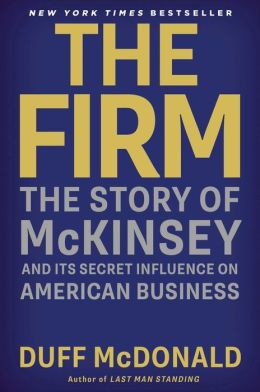
HBCU Money™ Business Book Feature – The Firm: The Story of McKinsey and Its Secret Influence on American Business

9781439190999_p0_v5_s260x420

It ranks among the unquestioned laws of American big business over the last half century: If you want to be taken seriously, you hire McKinsey & Company.

FOUNDED IN 1926, McKINSEY CAN LAY CLAIM to the following partial list of accomplishments: its consultants have ushered in waves of structural, financial, and technological change to the nation’s best organizations; they remapped the power structure within the White House; they even revo­lutionized business schools. In this book, star financial journalist Duff McDonald shows just how, in becoming an indispensable part of decision making at the highest levels, McKinsey has done nothing less than set the course of American capitalism.

But he also answers the question that’s on the mind of anyone who has ever heard the word McKinsey: Are they worth it? After all, just as McKinsey can be shown to have helped invent most of the tools of modern management, the company was also involved with a number of striking failures. Its consultants were on the scene when General Motors drove itself into the ground, and they were Kmart’s advisers when the retailer tumbled into disarray. They played a critical role in building the bomb known as Enron.

McDonald is one of the few journalists to have not only parsed the record but also penetrated the culture of McKinsey itself—a corporate mandarin elite whose methods have been compared (by oth­ers and by themselves) to those of the Jesuits or the U.S. Marines. They feel so strongly about themselves that they have insisted on a proper noun where one need not exist. To an outsider, they are a consulting firm. To themselves, simply, The Firm. This revealing book uncovers the inner workings of what just might be the most influential private organization in America.

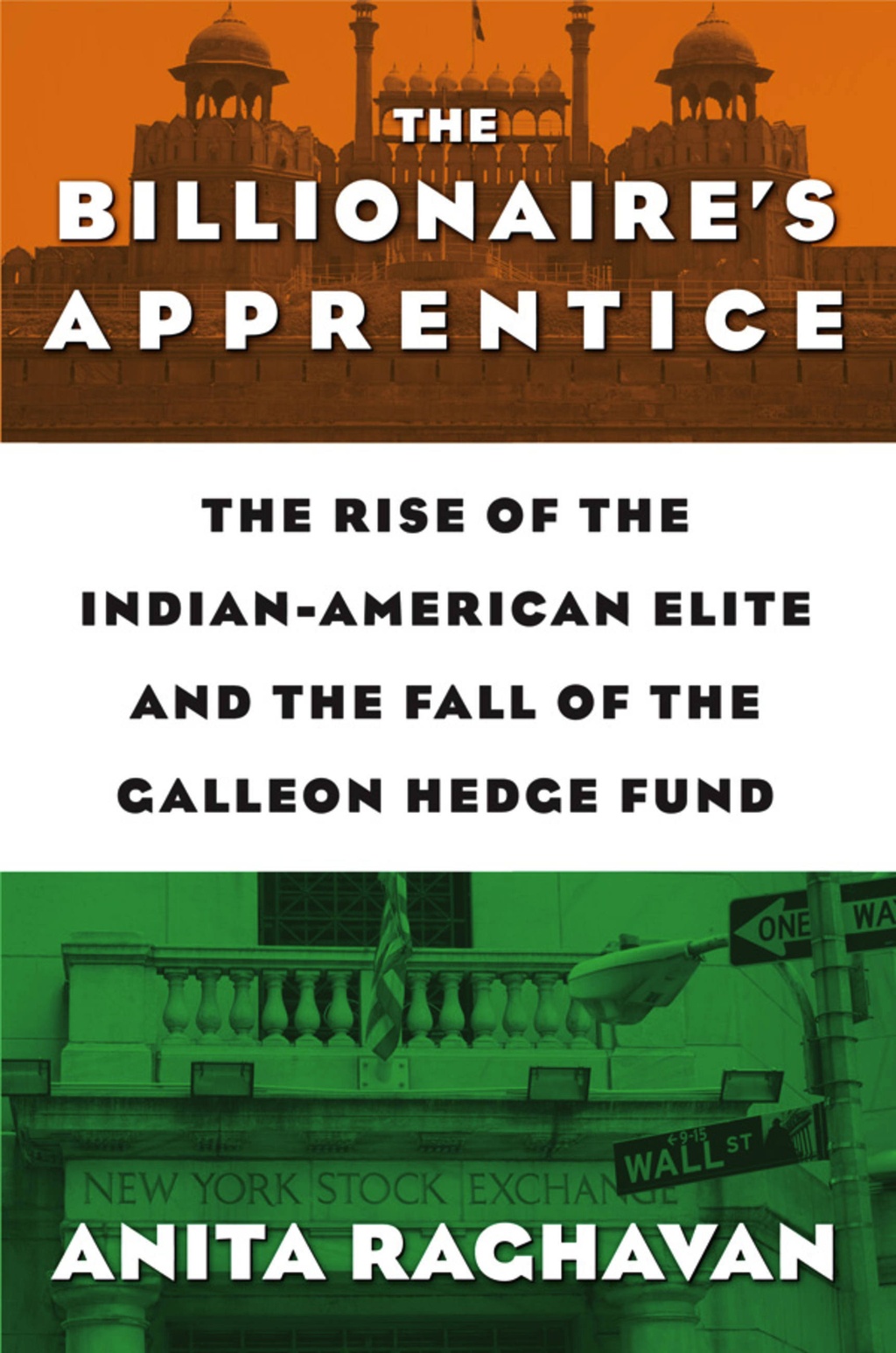
HBCU Money™ Business Book Feature – The Billionaire’s Apprentice: The Rise of Indian-American Elite & Fall of Galleon Hedge Fund

f607967e96f7b3a410178a7cb4a065f6

Just as WASPs, Irish-Catholics and Our Crowd Jews once made the ascent from immigrants to powerbrokers, it is now the Indian-American’s turn. Citigroup, PepsiCo and Mastercard are just a handful of the Fortune 500 companies led by a group known as the “Twice Blessed.” Yet little is known about how these Indian emigres (and children of emigres) rose through the ranks. Until now…

The collapse of the Galleon Group–a hedge fund that managed more than $7 billion in assets–from criminal charges of insider trading was a sensational case that pitted prosecutor Preet Bharara, himself the son of Indian immigrants, against the best and brightest of the South Asian business community. At the center of the case was self-described King of Kings, Galleon’s founder Raj Rajaratnam, a Sri-Lankan-born, Wharton-educated billionaire. But the most shocking allegation was that the éminence grise of Indian business, Rajat Gupta, was Rajaratnam’s accomplice and mole. If not for Gupta’s nose-to-the-grindstone rise to head up McKinsey & Co and a position on the Goldman Sachs board, men like Rajaratnam would have never made it to the top of America’s moneyed elite.

Author Anita Raghavan criss-crosses the globe from Wall Street boardrooms to Delhi’s Indian Institute of Technology as she uncovers the secrets of this subculture–an incredible tale of triumph, temptation and tragedy.