Category Archives: Books

HBCU Money™ Business Book Feature – The Everything Store: Jeff Bezos and the Age of Amazon

6a00d8341d136453ef019b00fc4176970d-pi

The definitive story of Amazon.com, one of the most successful companies in the world, and of its driven, brilliant founder, Jeff Bezos.

Amazon.com started off delivering books through the mail. But its visionary founder, Jeff Bezos, wasn’t content with being a bookseller. He wanted Amazon to become the everything store, offering limitless selection and seductive convenience at disruptively low prices. To do so, he developed a corporate culture of relentless ambition and secrecy that’s never been cracked. Until now. Brad Stone enjoyed unprecedented access to current and former Amazon employees and Bezos family members, giving readers the first in-depth, fly-on-the-wall account of life at Amazon. Compared to tech’s other elite innovators–Jobs, Gates, Zuckerberg–Bezos is a private man. But he stands out for his restless pursuit of new markets, leading Amazon into risky new ventures like the Kindle and cloud computing, and transforming retail in the same way Henry Ford revolutionized manufacturing.

THE EVERYTHING STORE will be the revealing, definitive biography of the company that placed one of the first and largest bets on the Internet and forever changed the way we shop and read.

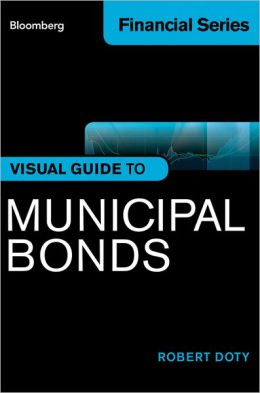
HBCU Money™ Business Book Feature – Bloomberg Visual Guide to Municipal Bonds

9781118216972_p0_v1_s260x420
A hands-on visual guide to understanding and investing in an important and consistently safe investment vehicleBloomberg Visual Guide to Municipal Bonds offers step-by-step guidance to the nature and diversity of municipal securities credit structures. This valuable guide demonstrates the dependability of the overwhelming majority of municipal securities, and points out particular market sectors that may yield greater rewards, but also present greater risks.This book also directs readers to good sources of up-to-date information as well as new market tools, byproducts of recent market enhancements, so as to assist you in making informed investment decisions.

  • Filled with reliable and highly accessible information needed for making sound decisions when investing in municipal securities
  • Author Robert Doty is a noted expert on municipal securities
  • A valuable addition to the new Bloomberg Visual Series

Engaging and informative, this reliable resource is an easy-to-use “how to” guide to municipal securities that will help you create more effective investment strategies.

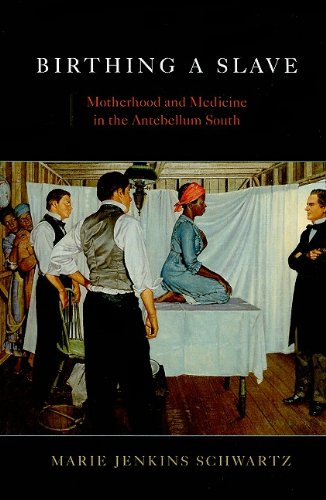
HBCU Money™ Business Book Feature – Birthing a Slave: Motherhood and Medicine in the Antebellum South

5124mNIlqML

The deprivations and cruelty of slavery have overshadowed our understanding of the institution’s most human dimension: birth. We often don’t realize that after the United States stopped importing slaves in 1808, births were more important than ever; slavery and the southern way of life could continue only through babies born in bondage.

In the antebellum South, slaveholders’ interest in slave women was matched by physicians struggling to assert their own professional authority over childbirth, and the two began to work together to increase the number of infants born in the slave quarter. In unprecedented ways, doctors tried to manage the health of enslaved women from puberty through the reproductive years, attempting to foster pregnancy, cure infertility, and resolve gynecological problems, including cancer.

Black women, however, proved an unruly force, distrustful of both the slaveholders and their doctors. With their own healing traditions, emphasizing the power of roots and herbs and the critical roles of family and community, enslaved women struggled to take charge of their own health in a system that did not respect their social circumstances, customs, or values. Birthing a Slave depicts the competing approaches to reproductive health that evolved on plantations, as both black women and white men sought to enhance the health of enslaved mothers–in very different ways and for entirely different reasons.

Birthing a Slave is the first book to focus exclusively on the health care of enslaved women, and it argues convincingly for the critical role of reproductive medicine in the slave system of antebellum America.

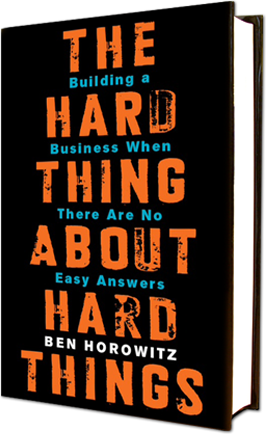
HBCU Money™ Business Book Feature – The Hard Thing About Hard Things: Building a Business When There Are No Easy Answers

ben_horowitz

Ben Horowitz, cofounder of Andreessen Horowitz and one of Silicon Valley’s most respected and experienced entrepreneurs, offers essential advice on building and running a startup—practical wisdom for managing the toughest problems business school doesn’t cover, based on his popular ben’s blog.

While many people talk about how great it is to start a business, very few are honest about how difficult it is to run one. Ben Horowitz analyzes the problems that confront leaders every day, sharing the insights he’s gained developing, managing, selling, buying, investing in, and supervising technology companies. A lifelong rap fanatic, he amplifies business lessons with lyrics from his favorite songs, telling it straight about everything from firing friends to poaching competitors, cultivating and sustaining a CEO mentality to knowing the right time to cash in.

Filled with his trademark humor and straight talk, The Hard Thing About Hard Things is invaluable for veteran entrepreneurs as well as those aspiring to their own new ventures, drawing from Horowitz’s personal and often humbling experiences.

HBCU Money™ Business Book Feature – THE MERGER – The Conglomeration of International Organized Crime

merger-conglomeration-international-organized-crime-jeffrey-robinson-hardcover-cover-art

Crime is no longer bound by borders. International organized crime gangs have formed joint ventures and strategic alliances to become the most dangerous special interest group on the planet. These unholy alliances provide criminal groups with more power, more leverage, more ill-gotten gains. These crime gangs are more formidable and dangerous than ever, and law enforcement agencies have only just begun the immense task of combating them.

A shocking true account of a global network of unimaginable proportions.

Amazon.com Review: When telecommunications companies merge, the news is immediately analyzed by the media and government agencies. Owners of the companies’ stock immediately vote on the wisdom of the move by buying or selling. But when criminal organizations merge and make their operations global, it takes years for law enforcement to figure out what happened, who was involved, and what the implications are. Jeffrey Robinson is an authority on international crime, and The Merger sometimes reads like a crime novel. It seems strange to imagine that Mexican drug traffickers would be working closely with Thai postal workers; that a billion dollars a month in drug money would be laundered from Russian gangs through Greek Cypriots and then moved on to respectable financial centers such as London and New York; that Colombian drug cartels would get kerosene–an important ingredient for making cocaine–from Turkmenistan by way of Argentina; that Eastern European criminals would claim to be Jewish so they could get Israeli passports and launder money in the Holy Land. Robinson concludes with a note that international drug trafficking is growing so fast it now represents 2 percent of the world’s economy. If this book doesn’t keep you up at night, or at least raise some serious goose flesh, you’re made of pretty stern stuff. –Lou Schuler

From Publishers Weekly: It’s not only the free market that is being globalized, but illegal markets as well: transnational crime expert Robinson sounds the alarm in this well-researched and genuinely chilling treatise. Veteran author Robinson (The Laundrymen, etc.) pursues a provocative thesis: where the general public has perceived the influence of traditional crime syndicates as waning, disparate developments – primarily the end of the Cold War and banking’s growing reliance on computers – have made it possible for discrete criminal entities to merge, much like legitimate corporations do. Robinson plunges into a sordid history of global crime, identifying key players and the labyrinthine attempts by international law enforcement to play “catch-up.” Chapters detail the nefarious activities of the Russian “Mafiya,” Colombian and Mexican drug cartels, Asian Triads, Japanese Yakuza, Nigerian confidence rings, Hell’s Angels, rogue factions of the St. Regis Mohawk tribe and the surviving, leaner and meaner Cosa Nostra (and its Italian relatives). He presents a wealth of evidence that these groups have found ways to accommodate one another in numerous activities worldwide – identity theft, credit card fraud, smuggling, bribery and counterfeiting, all of which are underwritten by enormous drug profits. More importantly, he explains, the cartels have been able to refine their money laundering, tax evasion and offshore banking crimes. All the while, Robinson provides an exciting and unsettling glimpse of our future as a wired and globalized paradise for thieves.