Excerpt from June Press Conference with Chairwoman Janet Yellen:
“While the general picture of the labor market is largely positive, some people are still struggling. Unemployment rates rose more during the recession for African Americans and Hispanics than for the nation overall, and even though those rates have also come down by more during the economic expansion, unemployment remains higher for these groups. Unfortunately, those gaps have not narrowed noticeably relative to where they were before the recession. Unemployment rates for young African American and Hispanic men without a college degree remain especially high, and one important benefit from further improvement in the labor market would be increased job opportunities for these men and other groups that currently still experience high unemployment.”
Excerpt from March Press Conference with Chairwoman Janet Yellen:
“Consistent with its statutory mandate, the Committee seeks to foster maximum employment and price stability. The Committee currently expects that, with gradual adjustments in the stance of monetary policy, economic activity will expand at a moderate pace and labor market indicators will continue to strengthen. However, global economic and financial developments continue to pose risks. Inflation is expected to remain low in the near term, in part because of earlier declines in energy prices, but to rise to 2 percent over the medium term as the transitory effects of declines in energy and import prices dissipate and the labor market strengthens further. The Committee continues to monitor inflation developments closely.”
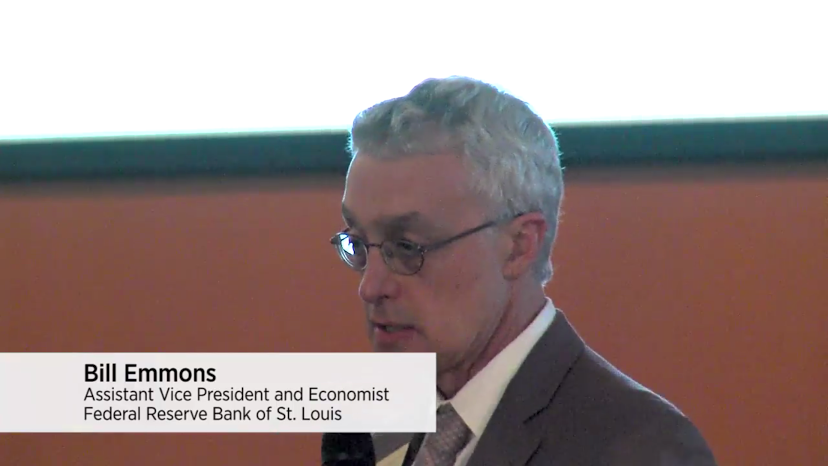
“William R. Emmons, senior economic adviser at the Center for Household Financial Stability at the St. Louis Fed, discusses key findings from the center’s research on demographics—specifically race, ethnicity, education and age—and the relationship of those factors to wealth accumulation.” – via St. Louis Fed
Press release via Federal Reserve’s website and video from Chairwoman Janet Yellen’s press conference:
Information received since the Federal Open Market Committee met in July suggests that economic activity is expanding at a moderate pace. Household spending and business fixed investment have been increasing moderately, and the housing sector has improved further; however, net exports have been soft. The labor market continued to improve, with solid job gains and declining unemployment. On balance, labor market indicators show that underutilization of labor resources has diminished since early this year. Inflation has continued to run below the Committee’s longer-run objective, partly reflecting declines in energy prices and in prices of non-energy imports. Market-based measures of inflation compensation moved lower; survey-based measures of longer-term inflation expectations have remained stable.
Consistent with its statutory mandate, the Committee seeks to foster maximum employment and price stability. Recent global economic and financial developments may restrain economic activity somewhat and are likely to put further downward pressure on inflation in the near term. Nonetheless, the Committee expects that, with appropriate policy accommodation, economic activity will expand at a moderate pace, with labor market indicators continuing to move toward levels the Committee judges consistent with its dual mandate. The Committee continues to see the risks to the outlook for economic activity and the labor market as nearly balanced but is monitoring developments abroad. Inflation is anticipated to remain near its recent low level in the near term but the Committee expects inflation to rise gradually toward 2 percent over the medium term as the labor market improves further and the transitory effects of declines in energy and import prices dissipate. The Committee continues to monitor inflation developments closely.
To support continued progress toward maximum employment and price stability, the Committee today reaffirmed its view that the current 0 to 1/4 percent target range for the federal funds rate remains appropriate. In determining how long to maintain this target range, the Committee will assess progress–both realized and expected–toward its objectives of maximum employment and 2 percent inflation. This assessment will take into account a wide range of information, including measures of labor market conditions, indicators of inflation pressures and inflation expectations, and readings on financial and international developments. The Committee anticipates that it will be appropriate to raise the target range for the federal funds rate when it has seen some further improvement in the labor market and is reasonably confident that inflation will move back to its 2 percent objective over the medium term.
The Committee is maintaining its existing policy of reinvesting principal payments from its holdings of agency debt and agency mortgage-backed securities in agency mortgage-backed securities and of rolling over maturing Treasury securities at auction. This policy, by keeping the Committee’s holdings of longer-term securities at sizable levels, should help maintain accommodative financial conditions.
When the Committee decides to begin to remove policy accommodation, it will take a balanced approach consistent with its longer-run goals of maximum employment and inflation of 2 percent. The Committee currently anticipates that, even after employment and inflation are near mandate-consistent levels, economic conditions may, for some time, warrant keeping the target federal funds rate below levels the Committee views as normal in the longer run.
Voting for the FOMC monetary policy action were: Janet L. Yellen, Chair; William C. Dudley, Vice Chairman; Lael Brainard; Charles L. Evans; Stanley Fischer; Dennis P. Lockhart; Jerome H. Powell; Daniel K. Tarullo; and John C. Williams. Voting against the action was Jeffrey M. Lacker, who preferred to raise the target range for the federal funds rate by 25 basis points at this meeting.
“Obviously we have to look at the pace of job creation, we have to look at what’s happening to labor force participation to part time employment for economic reasons, to job openings, to the pace of quits, to wage inflation and other indicators of the state of the labor market. I did say when we agreed that labor markets slack has diminished to some extent, in the inter-meeting period and clearly over a longer span of time over the last several years, obviously we have made considerable progress in moving towards our goal of maximum employment. So in spite of the fact that there is some progress on that front the committee wants to see some further progress before feeling that it will be appropriate to raise rates.” – Chairwoman Janet Yellen


 HBCU Money