Author Archives: hbcumoney

The HBCU Money™ Weekly Market Watch

Our Money Matters /\ June 6, 2014

A weekly snapshot of African American owned public companies and HBCU Money™ tracked African stock exchanges.

NAME TICKER PRICE (GAIN/LOSS %)

African American Publicly Traded Companies

Citizens Bancshares Georgia (CZBS) $8.70 (0.00% UNCH)

M&F Bancorp (MFBP) $4.85 (0.00% UNCH)

Radio One (ROIA) $4.39 (0.39% DN)

African Stock Exchanges

Bourse Regionale des Valeurs Mobilieres (BRVM)  232.13 (0.10% UP)

Botswana Stock Exchange (BSE)  9 111.93 (0.03% DN)

Ghana Stock Exchange (GSE)  2 343.98 (9.27% UP)*

Nairobi Stock Exchange (NSE)  149.29 (N/A)

Johannesburg Stock Exchange (JSE) 49 933.99 (0.13% DN)

International Stock Exchanges

New York Stock Exchange (NYSE) 10 904.22 (0.52% UP)

London Stock Exchange (LSE)  3 669.04 (0.77% UP)

Tokyo Stock Exchange (TOPIX)  1 234.57 (0.15% UP)

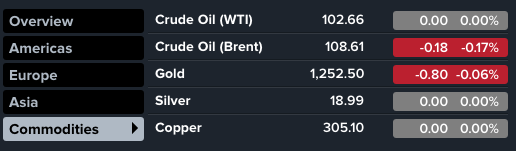
Commodities

Screen Shot 2014-06-06 at 6.36.38 PM

HBCU Money™ Histronomics: S.2510 – Howard University Endowment Act

Howard_University_seal

Sponsor: Dan Quayle (R-IN) – Introduced March 30, 1984

Summary:

Howard University Endowment Act – Authorizes the Secretary of Education to establish an endowment program for Howard University. Authorizes the Secretary, from funds available in any fiscal year for the University, to make grants into the endowment fund established under this Act at the University. Authorizes the Secretary to enter into agreements with the University, including provisions necessary to assure that the purposes of this Act will be achieved.

Requires the University, in order to receive such a grant, to: (1) deposit in the endowment fund an amount equal to such grant; and (2) administer the endowment fund in accordance with the requirements of this Act. Prohibits the source of funds for such institutional match from including Federal funds or funds derived from an existing endowment fund.

Limits the period of any such grant to 20 years. Prohibits the University from withdrawing or expending any of its endowment fund corpus during such grant period. Allows the University, upon expiration of such period, to use the endowment fund corpus plus any endowment fund income for any educational purpose.

Sets forth requirements for investments of the endowment fund corpus and endowment fund income.

Sets forth provisions relating to authorized withdrawals and expenditures of endowment fund income.

Sets forth provisions for enforcement of requirements under this Act.

Makes conforming amendments to specified Federal law relating to Howard University.

Source: Congress.gov

HBCU Money™ Business Book Feature – The Race for What’s Left: The Global Scramble for the World’s Last Resources

9781250023971

From Michael Klare, the renowned expert on natural resource issues, an invaluable account of a new and dangerous global competition

The world is facing an unprecedented crisis of resource depletion—a crisis that goes beyond “peak oil” to encompass shortages of coal and uranium, copper and lithium, water and arable land. With all of the planet’s easily accessible resource deposits rapidly approaching exhaustion, the desperate hunt for supplies has become a frenzy of extreme exploration, as governments and corporations rush to stake their claim in areas previously considered too dangerous and remote. The Race for What’s Left takes us from the Arctic to war zones to deep ocean floors, from a Russian submarine planting the country’s flag on the North Pole seabed to the large-scale buying up of African farmland by Saudi Arabia, China, and other food-importing nations.

As Klare explains, this invasion of the final frontiers carries grave consequences. With resource extraction growing more complex, the environmental risks are becoming increasingly severe; the Deepwater Horizon disaster is only a preview of the dangers to come. At the same time, the intense search for dwindling supplies is igniting new border disputes, raising the likelihood of military confrontation. Inevitably, if the scouring of the globe continues on its present path, many key resources that modern industry relies upon will disappear completely. The only way out, Klare argues, is to alter our consumption patterns altogether—a crucial task that will be the greatest challenge of the coming century.

The HBCU Money™ Weekly Market Watch

Our Money Matters /\ May 30, 2014

A weekly snapshot of African American owned public companies and HBCU Money™ tracked African stock exchanges.

NAME TICKER PRICE (GAIN/LOSS %)

African American Publicly Traded Companies

Citizens Bancshares Georgia (CZBS) $8.51 (4.27% DN)

M&F Bancorp (MFBP) $4.85 (1.04% UP)

Radio One (ROIA) $4.49 (2.51% UP)

African Stock Exchanges

Bourse Regionale des Valeurs Mobilieres (BRVM)  230.61 (0.19% UP)

Botswana Stock Exchange (BSE)  9 061.52 (0.39% DN)

Ghana Stock Exchange (GSE)  2 308.96 (7.63% UP)*

Nairobi Stock Exchange (NSE)  149.80 (N/A)

Johannesburg Stock Exchange (JSE) 49 632.70 (0.19% DN)

International Stock Exchanges

New York Stock Exchange (NYSE) 10 735.58 (0.15% DN)

London Stock Exchange (LSE)  3 655.01 (0.26% DN)

Tokyo Stock Exchange (TOPIX)  1 201.41 (0.06% UP)

Commodities

For The Greater Good, Make Donald Sterling Keep The Clippers

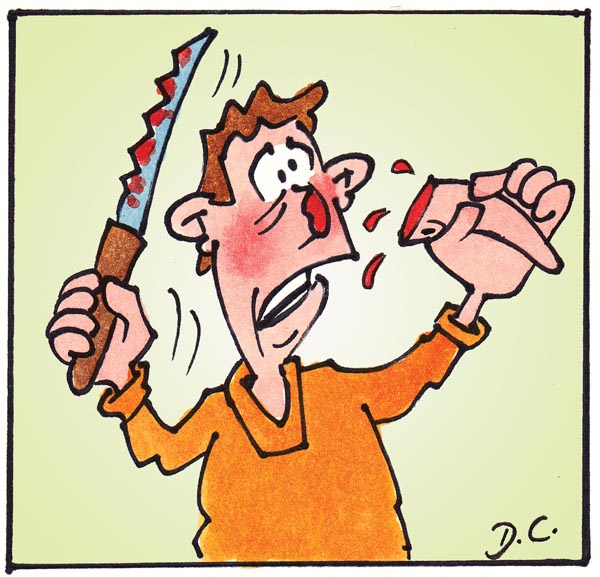
Don’t cut off your nose to spite your face. – 12th Century Idiom
ouch

I am a fan of prenuptial agreements. As a banker you come to realize that money, divorces, and emotions are a Molotov cocktail waiting to explode. A former associate of mine allowed car loans that both she and her now former husband purchased new vehicles with to be all in her name because of his poor credit. As the marriage dissolved and headed for divorce she just wanted it over and was willing to sign whatever to expedite the divorce. By the time she came to her senses she realized that she was stuck with a bundle of debt for two cars, her car was upside down, no recourse, and an ex-husband who basically got a vehicle free and clear. The point is that emotions of the short-term moment often end with long-term consequences that are more detrimental to the injured parties. Enter, Donald Sterling.

For those who are unaware Donald Sterling is a lawyer who made his wealth not through litigation, but through leveraging his earning into real estate holdings. According to Nadja Brandt of Bloomberg, “He owns at least 160 apartment buildings, office properties and single-family homes in the area, many of which he purchased with cash, according to county records compiled by data provider LexisNexis.” In addition, over the past eighteen months she reports, “They’ve purchased at least 12 houses and three multifamily buildings from the beginning of 2013 through last month for a total of $58.7 million, according to Los Angeles County Office of the Assessor records.” Now, with the NBA forcing the sale of the Clippers amongst public pressure, Mr. Sterling is about to be let loose with $1 billion in capital, the expected sale price of the team, to go on a real estate buying spree. Currently, the Los Angeles Clippers produce about $15 million net income per annum according to recent Forbes assessment. A significantly less amount of capital to accumulate property than a sale thanks to having to keep significant capital tied up in the operation of the team.

-1

Two significant items of importance to consider with a man who owns 160 apartment buildings before you let him loose with a billion bullets. He has already paid according to Housing Wire’s Trey Garrison, “The longtime Democrat and NAACP donor agreed to pay $2.625 million to a fund for tenants and prospective tenants injured by his discriminatory practices, plus $100,000 in fines” in 2009. Before that according to Garrison, “in 2005 after a settlement was reached, wherein a judge ordered Sterling to pay nearly $5 million in attorney’s fees to the plaintiffs.” Remember, he already owns at least 160 apartment buildings. Has anyone given any thought to how many he potentially could own by forcing the sale of the Clippers? No, because we are caught up in the emotions of the moment.

There are 12 players on the Los Angeles Clippers roster. The NBA is comprised of 30 teams with 12 players on each for a total of 360 players. So let us take a good hard look at the number of people potentially impacted by the sale because right now we are only talking twelve. Initially, Donald Sterling was going to fight the forced sale of the team, but I am sure he, his lawyers, and financial advisers may have come to the same conclusion I have looking at the numbers. He could arguably double his real estate holdings, which means he could potentially be the landlord of as few as 30 000 or potentially as many as 300 000 plus Los Angeles citizens versus the grumblings of twelve basketball players and staff. My math is still pretty sharp and the last I checked 12 is less than 30 000, so for the sake of the greater good please let this man keep his team. Most often it is best to take a step back and let the emotions clear the room to be sure a rational decision is being thought out and made. Otherwise, get out the scalpel.