
Monthly Archives: March 2014

HBCU Money’s 2014 African American Owned Bank Directory

For the most current African American Owned Bank Directory visit the 2022 link by clicking here.

All banks are listed in alphabetical order. In order to be listed in our directory the bank must have at least 51 percent African American ownership. You can click on the bank name to go directly to their website.
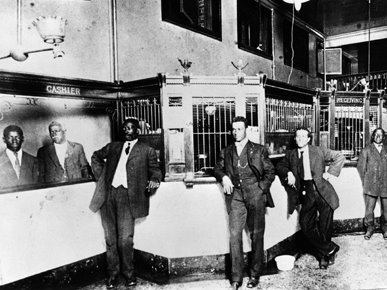
blackbank

There are 25 African American owned banks with assets totaling approximately $5.1 billion in assets or approximately 0.46 percent of African America’s $1.1 trillion in buying power.

OTHER KEY FINDINGS:

  • AAOBs are in 17 states. Key states absent are Florida, Mississippi, New York, and Ohio.
  • Alabama, Georgia, and Illinois lead the way with 3 AAOBs each.
  • Median AAOBs Aseets: $117 869 000
  • Average AAOBs Assets: $206 932 000
  • AAOBs control 0.03 percent of All American Bank Owned Assets
  • AAOBs control 2.8 percent of FDIC designated Minority-Owned Bank Assets
  • In 2013, there were 21 AAOBs, this year sees 25 or an increase of almost 25 percent.
  • Only 6 of 2013’s 21 AAOBs saw increases in assets.
  • For comparison, Asian American Owned Banks have approximately $43 billion in assets spread over 78 institutions. They control 6 percent of Asian America’s buying power.

ALAMERICA BANK

Location: Birmingham, Alabama

Founded: January 28, 2000

FDIC Region: Atlanta

Assets: $36 715 000

Asset Change (2013): Up 3.7%

BROADWAY FEDERAL BANK FSB

Location: Los Angeles, California

Founded: February 26, 1947

FDIC Region: San Francisco

Assets: $345 574 000

Asset Change (2013): Down 10.3%

CAPITAL CITY BANK & TRUST COMPANY

Location: Atlanta, Georgia

Founded: October 3, 1994

FDIC Region: Atlanta

Assets: $291 266 000

Asset Change (2013): Down 1.1%

CARVER STATE BANK

Location: Savannah, Georgia

Founded: January 1, 1927

FDIC Region: Atlanta

Assets: $40 790 000

Asset Change (2013): Down 1.9%

CITIZENS SAVINGS B&T COMPANY

Location: Nashville, Tennessee

Founded: January 4, 1904

FDIC Region: Dallas

Assets: $97 201 000

Asset Change (2013): N/A

CITIZENS TRUST BANK

Location: Atlanta, Georgia

Founded: June 18, 1921

FDIC Region: Atlanta

Assets: $391 647 000

Asset Change (2013): Down 0.2%

CITY NB OF NEW JERSEY

Location: Newark, New Jersey

Founded: June 11, 1973

FDIC Region: New York

Assets: $313 355 000

Asset Change (2013): Down 7.9%

COLUMBIA SAVINGS & LOAN ASSOCIATION (No Website)

Location: Milwaukee, Wisconsin

Founded: January 1, 1924

FDIC Region: Chicago

Assets: $24 136 000

Asset Change (2013): N/A

COMMONWEALTH NATIONAL BANK

Location: Mobile, Alabama

Founded: February 19, 1976

FDIC Region: Atlanta

Assets: $59 455 000

Asset Change (2013): Down 6.0%

FIRST INDEPENDENCE BANK

Location: Detroit, Michigan

Founded: May 14, 1970

FDIC Region: Chicago

Assets: $231 547 000

Asset Change (2013): Up 7.2%

FIRST STATE BANK

Location: Danville, Virginia

Founded: September 08, 1919

FDIC Region: Atlanta

Assets: $38 784 000

Asset Change (2013): Down 0.3%

FIRST TUSKEGEE BANK

Location: Tuskegee, Alabama

Founded: October 11, 1991

FDIC Region: Atlanta

Assets: $63 127 000

Asset Change (2013): Down 6.2%

HARBOR BANK OF MARYLAND

Location: Baltimore, Maryland

Founded: September 13, 1982

FDIC Region: New York

Assets: $242 628 000

Asset Change (2013): N/A

HIGHLAND COMMUNITY BANK

Location: Chicago, Illinois

Founded: November 09, 1970

FDIC Region: Chicago

Assets: $73 375 000

Asset Change (2013): Down 13.6%

ILLINOIS SERVICE FEDERAL SAVINGS & LOAN

Location: Chicago, Illinois

Founded: January 01, 1934

FDIC Region: Chicago

Assets: $117 869 000

Asset Change (2013): Down 15.9%

INDUSTRIAL BANK

Location: Washington, DC

Founded: August 18, 1934

FDIC Region: New York

Assets: $342 524 00

Asset Change (2013): Up 3.3%

LIBERTY BANK & TRUST COMPANY

Location: New Orleans, Louisiana

Founded: November 16, 1972

FDIC Region: Dallas

Assets: $562 046 000

Asset Change (2013): Up 3.1%

MECHANICS & FARMERS BANK

Location: Durham, North Carolina

Founded: March 01, 1908

FDIC Region: Atlanta

Assets: $291 792 000

Asset Change (2013): Down 4.3%

NORTH MILWAUKEE STATE BANK

Location: Milwaukee, Wisconsin

Founded: February 12, 1971

FDIC Region: Chicago

Assets: $86 806 000

Asset Change (2013): Down 5.1%

ONEUNITED BANK

Location: Boston, Massachusetts

Founded: August 02, 1982

FDIC Region: New York

Assets: $612 624 000

Asset Change (2013): Up 3.7%

SEAWAY BANK & TRUST COMPANY

Location: Chicago, Illinois

Founded: January 02, 1965

FDIC Region: Chicago

Assets: $550 720 000

Asset Change (2013): Down 3.9%

SOUTH CAROLINA COMMUNITY BANK

Location: Columbia, South Carolina

Founded: March 26, 1999

FDIC Region: Atlanta

Assets: $69 613 000

Asset Change (2013): N/A

TRI-STATE BANK OF MEMPHIS

Location: Memphis, Tennessee

Founded: December 16, 1946

FDIC Region: Dallas

Assets: $150 270 000

Asset Change (2013): N/A

UNITED BANK OF PHILADELPHIA

Location: Philadelphia, Pennsylvania

Founded: March 23, 1992

FDIC Region: New York

Assets: $62 453 000

Asset Change (2013): Down 8.1%

UNITY NB OF HOUSTON

Location: Houston, Texas

Founded: August 01, 1985

FDIC Region: Dallas

Assets: $69 813 000

Asset Change (2013): Up 2.5%

HBCU Money™ Business Book Feature – THE MERGER – The Conglomeration of International Organized Crime

merger-conglomeration-international-organized-crime-jeffrey-robinson-hardcover-cover-art

Crime is no longer bound by borders. International organized crime gangs have formed joint ventures and strategic alliances to become the most dangerous special interest group on the planet. These unholy alliances provide criminal groups with more power, more leverage, more ill-gotten gains. These crime gangs are more formidable and dangerous than ever, and law enforcement agencies have only just begun the immense task of combating them.

A shocking true account of a global network of unimaginable proportions.

Amazon.com Review: When telecommunications companies merge, the news is immediately analyzed by the media and government agencies. Owners of the companies’ stock immediately vote on the wisdom of the move by buying or selling. But when criminal organizations merge and make their operations global, it takes years for law enforcement to figure out what happened, who was involved, and what the implications are. Jeffrey Robinson is an authority on international crime, and The Merger sometimes reads like a crime novel. It seems strange to imagine that Mexican drug traffickers would be working closely with Thai postal workers; that a billion dollars a month in drug money would be laundered from Russian gangs through Greek Cypriots and then moved on to respectable financial centers such as London and New York; that Colombian drug cartels would get kerosene–an important ingredient for making cocaine–from Turkmenistan by way of Argentina; that Eastern European criminals would claim to be Jewish so they could get Israeli passports and launder money in the Holy Land. Robinson concludes with a note that international drug trafficking is growing so fast it now represents 2 percent of the world’s economy. If this book doesn’t keep you up at night, or at least raise some serious goose flesh, you’re made of pretty stern stuff. –Lou Schuler

From Publishers Weekly: It’s not only the free market that is being globalized, but illegal markets as well: transnational crime expert Robinson sounds the alarm in this well-researched and genuinely chilling treatise. Veteran author Robinson (The Laundrymen, etc.) pursues a provocative thesis: where the general public has perceived the influence of traditional crime syndicates as waning, disparate developments – primarily the end of the Cold War and banking’s growing reliance on computers – have made it possible for discrete criminal entities to merge, much like legitimate corporations do. Robinson plunges into a sordid history of global crime, identifying key players and the labyrinthine attempts by international law enforcement to play “catch-up.” Chapters detail the nefarious activities of the Russian “Mafiya,” Colombian and Mexican drug cartels, Asian Triads, Japanese Yakuza, Nigerian confidence rings, Hell’s Angels, rogue factions of the St. Regis Mohawk tribe and the surviving, leaner and meaner Cosa Nostra (and its Italian relatives). He presents a wealth of evidence that these groups have found ways to accommodate one another in numerous activities worldwide – identity theft, credit card fraud, smuggling, bribery and counterfeiting, all of which are underwritten by enormous drug profits. More importantly, he explains, the cartels have been able to refine their money laundering, tax evasion and offshore banking crimes. All the while, Robinson provides an exciting and unsettling glimpse of our future as a wired and globalized paradise for thieves.

HBCU Money™ Dozen 2/24 – 2/28

American-Football-Jerseys-12-Green[1]

Did you miss HBCU Money™ Dozen via Twitter? No worry. We are now putting them on the site for you to visit at your leisure. We have made some changes here at HBCU Money™ Dozen. We are now solely focused on research and central bank articles from the previous week.

Research

How tools sharpened our brains & made us human l New Scientist http://ow.ly/u4aKn

Intel vs. ARM: Two titans’ tangled fate l Networkworld http://ow.ly/u4ekU

Just Another Solar Deal, Or The Future Of Mid-Size Project Financing? l Clean Technica http://dlvr.it/525Z0n

One small step for Indian spaceflight: 1st home-grown astronaut capsule l New Scientist http://ow.ly/u4eT2

Your car as smartphone: In-car tech at Mobile World Congress l Computerworld http://ow.ly/u4f2C

Enterprises advised to exercise care in using Apple products l CSOonline http://bit.ly/1mDRHUW

Federal Reserve, Central Banks, & Financial Departments

10 breakthrough technologies that could change our world. l World Economic Forum http://wef.ch/etech14

Treasury Sanctions Key Sinaloa Cartel Network l Treasury Department http://go.usa.gov/Bhjj

Recovery questioned as jobless claims jump l Housing Wire http://hwi.re/525kLW

Can Europe continue to provide old age security as the population ages & the work force shrinks? l World Bank http://wrld.bg/u3E04

How can we improve educational outcomes for lower income youth? l Philadelphia Fed http://ow.ly/u4lAL

What kinds of firms create jobs? What kinds destroy them? l Atlanta Fed http://goo.gl/3QjEac

Thank you as always for joining us on Saturday for HBCU Money™ Dozen. The 12 most important research and finance articles of the week.